How FIRS Tracks Business Income in Nigeria (What SMEs Must Know in 2026)
A plain-English guide to how Nigerian tax authorities connect your TIN, bank footprint, returns, and records, and why SMEs should treat those signals seriously in 2026.
Published: April 25, 2026 4:30 PM GMT+1
Author: Lukmon Isiaq
Tracking starts long before an audit letter
Many SMEs imagine tax enforcement begins when a formal audit notice arrives. In practice, it starts earlier. Your registration data, bank activity, filings, invoices, and records can be compared against one another.
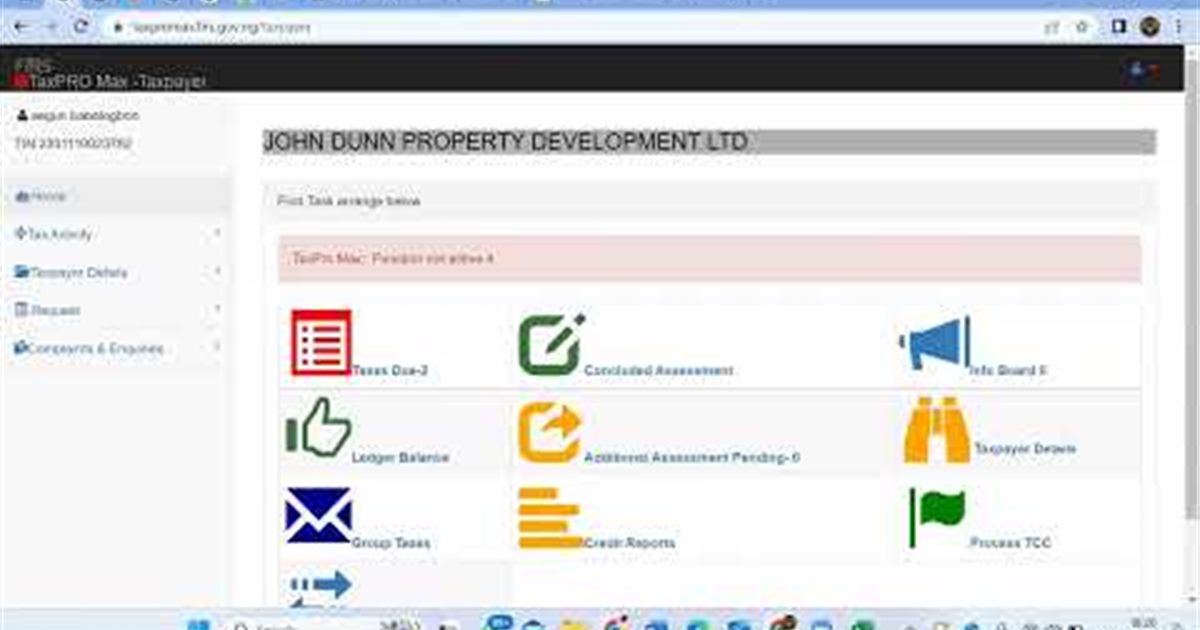
There is no single public FIRS page titled "this is how we track your income." So this article is an inference from the laws and public systems the authority publishes. As of April 25, 2026, the public firs.gov.ng homepage redirects to the Nigeria Revenue Service, while live tools still sit on TaxPro Max, TIN Verification, and ATRS. The branding is mixed. The data rails are not.
First layer: your business identity is linkable
Section 10 of the Companies Income Tax Act requires every company to have a Tax Identification Number and display it on business transactions, returns, audited accounts, and correspondence with revenue authorities. In other words, the law expects your tax identity to travel with the business, not sit separately from it.
That identity is also searchable in public tools:
- the TaxPro Max CAC identification page supports lookup by CAC number
- the NRS TIN verification system supports lookup by RC/BN, TIN, or phone number
For an SME, that means company registration, banking, and tax registration are not really separate stories.
Second layer: business bank accounts are not tax-invisible
This is where many founders misread the system.
Section 10 of CITA says banks and other financial institutions must require a company's TIN before opening a bank account and as a condition for continuing to operate that account. Section 61 adds another layer: every person engaged in banking must prepare a monthly return showing the names and addresses of new customers and deliver it to the relevant tax authority, or to FIRS where the customer is a company. The same section also allows further information to be requested by notice.
That does not mean every transfer triggers an instant tax dispute. It does mean a business account is not sealed off from the tax system. If turnover passes through the account, the safer assumption is traceability, not obscurity.
Third layer: returns are meant to cross-check one another
For companies, section 55 of CITA requires yearly self-assessment returns with accounts, tax computations, and evidence of payment. If VAT applies, monthly returns add more visibility. If withholding tax is deducted or claimed around your transactions, that creates another trail around the same commercial activity.
This is where SMEs usually create avoidable tension:
- bank receipts suggest more trading activity than the return suggests
- VAT-facing activity exists, but VAT compliance is thin or inconsistent
- audited accounts and tax computation do not reconcile with what reaches the portal
- credits or deductions are claimed without a clean document trail
That list is partly inference from the filing structure rather than a quoted FIRS checklist. Still, it is a solid inference. Digital tax systems become useful because related numbers can be compared cheaply and quickly.
If you want a quick reasonableness check before filing, use the company income tax calculator, VAT calculator, and withholding tax calculator as separate review tools. They are not substitutes for statutory filing, but they help you catch contradictions early.
Fourth layer: electronic transaction trails are getting sharper
The FIRS Automated Tax Remittance System (ATRS) shows the direction clearly. Its public page says taxable transactions can be reported in real time and that taxable electronic invoices and receipts can be issued and validated through the system. It also lists compliant businesses and certified software.
That does not mean every Nigerian SME is already on a live tax feed. It does mean the federal system is no longer built only for paper-era hindsight. Where a business uses compliant channels or structured electronic invoicing, the transaction trail can become much clearer much sooner.
Fifth layer: records and explanations can be compelled
Sections 60 to 64 of CITA matter more than many SMEs realise.
Section 60 allows the Service to require returns, books, documents, and other information, and to require a person to appear for examination. Section 63 requires companies to keep records sufficient for tax purposes for at least six years after the relevant year of assessment. Section 64 allows entry and search of premises under warrant where there are reasonable grounds to suspect non-disclosure or tax irregularity.
This is why weak record keeping is not a cosmetic problem. Once your records stop explaining the business clearly, the authority has more room to explain the business for you.
Sixth layer: if profit is unclear, turnover becomes important
Section 30 of CITA says that where the Service believes a trade or business produces no assessable profits, profits lower than expected, or profits that cannot be truly ascertained, it may assess and charge the company on a fair and reasonable percentage of turnover.
Section 65 adds a related point: if a company does not deliver a return and the Service believes it is liable to tax, it may determine total profits to the best of its judgment and assess accordingly.
That is why "profit was small" is not a complete defence. Sometimes it is true. But once the books are weak or incomplete, the argument becomes harder to prove, and turnover starts carrying more weight.
What usually puts an SME on the radar
This is still inference, not an official ranked checklist, but the pattern is fairly plain:
1. A business account receives steady commercial payments, yet the tax profile is thin or dormant.
2. The company files late or not at all, especially for repeating taxes.
3. Reported profit looks unusually small relative to visible operating scale.
4. VAT, CIT, and supporting records do not line up cleanly.
5. The business applies for something like a tax clearance certificate before the underlying filing story is coherent.
None of that requires mind reading. It requires comparison.
What SMEs should do now
Keep one revenue story across every surface:
- invoices
- bank entries
- bookkeeping
- VAT position
- annual tax computation
Do a monthly reconciliation instead of a year-end reconstruction. If a transfer hit the account, you should know what invoice, customer, or business event explains it. If VAT applied, the VAT treatment should be identifiable. If withholding tax was deducted, the evidence should be filed immediately.
If your company is exempt from paying CIT because of size, remember that exemption from tax is not exemption from records. The filing burden still matters. Our CIT filing guide is a better starting point if the team still treats annual filing as a last-minute upload job.
FAQs
Does FIRS need my full bank statement before it can suspect undeclared income?
No. A company bank account already sits inside a framework where TIN, customer reporting, filings, and information requests can intersect.
Can FIRS assess my company on turnover instead of profit?
Yes. Section 30 of CITA allows assessment on a fair and reasonable percentage of turnover where true profits cannot be ascertained or appear too low.
If my company is small and exempt from CIT, am I off the radar?
No. A small company may be exempt from paying CIT in the relevant year, but filing and record-keeping obligations still matter.
How many years of records should I keep?
At least six years after the relevant year of assessment, based on section 63 of CITA.
Does ATRS mean every SME is already being watched transaction by transaction?
Not necessarily. The safer reading is narrower: the compliance environment is becoming more connected, not that every SME is already on a universal real-time feed.
Final note
FIRS does not need a dramatic raid to begin understanding your income pattern. Your registration data, bank relationship, filings, invoices, and records already do much of the talking.
For an SME, the safest move in 2026 is to stop thinking in silos. If the business earns in one place, reports in another, and explains itself in a third, pressure will usually show up in the gaps between those versions.
Related guides
- What Happens If You Don't File Tax Returns in Nigeria? (Penalties Explained)
- FIRS Tax Clearance Certificate (TCC) Explained: Requirements and How to Get It Fast
- How to File Company Income Tax (CIT) in Nigeria Step-by-Step (2026 Guide)
- Capital Loss Deduction in Nigeria: Practical Planning Without Overclaiming