Aircraft nose art in movies is the use of painted aircraft names, symbols, mascots, figures, mission markings and aircraft identifiers to make aircraft recognizable, emotional, and historically meaningful on screen.
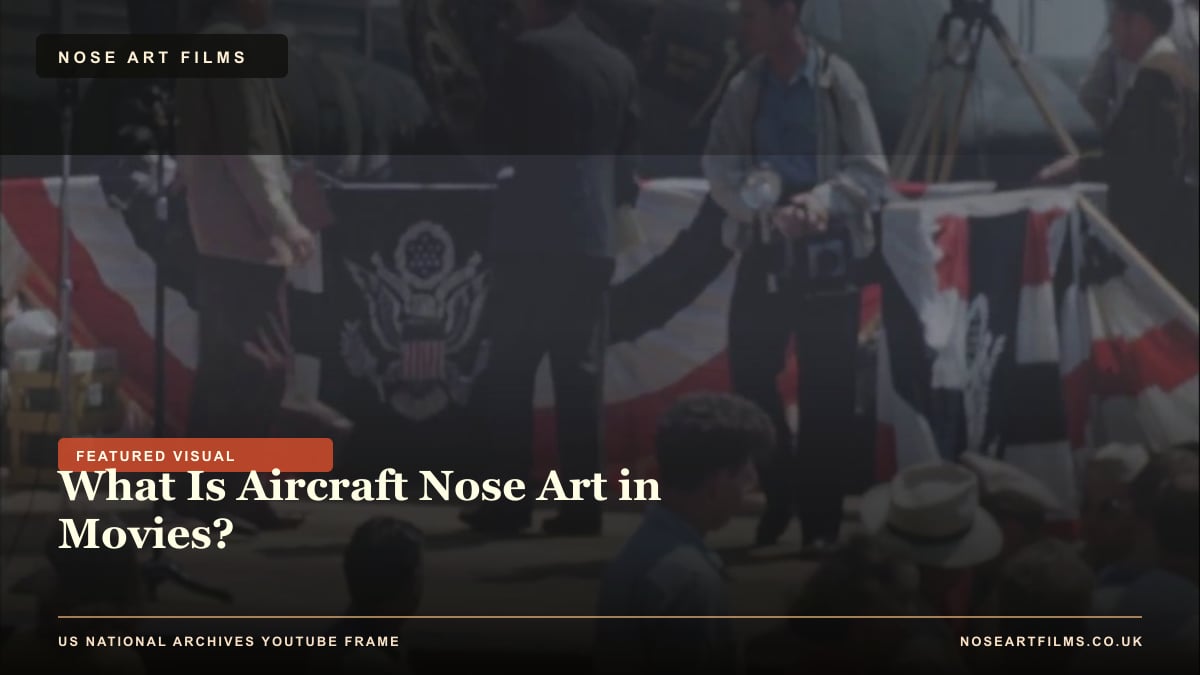
YouTube archival video frame prepared by Nose Art Films for What Is Aircraft Nose Art in Movies?. Source: Sources and Visual Credits.
Aircraft nose art in movies is the use of painted aircraft names, symbols, mascots, figures, mission markings and aircraft identifiers to make aircraft recognizable, emotional, and historically meaningful on screen.
Movies use aircraft nose art to connect aircraft with aircrews, missions, memory, combat danger, and aviation storytelling. In war movies, Hollywood productions, aviation documentaries, bomber movies, fighter-pilot movies, and air combat movies, aircraft nose art gives an aircraft a visible identity.
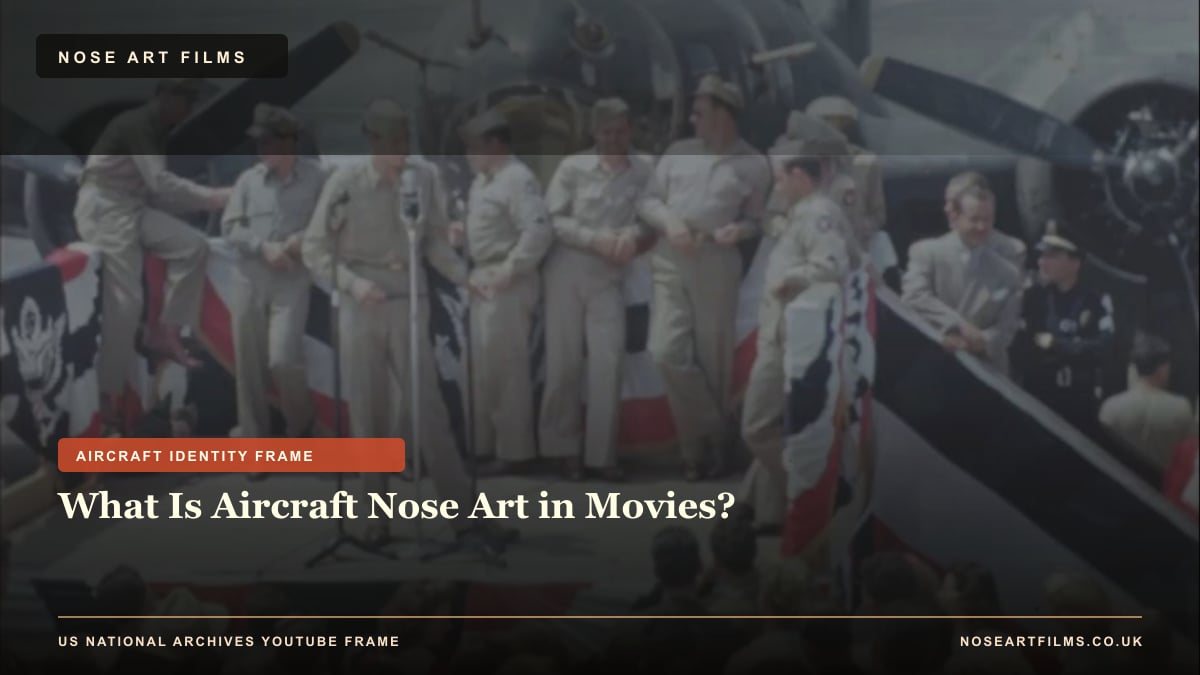
YouTube archival video frame prepared by Nose Art Films for What Is Aircraft Nose Art in Movies?, showing aircraft identity, markings, and film evidence for this blog article.
WWII aircraft nose art varied by crew, theater, and aircraft type. The National WWII Museum notes that participating air forces had different nose art styles, while American aircraft became especially associated with graphic aircraft nose art during the war. (Decoding WWII Plane Nose Art | The National WWII Museum)
Aircraft nose art in movies is judged through 5 main contexts:
Aircraft identity.
Aircrew meaning.
Historical accuracy.
Movie recreation.
Evidence-based verification.
A strong movie uses aircraft nose art for story, aircraft identity, and wartime atmosphere without presenting fictional or restored artwork as documented wartime evidence.
Why Do Movies Show Aircraft Nose Art?
Movies show aircraft nose art because it gives aircraft identity, recognition, memory and emotional meaning.
Aircraft nose art helps viewers identify a specific aircraft in hangar scenes, formation shots, air combat scenes, mission briefings, and return sequences. It also connects aircraft to aircrews and mission stakes.
What Does Aircraft Nose Art Mean in Movies?
Aircraft nose art in movies means aircraft identity, crew personality, mission memory, morale and wartime culture.
Aircraft nose art can represent:
A crew's identity.
A pilot's confidence.
A mission history.
A reminder of home.
A symbol of luck.
A visual personality for the aircraft.
This meaning is strongest when aircraft names, markings, crew stories, and scene context support one aircraft identity.
How Does Nose Art Create Aircraft Identity in Movies?
Nose art creates aircraft identity by giving a plane a visible name, face, symbol, or visual marker.
Movies show several similar aircraft together. Nose art helps separate one aircraft from another.
Movies use aircraft nose art to show:
Aircraft names.
Recurring aircraft.
Formation identity.
Visual recognition.
Aircraft continuity.
Aircraft-as-character storytelling.
A named aircraft is easier to follow than an anonymous aircraft identified only by model or serial number.
How Does Nose Art Represent Aircrews in Movies?
Nose art represents aircrews by connecting aircraft artwork to crew humor, crew memory, crew identity and shared combat experience.
The aircrew context includes:
Bomber crews.
Fighter pilots.
Ground crews.
Squadron artists.
Aircraft painters.
Mission crews.
Veterans' accounts.
Aircraft nose art works as a human marker. It connects metal, paint, names, and missions to the people around the aircraft.
How Does Aircraft Nose Art Represent Bomber Crews in Movies?
Aircraft nose art represents bomber crews through group identity. Bombers carried multi-person crews, so bomber nose art shows shared danger, crew bonding, and aircraft attachment.
Bomber nose art in movies represents:
Aircraft names.
Crew bonding.
Mission tallies.
Unit culture.
Shared risk.
Survival hope.
Aircraft-as-home imagery.
Original bomber nose art can also survive as physical evidence. The National Aviation Education Center describes its WWII nose art collection as panels cut from the forward noses of WWII bomber aircraft. (The Gallery - NAEC | Authentic World War II Aviation Nose Art)
How Does Aircraft Nose Art Represent Fighter Pilots in Movies?
Aircraft nose art represents fighter pilots through pilot identity, unit pride, victory claims and combat reputation.
Fighter aircraft markings differ from bomber nose art because fighters had less surface area and stronger pilot-centered identity.
Fighter aircraft markings may include:
Pilot names.
Squadron colors.
Unit insignia.
Kill markings.
Shark-mouth designs.
Small personal symbols.
Movies create stronger aircraft accuracy when fighter markings and bomber nose art are treated as different aircraft-marking systems.
How Does Nose Art Help Viewers Recognize Aircraft in Movies?
Nose art helps viewers recognize aircraft by creating a clear visual marker.
This function matters in:
Formation scenes.
Dogfight scenes.
Takeoff scenes.
Hangar scenes.
Mission briefings.
Return-from-mission scenes.
A viewer may forget a serial number, but a viewer can remember a painted aircraft name, mascot, or shark-mouth design.
How Does Aircraft Nose Art Create Emotional Connection in Movies?
Aircraft nose art creates emotional connection by making an aircraft feel personal and remembered.
When a named aircraft returns, disappears, crashes, or is repaired, the viewer understands the aircraft's story value faster.
Aircraft nose art can support:
Crew attachment.
Aircraft loss.
Mission danger.
Survival drama.
Repair scenes.
Audience empathy.
A movie aircraft with nose art becomes more than a background object.
Does Movie Nose Art Romanticize Air Combat?
Movie nose art can romanticize air combat when attractive artwork, heroic names, or humorous symbols hide fear, casualties, aircraft damage, and combat risk.
Movie nose art can also show real morale and crew identity. The strongest use of aircraft nose art balances visual appeal with wartime danger.
How Accurate Is Aircraft Nose Art in Movies?
Aircraft nose art in movies is accurate when it matches aircraft type, aircraft name, serial number, unit markings, placement, mission tally, paint condition, scene date and historical evidence.
A movie can look convincing and still be inaccurate when aircraft nose art belongs to the wrong aircraft or when official markings do not match the aircraft identity.
This table shows the main accuracy factors for aircraft nose art in movies.
Accuracy Factor
What It Checks
Common Movie Error
Aircraft type
Whether artwork fits the aircraft model
Bomber-style art on fighter aircraft
Aircraft name
Whether the name matches evidence
Fictional name presented as real
Serial number
Whether aircraft identity is correct
Correct art on wrong serial number
Squadron code
Whether unit identity is correct
Wrong unit marking
Tail code
Whether group or aircraft ID matches
Mismatched aircraft identity
Placement
Whether art appears on correct side or panel
Mirrored or misplaced art
Mission tally
Whether mission count fits timeline
Late-service tallies in early scenes
Paint condition
Whether wear matches aircraft use
Over-clean artwork
Scene date
Whether markings fit the time period
Future markings in earlier scenes
Do Movies Use Real Aircraft Nose Art?
Movies use real aircraft nose art when the artwork is documented by wartime photographs, aircraft records, museum files, or original panels.
Movies can use 5 aircraft nose art categories.
Type
Meaning
Real wartime nose art
Artwork documented on an actual wartime aircraft
Restored nose art
Repainted or reconstructed artwork after service
Recreated nose art
Modern copy based on historical evidence
Inspired nose art
New artwork based on wartime style
Fictional nose art
Invented artwork for a movie aircraft
Real aircraft nose art needs evidence. Smithsonian's Robert Serotkin collection contains 32 black-and-white photographs related to aircraft nose art Serotkin painted while serving with the US Army Air Forces during WWII. (Nose Art Photography Collection [Serotkin] | National Air and Space Museum)
Do Movies Recreate Aircraft Nose Art Correctly?
Movies recreate aircraft nose art correctly when the artwork matches the correct aircraft, aircraft side, panel position, unit, scene date, and surrounding aircraft markings.
Correct recreation requires:
Correct aircraft type.
Correct aircraft side.
Correct panel position.
Correct serial number.
Correct squadron code.
Correct tail code.
Correct mission tally.
Correct paint condition.
Wartime photograph or record support.
A correct-looking design becomes inaccurate when placed on the wrong aircraft.
What Makes Movie Aircraft Nose Art Accurate?
Movie aircraft nose art is accurate when it is tied to aircraft-specific evidence.
The strongest accuracy checklist contains 10 items:
Correct aircraft type.
Correct aircraft name.
Correct serial number.
Correct unit code.
Correct tail code.
Correct artwork placement.
Correct mission tally.
Correct paint condition.
Correct scene date.
Wartime photograph or record support.
The Memphis Belle shows this standard. The National Museum of the United States Air Force identifies the aircraft as a Boeing B-17F and explains that its famous nose art was based on a George Petty pin-up illustration, then touched up and repainted by Cpl. Tony Starcer at Bassingbourn, England. (The Memphis Belle and Nose Art)
What Makes Movie Aircraft Nose Art Inaccurate?
Movie aircraft nose art becomes inaccurate when it looks period-appropriate but does not match aircraft identity, placement, unit, timeline, or evidence.
Common causes include:
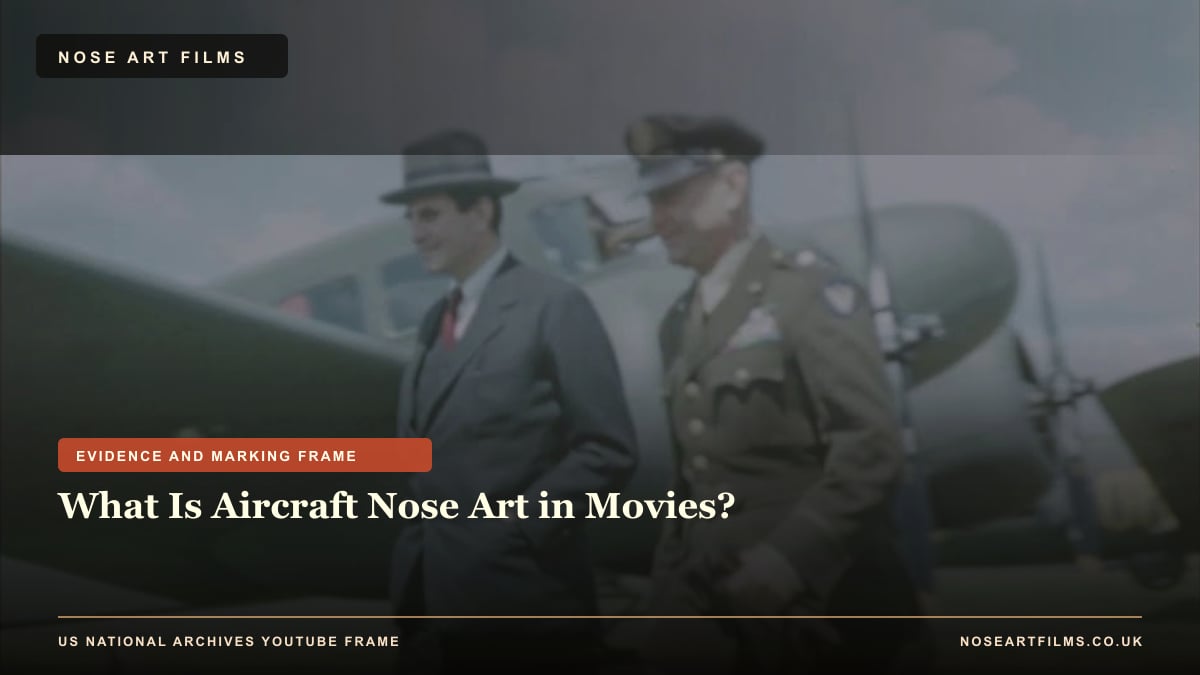
YouTube archival evidence frame prepared by Nose Art Films for What Is Aircraft Nose Art in Movies?, with source status, marking logic, and screen-accuracy cues.
Wrong aircraft type.
Wrong aircraft side.
Wrong artwork scale.
Wrong serial number.
Wrong squadron code.
Wrong tail code.
Wrong mission tally.
Modern lettering.
Over-clean paint.
Fictional art presented as real.
The main accuracy issue is aircraft identity, not artwork quality.
What Are the Most Common Aircraft Nose Art Errors in Movies?
The most common aircraft nose art errors in movies are wrong identity, wrong placement, wrong marking logic and over-clean presentation.
Common errors include:
Using real nose art on the wrong aircraft.
Placing artwork on the wrong side.
Applying bomber marking logic to fighters.
Treating fighter kill markings as bomber mission tallies.
Showing mission tallies that do not match scene date.
Reusing background aircraft with identical markings.
Treating restored aircraft as wartime aircraft.
Presenting fictional aircraft art as real evidence.
How Do Movies Confuse Nose Art with Official Aircraft Markings?
Movies confuse nose art with official aircraft markings when personal artwork and aircraft identification systems are treated as the same thing.
This table separates personal artwork from official aircraft identification.
Marking Type
Meaning
Nose art
Personal artwork or aircraft name
National insignia
Country identifier
Serial number
Aircraft identity
Squadron code
Unit identity
Tail code
Group or aircraft identifier
Mission tally
Bomber mission record
Kill marking
Fighter victory claim
Nose art gives aircraft personality. Official markings identify aircraft, country, unit, and combat record.
How Do Movies Misuse Serial Numbers, Squadron Codes, or Tail Codes?
Movies misuse serial numbers, squadron codes, or tail codes when those markings do not support the aircraft identity shown by the nose art.
A movie aircraft becomes inaccurate when:
The serial number belongs to another aircraft.
The squadron code belongs to another unit.
The tail marking does not fit the group.
The mission tally does not fit the scene date.
The aircraft type does not match the real aircraft.
Aircraft markings must work as one identity system.
How Does Scene Date Affect Aircraft Nose Art Accuracy in Movies?
Scene date affects aircraft nose art accuracy because aircraft markings changed during service.
Scene date controls:
Mission tally count.
Damage state.
Repainting.
Unit markings.
Kill markings.
Aircraft service history.
A scene set early in an aircraft's career becomes inaccurate when it shows late-service markings without story context.
How Does Aircraft Identity Affect Nose Art Accuracy in Movies?
Aircraft identity affects nose art accuracy because the aircraft name, artwork, serial number, unit code, tail code, mission tally, and scene date must support the same aircraft.
A movie can use accurate artwork and still create inaccurate aircraft identity when the surrounding markings contradict the nose art.
How Does Real Aircraft Nose Art Compare with Movie Aircraft Nose Art?
Real aircraft nose art was usually aircraft-specific, hand-painted, weathered, uneven and tied to service history. Movie aircraft nose art is often cleaner, larger, brighter, more readable and more symbolic.
This table compares real aircraft nose art with movie aircraft nose art.
Comparison Point
Real Aircraft Nose Art
Movie Aircraft Nose Art
Purpose
Crew identity and aircraft personalization
Storytelling and recognition
Evidence
Wartime photos and aircraft records
Production design and screen needs
Paint condition
Weathered and uneven
Cleaner and more readable
Scale
Aircraft-specific
Sometimes enlarged
Identity
Connected to a real aircraft
Real, inspired, or fictional
Markings
Unit and timeline dependent
Sometimes simplified
How Does Real WWII Nose Art Compare with Movie Nose Art?
Real WWII nose art was connected to actual aircraft, crews, missions, theaters, and unit cultures. Movie nose art is shaped by camera visibility, production design, ratings, legal clearance, and narrative clarity.
Real WWII nose art asks: Which aircraft carried this design? Movie nose art asks: Which aircraft does the audience need to notice?
How Does Real Bomber Nose Art Compare with Movie Bomber Nose Art?
Real bomber nose art was crew-linked, mission-linked, and aircraft-specific. Movie bomber nose art is clearer, larger, cleaner, and more emotionally emphasized.
How Does Real Fighter Nose Art Compare with Movie Fighter Markings?
Real fighter nose art was smaller and more connected to pilot identity, squadron markings, kill markings, unit colors, and aircraft role.
Movie fighter markings become inaccurate when bomber expectations are applied to fighters.
Fighter aircraft use:
Pilot names.
Unit colors.
Squadron insignia.
Kill markings.
Shark-mouth designs.
Small personal symbols.
Fighter markings and bomber nose art need separate judgment.
Why Does Movie Aircraft Nose Art Look Different from Real Nose Art?
Movie aircraft nose art looks different because movies prioritize screen visibility, camera distance, lighting, restored aircraft condition, CGI texture clarity, and narrative recognition.
Differences come from:
Camera distance.
Lighting.
CGI texture work.
Restored aircraft paint.
Production design.
Ratings limits.
Legal clearance.
Storytelling needs.
Movie art adapts real aircraft art for screen recognition.
Why Does Movie Aircraft Nose Art Look Cleaner or Larger Than Real Nose Art?
Movie aircraft nose art looks cleaner or larger because artwork must be visible in fast-moving scenes.
Real wartime nose art could be:
Faded.
Chipped.
Stained.
Patched.
Partly obscured.
Unevenly painted.
Movie nose art may be brightened, enlarged, repainted, or simplified for readability.
What Is the Difference Between Original, Restored, Recreated, Inspired, and Fictional Nose Art in Movies?
The difference is the relationship between aircraft nose art and historical evidence.
Category
Meaning
Movie Accuracy Risk
Original nose art
Wartime artwork or surviving panel
Rare or incomplete evidence
Restored nose art
Postwar repair or repaint
Mistaken for original wartime paint
Recreated nose art
Modern copy based on evidence
Details may be interpreted
Inspired nose art
New artwork based on wartime style
May look real without documentation
Fictional nose art
Invented artwork for a movie
May be mistaken for documented art
Movies need clear source labeling when aircraft nose art is restored, recreated, inspired, or fictional.
Can Fictional Movie Nose Art Still Be Historically Plausible?
Fictional movie nose art can be historically plausible when it matches aircraft type, period, theater, unit culture, placement, lettering style, and weathering.
Plausible means historically possible. Plausible does not mean documented.