A historian-friendly overview of why aircraft nose art mattered to crews and why modern archives should interpret it carefully.
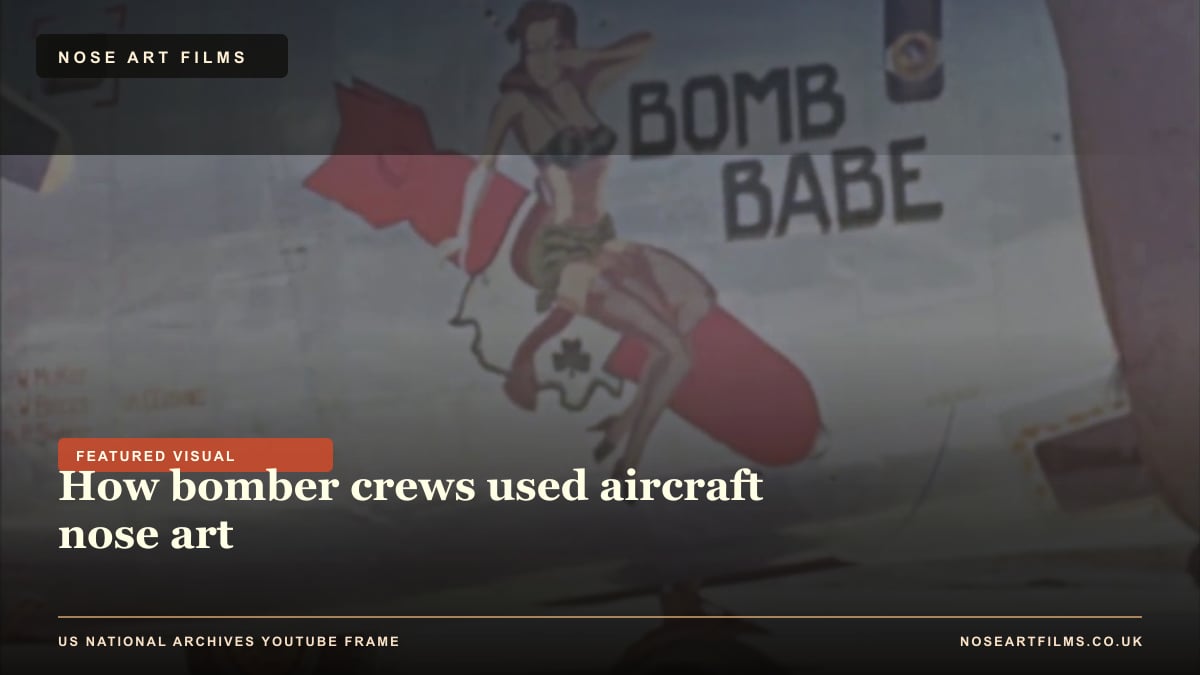
YouTube archival video frame prepared and branded by Nose Art Films for How bomber crews used aircraft nose art. Source: Sources and Visual Credits.
Identity on a standardized machine
The heavy bomber was designed for standardization: repeated parts, repeated procedures, repeated training, and repeated missions. Nose art worked against that sameness. It allowed a crew to recognize an aircraft as theirs and gave ground crews, pilots, bombardiers, navigators, and radio operators a shared visual reference in an environment where replacement and loss were constant possibilities.
That identity could be playful, sentimental, defiant, or borrowed from popular culture. The important point for an archive is not that every marking tells a tidy story. It is that the marking shows a crew making room for personality inside a system built for wartime efficiency.
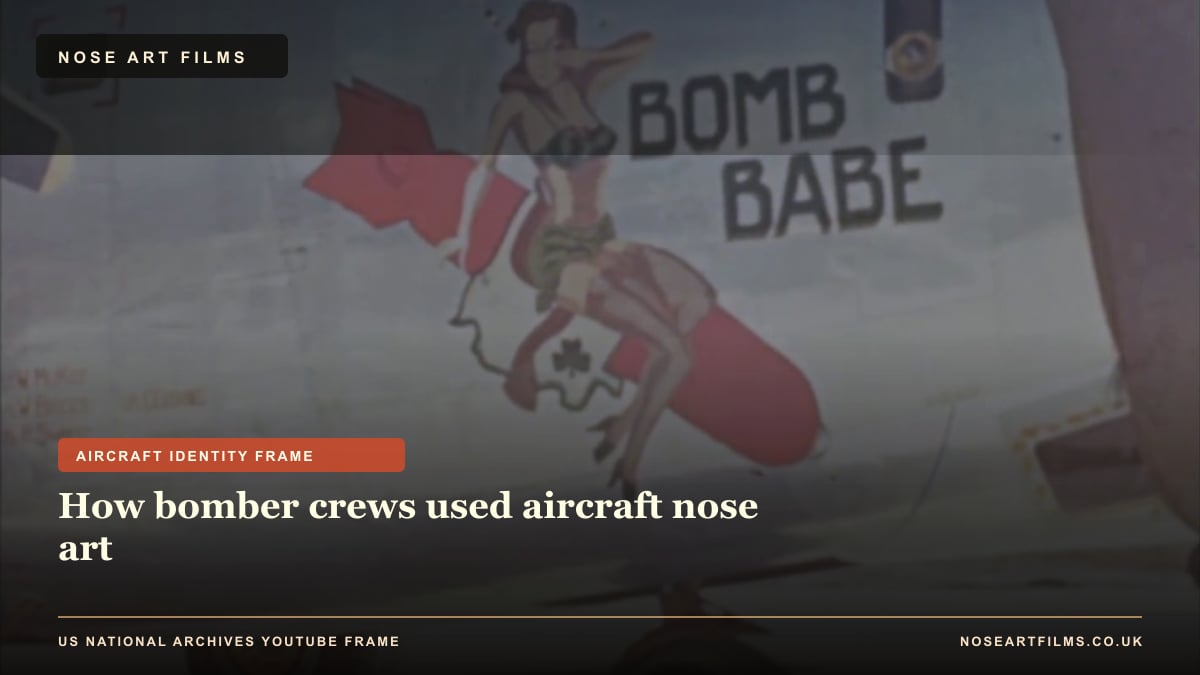
YouTube archival video frame prepared by Nose Art Films for How bomber crews used aircraft nose art, showing aircraft identity, markings, and film evidence for this blog article.
Morale without simplification
Many images from the period used pin-up conventions, slogans, mascots, jokes, or local references. A responsible educational site should neither sanitize that material nor reproduce it as empty spectacle. The stronger interpretation asks what pressures shaped the art, how gender and popular media influenced the imagery, and how crews used humor to manage fear.
That is why this archive presents nose art as a sociological subject. It belongs beside oral history, unit records, restoration notes, and image provenance. Visitors should be able to understand what they are seeing, where the image came from, and what claims the site can support.
Restoration-era images need labels
Many accessible photographs of B-17 nose art were made decades after World War II at air shows, museums, or commemorative flights. Those images are useful, but they are not the same as wartime documentation. A restoration can preserve a tradition while also reflecting later display choices, repainting standards, or public-memory practices.
For that reason, each image on Nose Art Films is linked back to a source page and described in careful language. When a photograph documents a modern restoration, the site says so. When a wartime claim cannot be verified from the available source, the site avoids presenting it as fact.
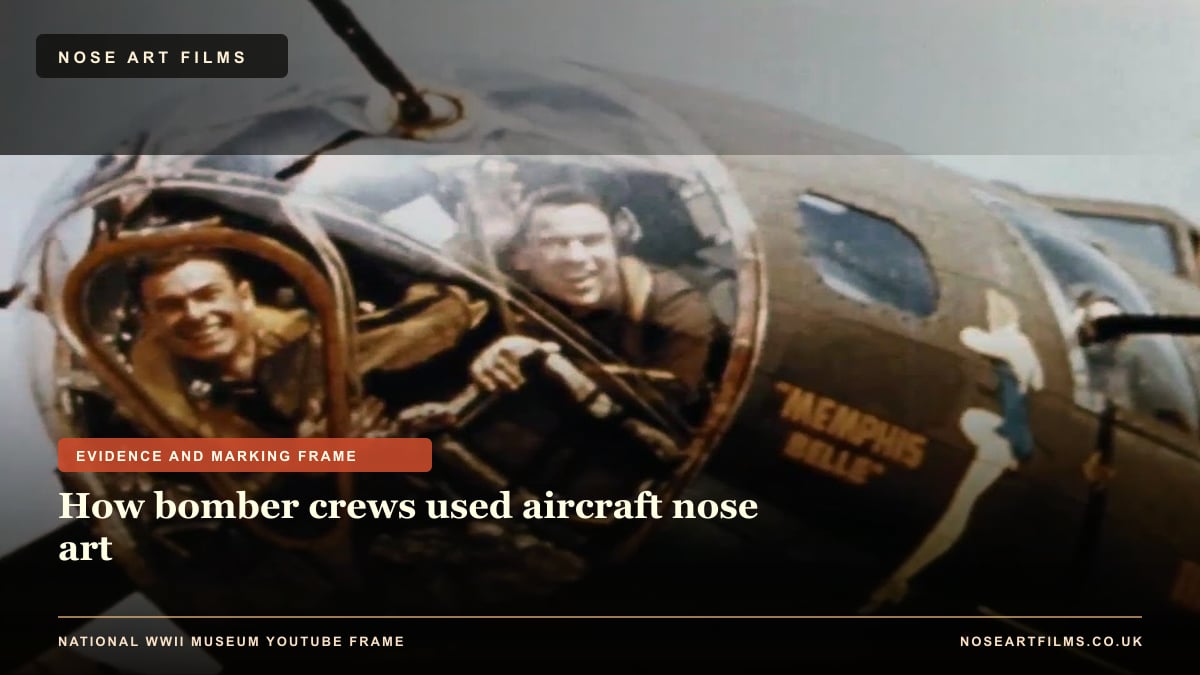
YouTube archival evidence frame prepared by Nose Art Films for How bomber crews used aircraft nose art, with source status, marking logic, and screen-accuracy cues.