How Does Bomber Type Affect Nose Art Accuracy in Movies?
Bomber type affects nose art accuracy because each bomber has different shape, role, surface area, air force, theater, unit culture and marking rules.
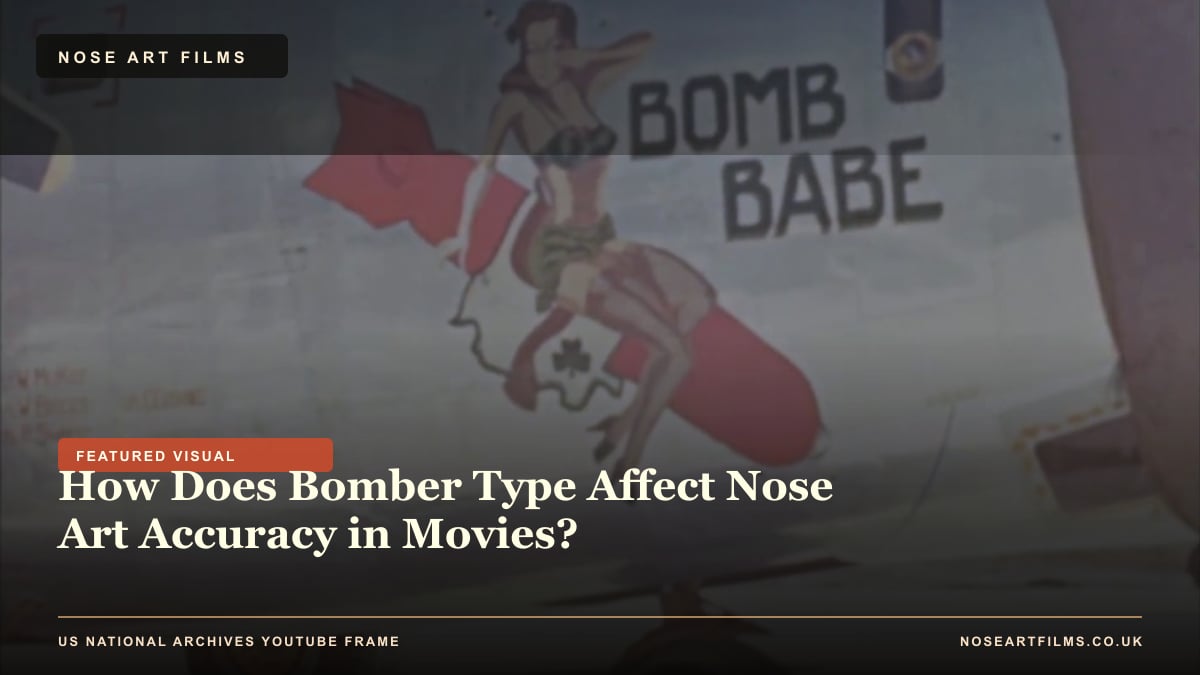
YouTube archival video frame prepared by Nose Art Films for How Does Bomber Type Affect Nose Art Accuracy in Movies?. Source: Sources and Visual Credits.
Bomber type affects nose art accuracy because each bomber has different shape, role, surface area, air force, theater, unit culture and marking rules.
A B-17, B-24, B-25, B-29, Lancaster, Halifax, Mosquito, and German bomber cannot use one shared nose art logic.
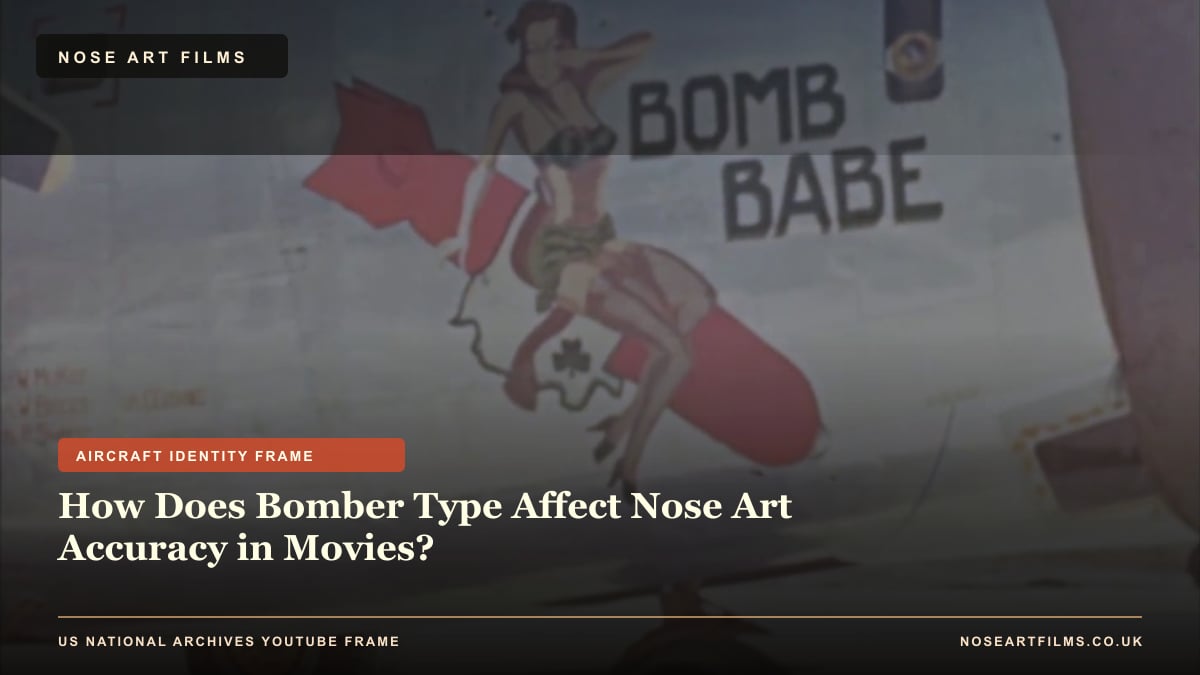
YouTube archival video frame prepared by Nose Art Films for How Does Bomber Type Affect Nose Art Accuracy in Movies?, showing aircraft identity, markings, and film evidence for this blog article.
How Is B-17 Nose Art Shown in Movies?
B-17 nose art is shown in movies through Flying Fortress identity, bomber crews, Eighth Air Force context, mission tallies, aircraft names, and Memphis Belle-style recognition.
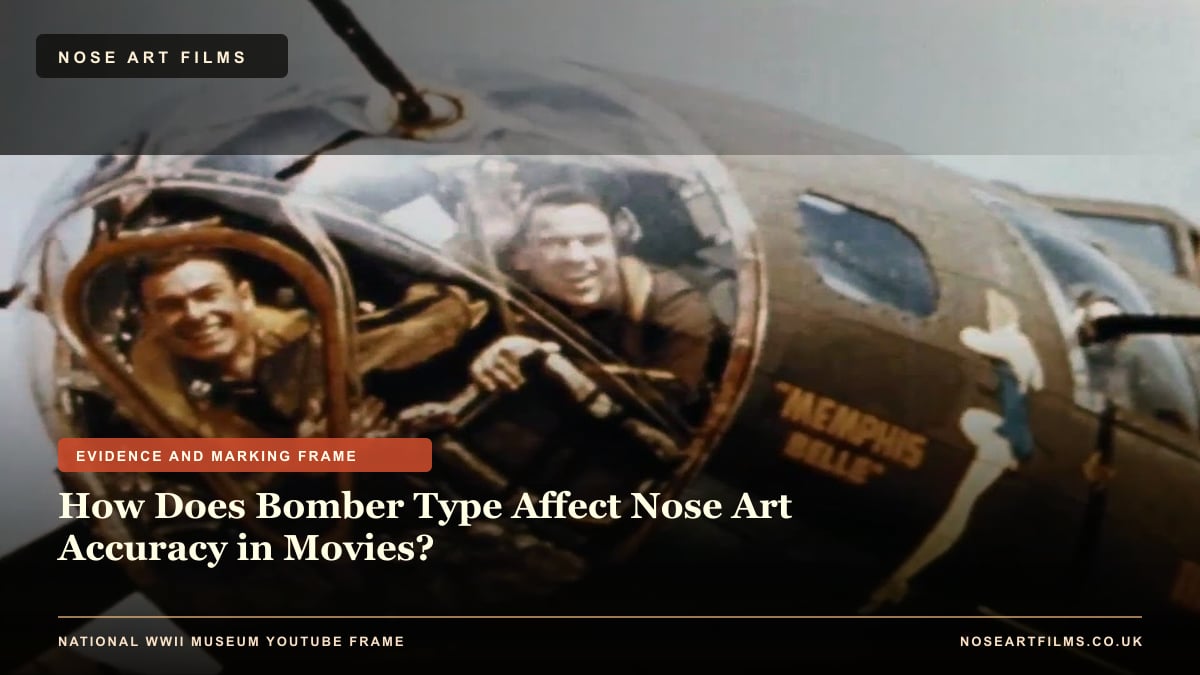
The National Museum of the U.S. Air Force documents the Memphis Belle as a Boeing B-17F and treats its nose art as part of the aircraft's public history. (The Memphis Belle and Nose Art)
How Is B-24 Nose Art Shown in Movies?
B-24 nose art is shown in movies through Liberator identity, heavy bomber missions, fuselage shape, and marking placement.
The National WWII Museum's B-24D Liberator fuselage is painted with the markings and nose art of Over Exposed, which shows B-24 nose art as aircraft-specific marking evidence. (Consolidated B-24 Liberator | The National WWII Museum)
How Is B-25 Nose Art Shown in Movies?
B-25 nose art is shown in movies through medium bomber context, Mediterranean or Pacific settings, lower-altitude operations, and aircraft scale.
B-29 nose art is shown in movies through late-war Pacific context, long-range bombing, aircraft names, and different marking logic from European bomber films.
B-29 markings become weaker when copied directly from B-17 or B-24 visual patterns.
How Are Lancaster Bomber Markings Shown in Movies?
Lancaster bomber markings are shown in movies through RAF Bomber Command context, squadron codes, aircraft letters, mission symbols, and British marking conventions.
Lancaster scenes become inaccurate when American bomber nose art expectations replace RAF marking logic.
How Are Halifax Bomber Markings Shown in Movies?
Halifax bomber markings are shown in movies through RAF squadron codes, national insignia, aircraft letters, and bomber-command mission context.
Halifax depictions need RAF marking logic before American-style nose art expectations.
How Are Mosquito Bomber Markings Shown in Movies?
Mosquito bomber markings are shown in movies through RAF aircraft role, reconnaissance or bomber context, squadron codes, and restrained marking culture.
Mosquito depictions need aircraft-role accuracy before nose art emphasis.
How Are German Bomber Markings Shown in Movies?
German bomber markings are shown in movies through Luftwaffe insignia, unit codes, theater context, and aircraft role.
German bomber depictions become inaccurate when USAAF-style bomber nose art is applied to Luftwaffe aircraft.
How Is WWII Heavy Bomber Nose Art Shown in Movies?
WWII heavy bomber nose art is shown in movies as larger, crew-centered, aircraft-name-based, and mission-linked.
Heavy bomber movies use nose art to show crew memory, mission repetition, formation danger, and aircraft survival.
How Is WWII Medium Bomber Nose Art Shown in Movies?
WWII medium bomber nose art is shown in movies as smaller, theater-specific, role-specific, and aircraft-placement dependent.
Medium bomber depictions work best when the artwork fits the aircraft size, mission type, and operating theater.
How Should Heavy Bomber Nose Art Differ from Medium Bomber Nose Art in Movies?
Heavy bomber nose art differs from medium bomber nose art by aircraft scale, mission type, surface area, formation use, and theater context.
Bomber Type
Nose Art Pattern
Main Accuracy Risk
Heavy bomber
Large artwork, aircraft name, mission tally
Wrong mission count
Medium bomber
Smaller artwork, theater-specific marking
Heavy-bomber style copied incorrectly
RAF bomber
Squadron codes and aircraft letters
USAAF-style art applied incorrectly
German bomber
Luftwaffe marking system
American nose art logic applied incorrectly
How Should American Bomber Nose Art Differ from RAF Bomber Markings in Movies?
American bomber nose art differs from RAF bomber markings because USAAF bombers used more visible personal artwork, while RAF bomber depictions rely on squadron codes, aircraft letters, roundels, and mission symbols.
How Do Bomber Shape and Surface Area Affect Nose Art Placement?
Bomber shape and surface area affect nose art placement because artwork must fit the nose section, forward fuselage, cockpit layout, window locations, gun positions, and panel lines.
Correct placement matters as much as the artwork itself.
How Does Bomber Role Affect Nose Art Style in Movies?
Bomber role affects nose art style because heavy bombers, medium bombers, night bombers, maritime bombers, and reconnaissance bombers used different marking contexts.
A strategic bomber, a medium attack bomber, and an RAF night bomber should not use one shared visual system.
What Bomber Nose Art Styles Appear in Movies?
Movies show pin-up bomber nose art, cartoon bomber nose art, mascot bomber nose art, patriotic symbols, aggressive symbols, bomber lettering, hand-painted art, mission tally marks, bomb symbols, crew names, weathering, and battle damage.
How Is Pin-Up Bomber Nose Art Shown in Movies?
Pin-up bomber nose art is shown in movies as one of the most recognizable WWII aircraft art styles.
The Memphis Belle shows evidence-based pin-up context because the National Museum of the United States Air Force connects the famous nose art to a George Petty pin-up illustration. (The Memphis Belle and Nose Art)
How Is Cartoon Bomber Nose Art Shown in Movies?
Cartoon bomber nose art is shown in movies through humor, popular culture, mascots, and crew personality.
Cartoon-style bomber art needs period style, aircraft context, and placement accuracy.
How Is Mascot Bomber Nose Art Shown in Movies?
Mascot bomber nose art is shown in movies as a symbol of luck, crew identity, unit humor, or aircraft personality.
Movie bomber mascots may include animals, devils, birds, dogs, skulls, lucky figures, and fictional characters.
YouTube archival evidence frame prepared by Nose Art Films for How Does Bomber Type Affect Nose Art Accuracy in Movies?, with source status, marking logic, and screen-accuracy cues.
How Are Patriotic Bomber Symbols Shown in Movies?
Patriotic bomber symbols are shown in movies through flags, eagles, national colors, victory signs, and wartime slogans.
Patriotic bomber art supports wartime tone when it matches the aircraft's air force and theater.
How Are Aggressive Bomber Symbols Used in Movies?
Aggressive bomber symbols are used in movies to show danger, combat identity, and crew confidence.
Common symbols include skulls, devils, bombs, weapons, predators, victory marks, and threat-based imagery.
How Is Bomber Aircraft Lettering Shown in Movies?
Bomber aircraft lettering is shown in movies through names, slogans, serials, and painted identifiers.
Good bomber lettering looks period-specific, slightly irregular, and aircraft-appropriate.
How Is Hand-Painted Bomber Nose Art Shown in Movies?
Hand-painted bomber nose art is shown in movies through uneven edges, visible brushwork, field-painted texture, and worn surfaces.
Digital-looking lettering can weaken the wartime effect.
How Are Mission Tally Marks Shown on Bombers in Movies?
Mission tally marks are shown on bombers in movies as mission-history indicators.
Mission tally marks need to match the bomber's service record and the scene date.
How Are Bomb Symbols Shown on Bombers in Movies?
Bomb symbols are shown on bombers in movies as visual records of bombing missions or mission participation.
Bomb-symbol counts become inaccurate when the count does not fit the aircraft timeline.
How Are Crew Names Shown on Bombers in Movies?
Crew names are shown on bombers in movies through aircraft names, painted crew associations, and dialogue around the aircraft.
Crew-name use becomes stronger when it connects the bomber to mission crews and ground crews.
How Is Weathered Bomber Nose Art and Battle Damage Shown in Movies?
Weathered bomber nose art and battle damage are shown through chipped paint, flak marks, scratches, exhaust stains, oil marks, patched panels, and dirt.
Damage needs story continuity.
How Is Bomber Nose Art Shown in Specific Movies and Series?
Bomber nose art in specific movies and series is judged by bomber type, real or fictional identity, nose art style, marking accuracy, production method, evidence source, and main accuracy risk.
How Is Bomber Nose Art Shown inMemphis Belle?
Bomber nose art in Memphis Belle is shown through a real B-17 identity, a named aircraft, bomber crew memory, and mission history.
The key checks are:
B-17F identity.
Aircraft name.
Nose art placement.
Mission markings.
Wartime photographs.
Museum evidence.
Crew story.
The real Memphis Belle is documented by the National Museum of the United States Air Force as a Boeing B-17F. (The Memphis Belle and Nose Art)
How Accurate IsMemphis BelleBomber Nose Art?
Memphis Belle bomber nose art accuracy depends on how closely the movie version matches wartime photographs, aircraft records, restoration evidence, mission markings, and aircraft identity.
The aircraft has a stricter accuracy standard because the aircraft identity is documented.
How Is Bomber Nose Art Shown inMasters of the Air?
Bomber nose art in Masters of the Air is best analyzed through B-17 aircraft, 100th Bomb Group context, bomber identity, unit codes, serial numbers, and formation scenes.
The main accuracy issue is bomber identity consistency across practical and digital shots.
How Accurate AreMasters of the AirBomber Markings?
Masters of the Air bomber markings are evaluated through serial numbers, unit codes, mission tallies, asset tracking, and scene date.
Large formation scenes require strict marking control to avoid duplicated bomber identities.
How Is Bomber Nose Art Shown inCatch-22?
Bomber nose art in Catch-22 is best analyzed through fictional bomber identity and satirical war context.
The bomber nose art is judged by historical plausibility and aircraft-type consistency.
How Accurate IsCatch-22Bomber Nose Art?
Catch-22 bomber nose art is accurate when it fits aircraft type, theater, period style, and bomber culture.
The depiction becomes weak when markings ignore aircraft structure, unit logic, or wartime visual style.
How Are Bomber Markings Shown inTwelve O'Clock High?
Bomber markings in Twelve O'Clock High are best analyzed through B-17 bomber culture, older production methods, black-and-white visual language, and available aircraft.
The aircraft details need production-era context.
How Is Bomber Nose Art Shown inThe War Lover?
Bomber nose art in The War Lover is best analyzed through B-17 aircraft, bomber markings, aircraft identity, and film-era constraints.
The main question is whether bomber markings support consistent aircraft identity.
How Is Bomber Nose Art Shown inCommand Decision?
Bomber nose art in Command Decision is best analyzed through bomber aircraft representation, wartime production context, aircraft identity, and marking accuracy.
The bomber markings need to support bomber unit context.
How Are Bomber Markings Shown inThe Dam Busters?
Bomber markings in The Dam Busters are best analyzed through RAF bomber context.
American-style bomber nose art expectations do not fit every RAF bomber-marking context because RAF aircraft used different identification systems and visual conventions.
How Are Bomber Markings Shown inTarget for Tonight?
Bomber markings in Target for Tonight are best analyzed through RAF operational film context, documentary-style presentation, bomber identification, and wartime marking accuracy.
The marking logic comes from RAF operational context, not USAAF-style nose art culture.
How Is Bomber Nose Art Shown inPearl Harbor?
Bomber nose art in Pearl Harbor is best analyzed through Hollywood spectacle, aircraft types, markings, and historical accuracy risks.
The focus is whether aircraft art supports the correct time period and bomber identity.
How Are Bomber Markings Shown inMidway?
Bomber markings in Midway are best analyzed through naval aviation markings, aircraft type, CGI markings, unit context, and historical plausibility.
Aircraft markings need to support correct aircraft identity and scene date.
Which Movies Show the Best Bomber Nose Art?
The best movies with bomber nose art use documented aircraft, correct bomber type, proper unit markings, wartime references, visual continuity, and realistic weathering.
A fair judgment uses evidence, not personal taste.
Which Movies Show Inaccurate Bomber Nose Art?
Movies show inaccurate bomber nose art when they use wrong bomber types, wrong placement, wrong serial numbers, incorrect unit markings, generic backgrounds, or fictional art presented as real.
Inaccuracy is determined by bomber identity and evidence.
Which Movies Use Fictional Bomber Nose Art?
Movies use fictional bomber nose art when they create fictional bombers, fictional crews, or composite wartime stories.
Fictional bomber art can remain plausible when it fits period and aircraft context.
Which Movies Rely Heavily on CGI Bomber Markings?
Movies rely heavily on CGI bomber markings when large aerial formations, complex air combat, or unavailable aircraft require digital bombers.
CGI-heavy bomber scenes need strict tracking of aircraft names, serial numbers, unit codes, mission tallies, bomb symbols, and damage states.