How Do WWII Aircraft Markings Work with Nose Art in Movies?
WWII aircraft markings work with nose art by supporting one aircraft identity.
YouTube archival video frame prepared by Nose Art Films for How Do WWII Aircraft Markings Work with Nose Art in Movies?. Source: Sources and Visual Credits.
WWII aircraft markings work with nose art by supporting one aircraft identity.
A movie aircraft becomes stronger when aircraft name, nose art, serial number, squadron code, tail code, national insignia, mission tally, and scene date work together.
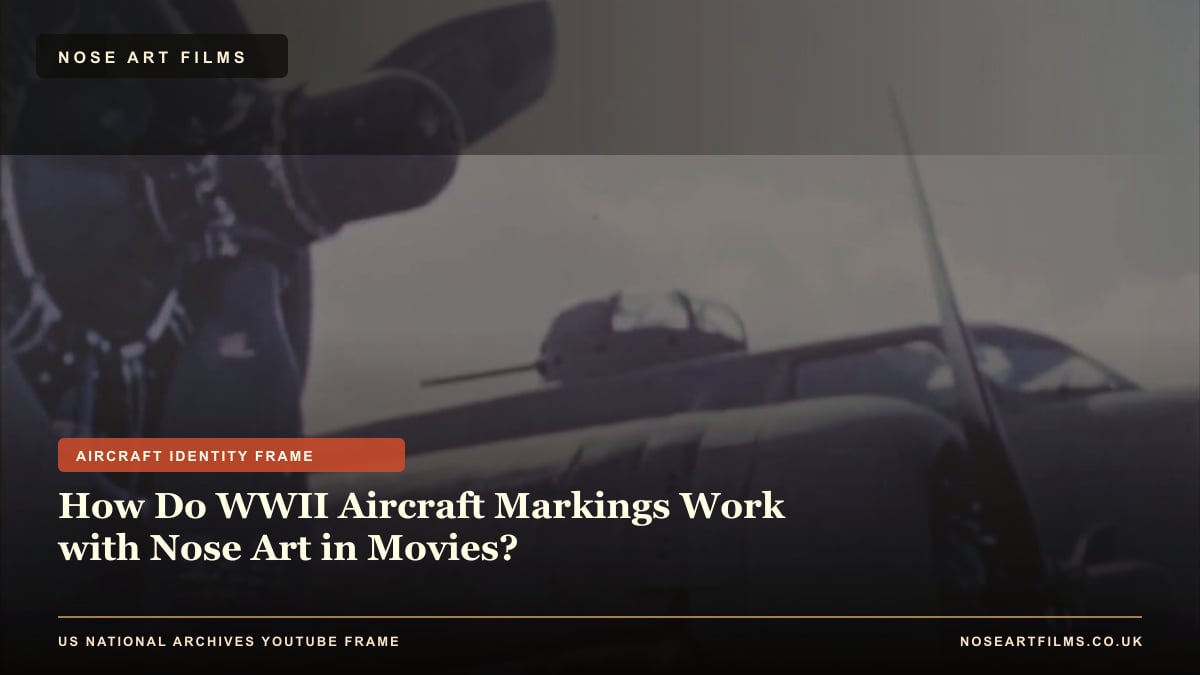
YouTube archival video frame prepared by Nose Art Films for How Do WWII Aircraft Markings Work with Nose Art in Movies?, showing aircraft identity, markings, and film evidence for this blog article.
What WWII Aircraft Markings Appear in Movies?
WWII aircraft markings in movies include nose art, national insignia, aircraft names, serial numbers, squadron codes, tail codes, mission tally marks, bomb symbols, kill markings, and unit markings.
Each marking has a different identification role.
How Are Aircraft Serial Numbers Shown in WWII Movies?
Aircraft serial numbers are shown in WWII movies as aircraft identity markers.
A real-aircraft movie needs the serial number to match the aircraft name, unit, and historical record.
How Are Squadron Codes Shown in WWII Movies?
Squadron codes are shown in WWII movies as unit identifiers.
Squadron codes need to match the aircraft's squadron, group, theater, and period.
How Are Tail Codes Shown in WWII Movies?
Tail codes are shown in WWII movies as group, unit, or aircraft identifiers depending on aircraft type and air force.
Tail codes need to support the same identity as nose art and serial number.
How Are Mission Tally Marks Shown in WWII Bomber Movies?
Mission tally marks are shown in WWII bomber movies as bomber timeline markers.
Mission tally marks need to match aircraft mission history and scene date.
How Are Kill Markings Shown in WWII Fighter Movies?
Kill markings are shown in WWII fighter movies as fighter combat-claim symbols.
Kill markings need pilot, aircraft, squadron, and timeline context.
How Do Aircraft Names and Markings Work Together in WWII Movies?
Aircraft names and markings work together when they support the same aircraft identity.
A consistent aircraft identity includes:
Aircraft name.
Nose art.
Serial number.
Squadron code.
Tail code.
National insignia.
Mission markings.
Scene date.
Where Should WWII Nose Art Be Placed on Aircraft in Movies?
WWII nose art placement depends on aircraft structure.
Placement depends on:
Nose section.
Forward fuselage.
Cowling.
Cockpit position.
Window location.
Gun positions.
Panel lines.
Aircraft side.
Correct placement matters as much as the artwork itself.
How Do National Insignia and WWII Nose Art Work Together in Movies?
National insignia identifies nationality. WWII nose art identifies personal or crew-linked aircraft identity.
Both can appear on the same aircraft, but both do not mean the same thing.
How Do Aircraft Markings Identify Planes in WWII Movies?
Aircraft markings identify planes in WWII movies through official codes and personal artwork.
The strongest movie aircraft identity uses official markings for historical identification and nose art for personal visual identity.
How Do Mission Tally Marks Affect WWII Nose Art Accuracy?
Mission tally marks affect WWII nose art accuracy because mission tallies record aircraft combat history.
A scene becomes inaccurate when the mission tally shows more missions than the aircraft had completed by that scene date.
How Do Serial Numbers Prove Whether WWII Movie Nose Art Belongs to the Right Aircraft?
Serial numbers prove whether WWII movie nose art belongs to the right aircraft by anchoring the artwork to a specific aircraft identity.
Serial numbers need cross-checking with aircraft records, wartime photographs, and museum documentation.
How Do Documentaries and Evidence Sources Verify WWII Nose Art?
Documentaries and evidence sources verify WWII nose art through wartime photographs, museum records, restored aircraft, original panels, veterans' accounts, oral histories and expert interpretation.
Evidence sources matter because movies can mix real, restored, recreated, inspired, and fictional aircraft art.
How Is WWII Nose Art Shown in Aviation Documentaries?
WWII nose art is shown in aviation documentaries through wartime photographs, museum records, restored aircraft, original panels, veterans' accounts, and historian explanation.
Documentaries need stronger source labeling than fictional movies.
Do Documentaries Show Real WWII Aircraft Nose Art?
Documentaries show real WWII aircraft nose art when they use wartime photographs, original panels, and museum-held aircraft records.
Documentaries need to state whether the viewer is seeing original, restored, recreated, or interpretive aircraft art.
How Do Aviation Documentaries Verify WWII Nose Art?
Aviation documentaries verify WWII nose art through serial numbers, museum files, squadron histories, mission logs, wartime photographs, restoration records, and curator explanation.
Verification connects the artwork to aircraft identity.
How Are Wartime Photos Used in WWII Aircraft Documentaries?
Wartime photos are used in WWII aircraft documentaries to show design, placement, scale, aircraft side, paint condition, and nearby markings.
Wartime photos are the strongest visual evidence for how nose art looked during service.
How Do Museum Records Support WWII Aircraft Nose Art Documentaries?
Museum records support WWII aircraft nose art documentaries through provenance, object descriptions, restoration notes, aircraft files, curatorial interpretation, and artifact collections.
Museum records clarify whether displayed art is original, restored, or recreated.
How Is Restored WWII Aircraft Nose Art Shown in Documentaries?
Restored WWII aircraft nose art is shown in documentaries as postwar repair, repainting, reconstruction, or museum interpretation.
Restored art is not the same as original wartime paint unless evidence proves continuity.
How Are Original WWII Nose Art Panels Shown in Documentaries?
Original WWII nose art panels are shown in documentaries as strong artifact evidence when provenance is clear.
Original panels can reveal paint surface, scale, aging, and aircraft material.
How Do Veterans Discuss WWII Nose Art?
Veterans discuss WWII nose art through memory, aircraft names, crew identity, mission experience, humor, fear, and survival.
Veteran accounts explain meaning. Photographs and records verify visual details.
How Do Aviation Museum Films Explain WWII Nose Art?
Aviation museum films explain WWII nose art through curatorial labels, artifact provenance, aircraft restoration files, and historical aircraft interpretation.
Museum interpretation becomes stronger when it separates original art from restoration paint.
How Do Documentaries Distinguish Original, Restored, Recreated, and Fictional WWII Nose Art?
Documentaries distinguish original, restored, recreated, and fictional WWII nose art by clearly labeling source type.
Documentaries need to state whether the viewer sees:
Wartime photograph.
Original panel.
Restored aircraft.
Recreated artwork.
Fictional illustration.
Digital reconstruction.
Museum interpretation.
How Do Documentaries Avoid Confusing Restored Artwork with Wartime Artwork?
Documentaries avoid confusing restored artwork with wartime artwork by labeling restoration status, citing original evidence, comparing with wartime photos, and explaining museum repainting.
This distinction prevents restored art from being treated as original wartime evidence.
How Can WWII Nose Art in Movies Be Verified?
WWII nose art in movies can be verified through wartime photographs, aircraft serial numbers, museum records, squadron histories, mission logs, restoration files, aircraft marking databases and historian analysis.
This table shows the evidence sources used to verify WWII nose art in movies.
Evidence Source
What It Verifies
Wartime photograph
Design, placement, scale, side, paint condition
Serial number
YouTube archival evidence frame prepared by Nose Art Films for How Do WWII Aircraft Markings Work with Nose Art in Movies?, with source status, marking logic, and screen-accuracy cues.
Aircraft identity
Squadron history
Unit and crew context
Mission log
Timeline and mission tally
Museum record
Provenance and restoration status
Original panel
Physical artifact evidence
Restoration file
Repaint or recreation decisions
Historian analysis
Context and cross-checking
How Can Viewers Check if Movie WWII Nose Art Is Real?
Viewers can check if movie WWII nose art is real by comparing the movie aircraft with historical sources.
Use this 8-step checklist:
Check aircraft type.
Check aircraft name.
Check serial number.
Check unit code.
Check tail code.
Compare wartime photos.
Compare museum records.
Check mission timeline.
Where Can Real WWII Aircraft Nose Art Photos Be Found?
Real WWII aircraft nose art photos can be found in museums, archives, aircraft photo collections, squadron histories, bomber group records, fighter group records, restoration files, and veteran collections.
How Do Wartime Photos Verify WWII Aircraft Nose Art?
Wartime photos verify WWII aircraft nose art by showing artwork, placement, aircraft side, scale, paint wear, and surrounding markings.
A wartime photo can prove how a design looked during service.
How Do Aircraft Serial Numbers Verify WWII Movie Nose Art?
Aircraft serial numbers verify WWII movie nose art by confirming aircraft identity.
A serial number becomes useful when it connects to:
Aircraft name.
Wartime photograph.
Unit record.
Mission log.
Museum file.
The serial number anchors the nose art to a specific aircraft.
How Do Museum Records Verify WWII Aircraft Nose Art?
Museum records verify WWII aircraft nose art through provenance, original panels, restoration history, aircraft files, and curator notes.
Museum records clarify whether nose art is original, restored, recreated, or commemorative.
How Do Squadron Histories Verify WWII Aircraft Markings?
Squadron histories verify WWII aircraft markings by connecting aircraft names, crews, units, missions, and marking systems.
Squadron histories help determine whether a movie aircraft identity fits the historical unit.
How Do Mission Logs Verify WWII Nose Art Context?
Mission logs verify WWII nose art context by showing the aircraft's timeline, combat missions, mission tallies, and service history.
Mission logs help prevent timeline errors.
How Do Historians Check WWII Aircraft Markings in Movies?
Historians check WWII aircraft markings in movies by comparing aircraft type, serial number, unit code, scene date, marking placement, mission tally, and documentary evidence.
A movie aircraft is stronger when all identity markers support the same historical aircraft.
How Can Viewers Compare Movie WWII Nose Art with Wartime Photographs?
Viewers can compare movie WWII nose art with wartime photographs by checking aircraft side, artwork shape, lettering, panel position, mission tallies, surrounding markings, and paint wear.
This comparison identifies whether the movie art is real, recreated, inspired, or fictional.
How Can Viewers Tell if WWII Movie Nose Art Is Real, Restored, Recreated, or Fictional?
Viewers can tell if WWII movie nose art is real, restored, recreated, or fictional by checking source labels, production notes, museum records, aircraft serial numbers, wartime photos, and restoration history.
Category
Viewer Check
Real
Wartime photo or original record exists
Restored
Museum or restoration record explains repainting
Recreated
Modern copy is based on evidence
Fictional
Created for story or composite aircraft
Final Verdict: How Should WWII Nose Art in Movies Be Judged?
WWII nose art in movies is best judged by whether it supports aircraft identity, aircrew meaning, historical accuracy, movie recreation, documentary evidence and verification.
A movie does not need every aircraft to be real. A movie becomes misleading when fictional, restored, or generic aircraft art is presented as documented wartime evidence.
When Is WWII Movie Nose Art Most Accurate?
WWII movie nose art is most accurate when it uses documented aircraft, wartime photographs, correct markings, accurate placement, realistic weathering, and continuity tracking.
Strong accuracy includes:
Correct aircraft type.
Correct aircraft name.
Correct serial number.
Correct unit markings.
Correct placement.
Correct scene date.
Evidence-based art.
Consistent continuity.
When Is WWII Movie Nose Art Least Accurate?
WWII movie nose art is least accurate when it uses generic aircraft, wrong markings, duplicated CGI assets, wrong placement, fictional art presented as real, or unsupported claims.
Weak accuracy comes from:
Wrong aircraft identity.
Wrong unit code.
Wrong side placement.
Incorrect mission tally.
Over-clean paint.
Modern lettering.
Reused aircraft markings.
Missing evidence.
What Is the Best Evidence for Checking WWII Nose Art Accuracy?
The best evidence for checking WWII nose art accuracy is a wartime photograph connected to aircraft name, serial number, unit record, mission history and museum documentation.
A movie is strongest when WWII nose art in movies, aircraft identity, aircrews, historical accuracy, movie recreation, documentaries, and verification support the same aircraft context.
WWII Movie Nose Art Accuracy Checklist
Use this checklist to judge WWII nose art in movies:
Check the aircraft type.
Check the aircraft name.
Check the serial number.
Check the squadron code.
Check the tail code.
Check nose art placement.
Check mission tally marks.
Check kill markings.
Check paint condition.
Check the scene date.
Compare wartime photographs.
Compare museum records.
Identify whether the art is original, restored, recreated, inspired, or fictional.
Quick FAQ About WWII Nose Art in Movies
Do Movies Use Real WWII Nose Art?
Movies sometimes use real WWII nose art, but movies also use restored, recreated, inspired, or fictional designs.
Why Does Movie WWII Nose Art Look Cleaner Than Real Nose Art?
Movie WWII nose art looks cleaner because movies use restored aircraft, studio paint, CGI textures, and screen-readable design.
Can Fictional WWII Nose Art Be Historically Plausible?
Fictional WWII nose art can be historically plausible when it matches aircraft type, period, theater, unit culture, placement, lettering style, and weathering.
How Can Viewers Verify Movie WWII Nose Art?
Viewers can verify movie WWII nose art by checking wartime photos, aircraft serial numbers, museum records, squadron histories, mission logs, restoration files, and aircraft marking databases.
Why Do Movies Change WWII Aircraft Names?
Movies change WWII aircraft names for fictional crews, composite stories, legal clearance, character identity, and audience recognition.
What Is the Best Evidence for Real WWII Nose Art?
The best evidence is a wartime photograph connected to a specific aircraft name, serial number, unit record, mission history, and museum documentation.
How Do CGI WWII Aircraft Markings Create Errors?
CGI WWII aircraft markings create errors when digital aircraft reuse the same serial numbers, nose art, unit codes, mission tallies, or damage patterns.
Summary
WWII nose art in movies helps identify aircraft, represent aircrews, create emotional connection, support wartime storytelling, and build aviation atmosphere. WWII nose art in movies is accurate when it matches aircraft identity, historical evidence, official markings, placement, paint condition, and scene date. Movie WWII nose art works best when movie recreation, visual storytelling, documentary evidence, and verification support the same aircraft context.