Famous Nose Art in War Movies: Real Aircraft Markings, Movie Recreations, and Iconic Warplane Art
Famous nose art in war movies is aircraft artwork, aircraft naming, or aircraft marking that becomes recognizable through film, wartime history, or public memory.
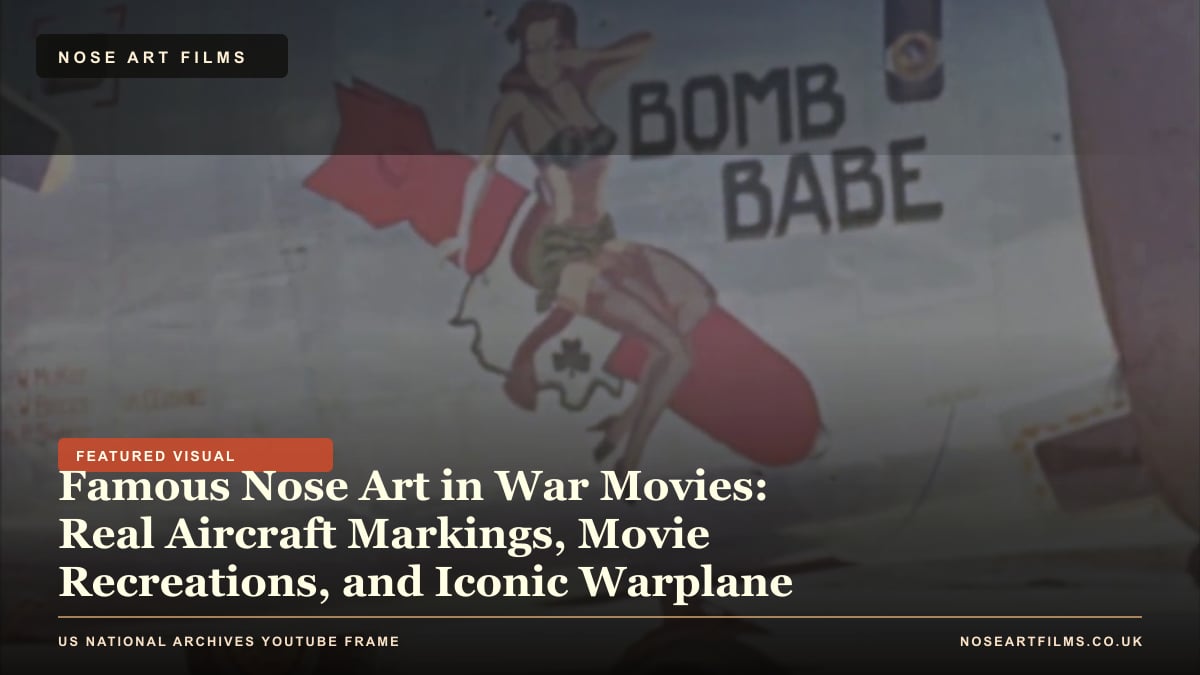
YouTube archival video frame prepared by Nose Art Films for Famous Nose Art in War Movies: Real Aircraft Markings, Movie Recreations, and Iconic Warplane Art. Source: Sources and Visual Credits.
Famous nose art in war movies is aircraft artwork, aircraft naming, or aircraft marking that becomes recognizable through film, wartime history, or public memory.
The strongest examples connect 4 elements: real aircraft identity, visible artwork, movie appearance, and historical documentation.
YouTube archival video frame prepared by Nose Art Films for Famous Nose Art in War Movies: Real Aircraft Markings, Movie Recreations, and Iconic Warplane Art, showing aircraft identity, markings, and film evidence for this blog article.
What Is Famous Nose Art in War Movies?
Famous nose art in war movies is recognizable aircraft art shown on screen.
It includes aircraft names, pin-up figures, mascots, shark-mouth markings, mission tallies, fuselage codes, tail markings, and aircraft nicknames.
What Makes Aircraft Nose Art Famous in War Films?
Aircraft nose art becomes famous in war films when viewers can connect the aircraft to a name, image, crew, mission, or historical event.
The strongest movie examples are memorable because they identify one aircraft inside a larger formation.
Why Do War Movies Use Nose Art to Identify Aircraft?
War movies use nose art to make aircraft visually distinct.
A named aircraft is easier to follow than an anonymous bomber during takeoff scenes, formation scenes, combat scenes, and return scenes.
What Is the Difference Between Famous Real Nose Art and Famous Movie Nose Art?
Famous real nose art belongs to a documented wartime aircraft.
Famous movie nose art is recreated, altered, or created for film production. It can match a real aircraft, imitate a real wartime style, or exist only inside the movie.
Which Famous Nose Art Was Real Before It Appeared in Movies?
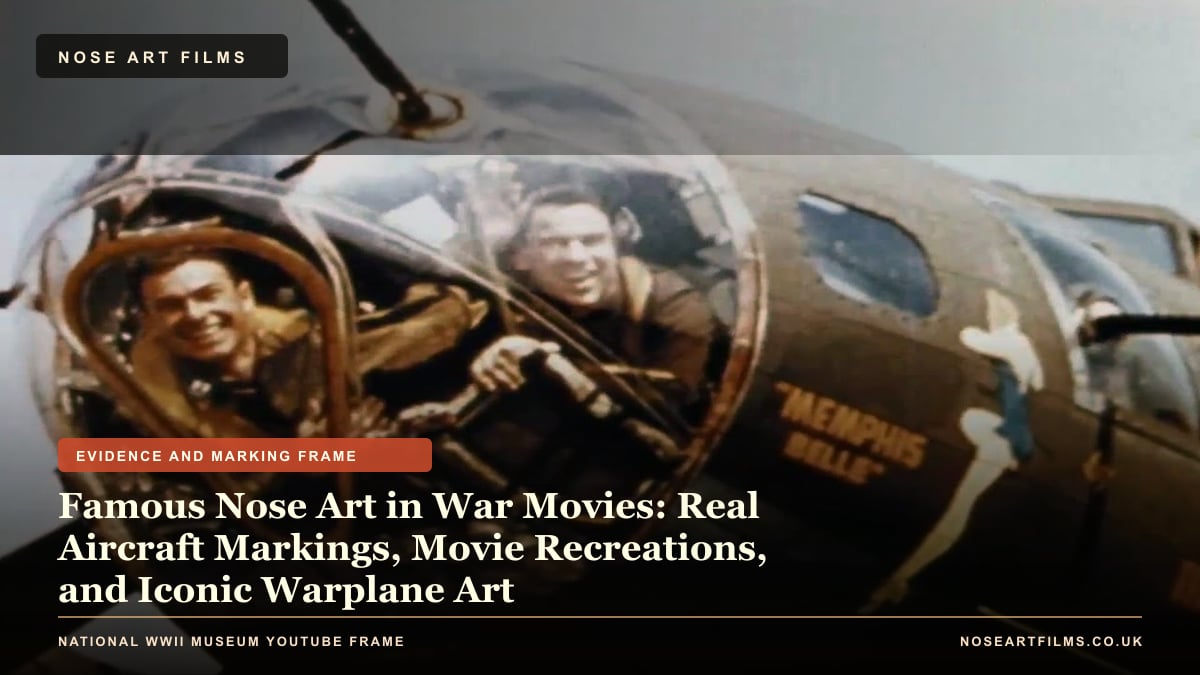
Memphis Belle is the clearest famous nose art that was real before it appeared in a major feature film.
The National Museum of the U.S. Air Force states that the Memphis Belle nose art represented a George Petty pin-up illustration and was later touched up and repainted by Cpl. Tony Starcer at Bassingbourn, England.
Which Famous Nose Art Was Created or Recreated for a Film?
Movie-created or movie-recreated nose art appears when a production needs a screen aircraft identity.
This happens in films and series that use substitute aircraft, CGI aircraft, replica aircraft, temporary decals, or art-department-designed liveries.
What Is the Most Famous Nose Art in War Movies?
The most famous nose art in war movies is Memphis Belle.
It is famous because it connects a real B-17F aircraft, wartime nose art, a 1944 documentary, a 1990 movie, and museum preservation.
Why Is Memphis Belle the Most Famous War Movie Nose Art?
Memphis Belle is the most famous war movie nose art because the aircraft had public recognition before the 1990 movie.
The real aircraft became a wartime media symbol, and the later film made the name more recognizable to modern audiences.
What Other Aircraft Nose Art Became Famous Through Movies?
Other aircraft art became famous through movies when films gave aircraft strong screen identity.
Examples include B-17 markings in Masters of the Air, B-25 markings in Catch-22, P-40 shark-mouth markings in Flying Tigers-related films, and B-29 aircraft names in atomic-bomber films.
Which War Movies Made Aircraft Names More Recognizable?
Memphis Belle, Masters of the Air, and Catch-22 made aircraft names or markings more recognizable.
Each title uses aircraft identity differently. Memphis Belle centers one named aircraft. Masters of the Air centers group-level B-17 identity. Catch-22 uses B-25 markings inside a satirical war setting.
Why Do Viewers Remember Named Aircraft in War Films?
Viewers remember named aircraft because names turn machines into story objects.
A name gives the aircraft a visible identity, a crew connection, and a memory anchor.
How Accurate Is Famous Nose Art in War Movies?
Famous nose art in war movies is accurate when the movie matches the real aircraft name, artwork, unit marking, aircraft type, and period.
Accuracy drops when a film uses fictional art, wrong aircraft variants, simplified markings, or censored artwork without context.
What Makes Movie Nose Art Historically Accurate?
Movie nose art is historically accurate when it matches documented aircraft evidence.
The table below defines the main details used to judge famous war movie nose art.
Accuracy Detail
What to Check
Why It Matters
Aircraft name
Memphis Belle, Enola Gay, Bockscar
Confirms aircraft identity
Aircraft type
B-17, B-24, B-25, B-29, P-40
Confirms correct aircraft body
Artwork source
Pin-up, mascot, shark mouth, slogan
Confirms visual origin
Unit marking
Squadron code, group marking, tail marking
Confirms military context
Serial number
Airframe number
Confirms aircraft record
Paint scheme
Olive drab, natural metal, camouflage
Confirms period and theater
Production method
Real aircraft, decal, replica, CGI
Explains accuracy limits
What Are the Most Common Nose Art Mistakes in War Movies?
The most common nose art mistakes are wrong placement, wrong aircraft variant, modernized artwork, incorrect unit codes, clean paint, repeated CGI markings, and censored historical detail.
These mistakes come from production limits, aircraft scarcity, studio standards, or simplified storytelling.
How Can Viewers Separate Real Nose Art from Movie Recreation?
Viewers can separate real nose art from movie recreation by checking wartime photos, museum records, production stills, serial numbers, and aircraft markings.
One screenshot is not enough for a verified conclusion.
How Can Wartime Photos Verify Movie Nose Art?
Wartime photos verify movie nose art by showing the aircraft's original name, artwork, codes, paint state, mission marks, and unit context.
The best comparison uses several photos from the same aircraft and time period.
How Can Museum Records Confirm Aircraft Markings?
Museum records confirm aircraft markings by connecting aircraft identity to curatorial research, restoration files, and verified airframe history.
Museum records are especially useful when a film recreates a famous restored aircraft.
What Famous Nose Art Appears in Memphis Belle?
The famous nose art in Memphis Belle is the Memphis Belle pin-up and aircraft name.
The artwork identifies the B-17F Memphis Belle and connects the real aircraft to its movie recreation.
Was Memphis Belle Nose Art Real?
Yes. Memphis Belle nose art was real wartime aircraft artwork.
The National Museum of the U.S. Air Force identifies the nose art as a representation of a George Petty pin-up illustration and states that Cpl. Tony Starcer later touched up and repainted it.
Was Memphis Belle Nose Art Recreated for the 1990 Movie?
Yes. Memphis Belle nose art was recreated for the 1990 movie.
The movie used screen aircraft to represent the real B-17F, so the film version is a production recreation rather than original wartime paint.
What Does Memphis Belle Nose Art Mean?
Memphis Belle nose art means aircraft identity, crew memory, personal naming, and wartime visual culture.
The name connected the aircraft to pilot Robert Morgan's personal life, while the pin-up artwork reflected wartime popular illustration.
Who Painted Memphis Belle Nose Art?
Cpl. Tony Starcer touched up and repainted the Memphis Belle nose art at Bassingbourn, England.
The museum also states that Starcer painted nose art on several 91st Bomb Group aircraft and aircrew flight jackets.
Who Was Memphis Belle Named After?
Memphis Belle was named after Margaret Polk of Memphis.
The name made the aircraft personal and memorable, which helped the B-17 become a wartime and movie symbol.
YouTube archival evidence frame prepared by Nose Art Films for Famous Nose Art in War Movies: Real Aircraft Markings, Movie Recreations, and Iconic Warplane Art, with source status, marking logic, and screen-accuracy cues.
How Accurate Is Memphis Belle Nose Art in the Movie?
The Memphis Belle movie nose art is historically based but recreated.
The film preserved the recognizable aircraft identity, but substitute aircraft and production markings created accuracy limits.
What Aircraft Played Memphis Belle in the 1990 Movie?
The 1990 movie used substitute B-17 aircraft to represent the Memphis Belle.
That distinction matters because a movie aircraft can carry accurate nose art while still differing from the original airframe.
How Does the Movie Memphis Belle Compare with the Real Aircraft?
The movie Memphis Belle is a screen recreation. The real Memphis Belle is the wartime B-17F aircraft.
The table below separates the original aircraft from the movie representation.
Detail
Real Memphis Belle
Movie Memphis Belle
Aircraft identity
Original B-17F
Substitute film aircraft
Nose art
Wartime artwork
Recreated artwork
Main evidence
Museum and archival record
Film stills and production context
Main accuracy issue
Restoration history
Production compromise
How Did the 1944 Memphis Belle Documentary Make the Nose Art Famous?
The 1944 documentary made Memphis Belle famous by turning a real aircraft into a public wartime symbol.
The documentary created a bridge between aircraft identity, crew story, war publicity, and later movie recognition.
What Nose Art Appeared in the 1944 Memphis Belle Documentary?
The 1944 documentary showed the real Memphis Belle context.
The aircraft's name and visual identity became part of wartime public memory before the 1990 feature film.
How Does the 1944 Documentary Compare with the 1990 Movie?
The 1944 documentary is wartime film evidence. The 1990 movie is dramatic recreation.
The documentary is stronger for original context. The feature film is stronger for modern cinematic recognition.
Why Is Memphis Belle Important in B-17 Movie History?
Memphis Belle is important in B-17 movie history because it connects real bomber culture with film memory.
It is both a wartime aircraft and a screen aircraft identity.
How Did Memphis Belle Move from Wartime Aircraft to Movie Symbol?
Memphis Belle moved from wartime aircraft to movie symbol through documentary exposure, public fame, later dramatization, and museum preservation.
This chain made the nose art one of the strongest links between real WWII aircraft art and cinema.
What Famous Nose Art Appears in Masters of the Air?
Masters of the Air shows famous B-17-style nose art through recreated Eighth Air Force aircraft markings.
The series focuses on the 100th Bomb Group and uses modern production methods to represent bomber identity.
Did Masters of the Air Recreate Real B-17 Nose Art?
Masters of the Air recreated historically grounded B-17 markings.
Official production materials describe Masters of the Air through its 100th Bomb Group context, while archive records help viewers compare the series with real B-17 markings.
What B-17 Aircraft Names Appear in Masters of the Air?
Masters of the Air uses B-17 aircraft names and group markings connected to the 100th Bomb Group context.
Each aircraft name needs verification against wartime records before being treated as an exact historical match.
How Does Masters of the Air Show 100th Bomb Group Nose Art?
Masters of the Air shows 100th Bomb Group nose art through aircraft names, unit identity, bomber formations, and recreated aircraft surfaces.
The show uses group-level identity rather than one single aircraft icon.
Was the Nose Art Based on Real Wartime Photos?
The nose art was based on historical research and visual reference, but each aircraft must be checked individually.
Museum consultation and B-17 reference work support the production's research base.
Did Masters of the Air Use CGI for Aircraft Nose Art?
Yes. Masters of the Air used CGI aircraft and life-sized replicas.
CGI allows large bomber formations, but it can create accuracy risks when markings, weathering, or aircraft identities repeat.
How Accurate Is the Nose Art in Masters of the Air?
The nose art in Masters of the Air is research-based modern recreation.
Its accuracy depends on aircraft-specific references, digital texture quality, unit markings, and shot continuity.
What Famous Nose Art Appears in Catch-22?
Catch-22 shows B-25-style nose art and medium-bomber markings.
Its aircraft art is historically inspired, but the story's satirical form changes how viewers should judge exact accuracy.
Did Catch-22 Use Real B-25 Nose Art?
Catch-22 used B-25 aircraft identities and art-department-designed liveries.
For the 2019 miniseries, VFX supervisor Matt Kasmir said the production digitized 2 on-location B-25s and created different liveries, including nose art designed by the art department.
What B-25 Markings Appear in Catch-22?
Catch-22 includes B-25 bomber markings, individual aircraft liveries, decals, and nose art.
These markings support the medium-bomber setting and screen identity.
Was Catch-22 Nose Art Historically Inspired?
Yes. Catch-22 nose art was historically inspired.
It is better described as plausible B-25-style aircraft art unless a specific marking matches a documented wartime B-25.
How Accurate Is the Aircraft Nose Art in Catch-22?
The aircraft nose art in Catch-22 is plausible for B-25 screen atmosphere.
Exact accuracy depends on matching each livery to wartime aircraft records.
Why Does Satire Affect the Way Catch-22 Uses Nose Art?
Satire affects Catch-22 nose art because the film or series does not function as a strict aircraft-documentation project.
It uses plausible military visuals to support absurdity, bureaucracy, and wartime setting.
How Does Catch-22 Compare with Other War Films for Nose Art Accuracy?
Catch-22 is stronger for B-25 atmosphere than exact aircraft-by-aircraft verification.
Memphis Belle is stronger for one famous real aircraft. Masters of the Air is stronger for B-17 group recreation.
What Are Famous B-17 Nose Art Examples in War Movies?
Famous B-17 nose art examples in war movies include Memphis Belle and other named Flying Fortress aircraft used in film, museum, and documentary contexts.
B-17 nose art is common because the B-17 became a strong screen symbol for WWII bomber crews.
Which B-17 Nose Art Designs Are Most Recreated?
The most recreated B-17 nose art designs are documented and visually recognizable.
Memphis Belle is the strongest example because it has aircraft history, movie history, and museum documentation.
Why Is B-17 Nose Art Common in WWII Movies?
B-17 nose art is common in WWII movies because the B-17 represents American daylight bombing, crew identity, and named-aircraft storytelling.
A B-17 nose panel also gives filmmakers a visible place for names and artwork.
How Accurate Is B-17 Nose Art in Movies?
B-17 nose art in movies is accurate when the film matches the real aircraft name, B-17 variant, artwork placement, unit marking, and time period.
The biggest risk is using a later aircraft variant to portray an earlier aircraft.
How Do B-17F and B-17G Differences Affect Movie Nose Art Accuracy?
B-17F and B-17G differences affect accuracy because visible features can reveal the wrong variant.
The B-17G chin turret is one important visual feature. A film portraying a B-17F must handle B-17G features carefully.
Which B-17 Nose Art Examples Are Linked to Museums?
B-17 nose art examples linked to museums include Memphis Belle and other preserved or restored Flying Fortress aircraft.
Museum aircraft help viewers compare real markings with movie recreations.
Which B-17 Nose Art Examples Are Linked to Documentaries?
Memphis Belle is the strongest B-17 nose art example linked to documentary film.
Its 1944 documentary context helped make the aircraft a public symbol before the 1990 movie.