Historical Accuracy of Nose Art in War Films: Real WWII Aircraft Art, Hollywood Recreation, and Military Rules
Historical accuracy of nose art in war films means matching screen aircraft art to verified aircraft, unit, time period, military culture, and production context.
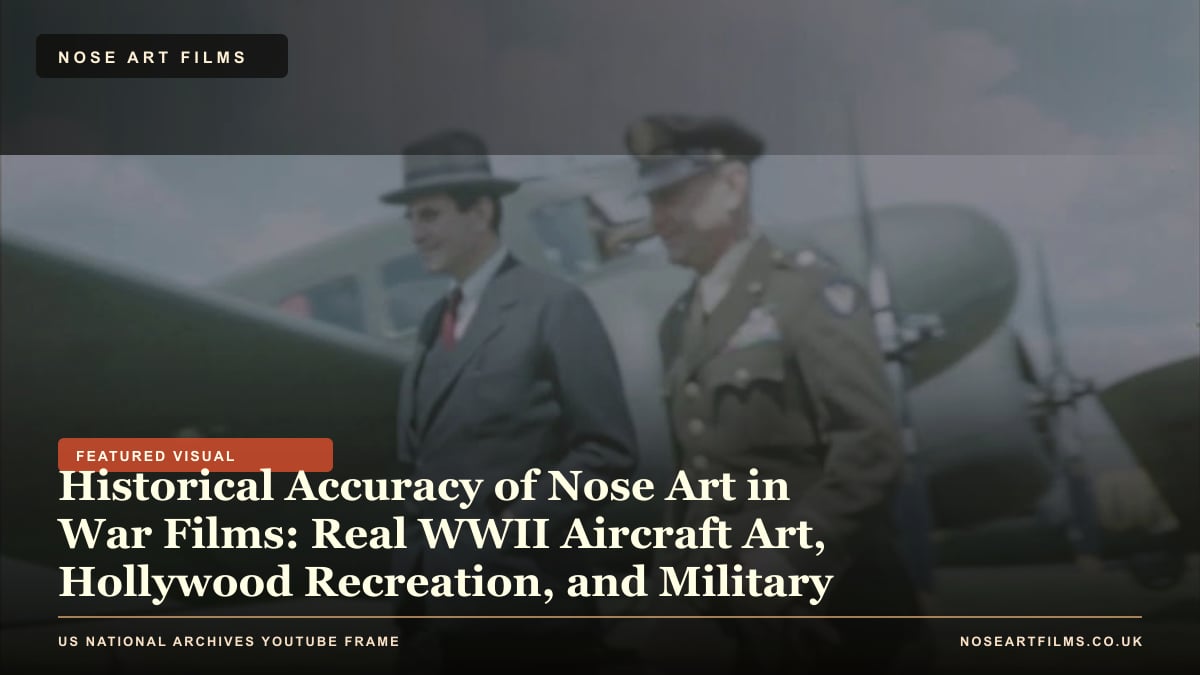
YouTube archival video frame prepared by Nose Art Films for Historical Accuracy of Nose Art in War Films: Real WWII Aircraft Art, Hollywood Recreation, and Military Rules. Source: Sources and Visual Credits.
Historical accuracy of nose art in war films means matching screen aircraft art to verified aircraft, unit, time period, military culture, and production context.
Aircraft nose art accuracy depends on 7 details: aircraft type, aircraft name, artwork source, artwork placement, squadron markings, mission symbols, and historical tolerance.
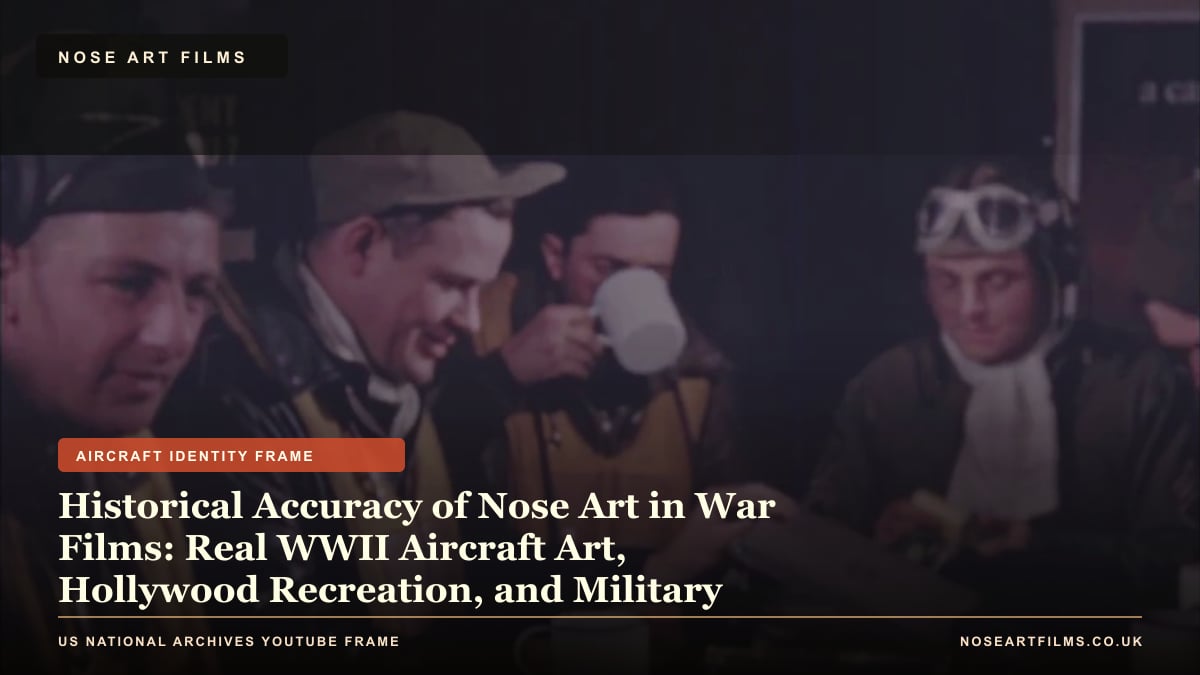
YouTube archival video frame prepared by Nose Art Films for Historical Accuracy of Nose Art in War Films: Real WWII Aircraft Art, Hollywood Recreation, and Military Rules, showing aircraft identity, markings, and film evidence for this blog article.
What Does Historical Accuracy Mean for Nose Art in War Films?
Historical accuracy means the movie nose art matches the real aircraft context.
A historically accurate aircraft-art scene uses the correct aircraft type, artwork style, unit culture, theater, and period. A film loses accuracy when it uses the wrong aircraft variant, modernized artwork, fictional markings, or censored art without context.
What Makes Aircraft Nose Art Historically Accurate in a Movie?
Aircraft nose art is historically accurate when it matches the real aircraft name, artwork, placement, unit, and period.
The strongest evidence sources are wartime photographs, squadron records, museum records, aircraft serials, restoration files, and production stills.
What Is the Difference Between Real Nose Art and Recreated Movie Nose Art?
Real nose art is wartime artwork painted on an actual aircraft.
Recreated movie nose art is production artwork painted, printed, or digitally applied to represent a wartime aircraft. Recreated art can be accurate, partially accurate, censored, or fictional.
Which Details Matter Most for Movie Nose Art Accuracy?
The most important accuracy details are aircraft type, name, artwork source, placement, squadron code, serial number, mission tally, and paint finish.
The table below defines the main accuracy attributes used to judge war-film nose art.
Accuracy Attribute
What to Check
Why It Matters
Aircraft type
B-17, B-24, B-25, B-29, P-40, P-51
Art placement changes by aircraft
Aircraft name
Memphis Belle, Enola Gay, Bockscar
Name confirms aircraft identity
Artwork source
Pin-up, mascot, cartoon, slogan
Source confirms visual authenticity
Unit marking
Squadron code, group symbol, tail mark
Unit confirms military context
Mission mark
Bomb tally, kill marking, lead-crew star
Mark confirms service history
Production method
Paint, decal, CGI texture
Method affects visual accuracy
Why Do War Films Change Aircraft Nose Art?
War films change aircraft nose art because of aircraft availability, camera readability, studio standards, public sensitivity, and production cost.
The 5 common causes are:
Replace unavailable aircraft with substitutes.
Simplify markings for quick recognition.
Alter offensive or sexualized imagery.
Reuse digital aircraft models.
Protect restored aircraft from permanent repainting.
How Accurate Is WWII Nose Art in War Movies?
WWII nose art in war movies has mixed accuracy.
Some films recreate real aircraft art. Some films create composite aircraft. Some films alter authentic designs to meet modern content standards.
Which War Movies Recreate Nose Art Accurately?
War movies recreate nose art accurately when they use documented aircraft artwork and verified markings.
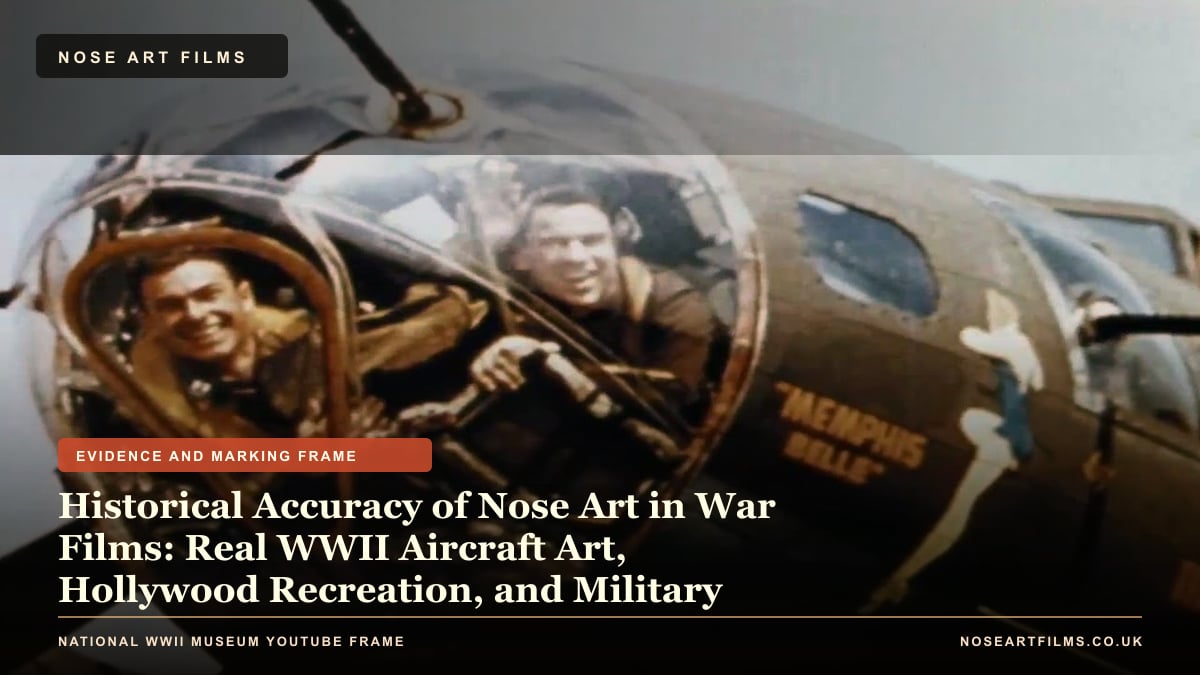
Memphis Belle is the strongest B-17 example because the real aircraft, documentary history, and restored museum aircraft provide multiple references. The National Museum of the U.S. Air Force states that Memphis Belle nose art was based on a George Petty pin-up illustration and later touched up and repainted by Cpl. Tony Starcer. (The Memphis Belle and Nose Art)
Which War Movies Use Fictional or Altered Nose Art?
War movies use fictional or altered nose art when they need story aircraft, safer imagery, or simplified visual identity.
Fictional aircraft art is not automatically inaccurate. It becomes inaccurate when a film presents fictional art as a known historical aircraft without matching evidence.
What Are the Most Common Nose Art Mistakes in War Films?
The most common nose art mistakes are wrong aircraft type, wrong placement, modern art style, missing unit codes, censored imagery, and inaccurate weathering.
Check these 8 signs:
Aircraft variant
Nose art placement
Fuselage code
Tail marking
Paint scheme
Mission tally
Pin-up style
Unit history
How Can Viewers Verify Aircraft Nose Art Accuracy?
Viewers can verify aircraft nose art accuracy by comparing film images with wartime photographs and museum records.
Use this 5-step process:
Identify the aircraft type.
Match the aircraft name.
Compare the artwork.
Check unit markings.
Separate wartime art from movie recreation.
How Accurate Is the Nose Art in Memphis Belle 1990?
The nose art in Memphis Belle 1990 is historically based but recreated.
The movie used the real Memphis Belle identity, but it relied on substitute B-17 aircraft for screen production.
Was the Memphis Belle Nose Art Based on Real Wartime Artwork?
Yes. The Memphis Belle movie nose art was based on real wartime B-17F artwork.
The National Museum of the U.S. Air Force identifies Memphis Belle as a Boeing B-17F Flying Fortress. Its nose art belonged to the real wartime aircraft before the 1990 feature film recreated that identity. (The Memphis Belle and Nose Art)
What Did Memphis Belle 1990 Get Right About Nose Art?
Memphis Belle 1990 got the aircraft identity and recognizable nose-art concept right.
The film preserved the named-bomber idea, the B-17 context, and the visual importance of nose art to crew identity.
What Did Memphis Belle 1990 Get Wrong About Aircraft Markings?
The main accuracy limit is substitute-airframe accuracy.
A movie aircraft can carry accurate nose art and still differ from the original aircraft. B-17 variants, turret details, surface differences, and production paint can affect accuracy.
How Does the Movie Memphis Belle Compare with the Real Aircraft?
The movie Memphis Belle is a screen recreation. The real Memphis Belle is the original B-17F aircraft.
The table below compares the real aircraft with the screen aircraft.
Detail
YouTube archival evidence frame prepared by Nose Art Films for Historical Accuracy of Nose Art in War Films: Real WWII Aircraft Art, Hollywood Recreation, and Military Rules, with source status, marking logic, and screen-accuracy cues.
Real Memphis Belle
Movie Memphis Belle
Aircraft identity
Original B-17F
Substitute film aircraft
Nose art
Wartime artwork
Recreated artwork
Evidence type
Museum and archival record
Film production image
Accuracy issue
Preservation history
Production compromise
How Accurate Is the Nose Art in Masters of the Air?
The nose art in Masters of the Air is a researched modern recreation of Eighth Air Force bomber culture.
Apple TV Press describes Masters of the Air as a series centered on the 100th Bomb Group, giving the show a clear B-17 and Eighth Air Force context. (Masters of the Air - Apple TV Press)
What B-17 Nose Art Appears in Masters of the Air?
Masters of the Air uses B-17 group identity, aircraft names, unit markings, and recreated bomber art.
The series connects nose art to 100th Bomb Group aircraft identity and Eighth Air Force crew culture.
Did Masters of the Air Recreate Real Aircraft Markings?
Masters of the Air recreated historically grounded aircraft markings, but it used modern production methods.
The aircraft art can be research-based without being original wartime paint.
What Research Sources Support Masters of the Air Nose Art Accuracy?
The strongest sources are 100th Bomb Group records, wartime photographs, mission records, museum archives, and curator consultation.
These sources help confirm aircraft names, markings, unit codes, and visual details.
How Does Masters of the Air Compare with Real Eighth Air Force Nose Art?
Masters of the Air compares well when it reflects aircraft names, crew culture, group markings, and bomber formation identity.
Its main limitation is production form. The series uses sets, visual effects, and recreated aircraft rather than a large fleet of real B-17s.
Did Catch-22 Use Historically Accurate Aircraft Nose Art?
Catch-22 used B-25 aircraft identity and individualized nose art, but accuracy depends on the version.
The 1970 film used real B-25 aircraft. The 2019 miniseries used real aircraft and digital aircraft work.
What Aircraft Nose Art Appears in Catch-22?
Catch-22 aircraft nose art appears as B-25 bomber markings, decals, and individual aircraft identities.
For the 2019 miniseries, VFX supervisor Matt Kasmir explained that the production digitized two on-location B-25s and created different liveries, including nose art designed by the art department. (CATCH-22: Matt Kasmir - Overall VFX Supervisor - The Art of VFX)
Was Catch-22 Nose Art Based on Real B-25 Wartime Examples?
Catch-22 nose art was historically inspired, not always tied to one verified wartime B-25.
Catch-22 is satire. A satirical war film can use plausible aircraft art without reproducing exact historical aircraft.
How Accurate Are the Aircraft Markings in Catch-22?
The aircraft markings in Catch-22 are plausible for B-25 screen context.
The markings support setting and atmosphere, but exact accuracy depends on comparison with specific wartime aircraft.
How Does Catch-22 Compare with Other War Films for Nose Art Accuracy?
Catch-22 is stronger for B-25 atmosphere than for exact nose-art documentation.
Memphis Belle is stronger for a specific aircraft. Masters of the Air is stronger for unit-level B-17 recreation.
How Does Real WWII Bomber Nose Art Compare with Hollywood Recreations?
Real WWII bomber nose art is crew-made wartime expression. Hollywood recreation is controlled production design.
Real art came from crews, mechanics, and unit artists. Movie art comes from art departments, consultants, studio standards, and production constraints.
What Do Hollywood Films Preserve from Real Nose Art?
Hollywood films preserve aircraft name, general artwork style, period look, and unit identity.
Preserved features help the audience recognize aircraft quickly.
What Do Hollywood Films Change in Real Nose Art?
Hollywood films change explicit detail, offensive imagery, color intensity, placement, lettering, and weathering.
Modern films also change art to meet studio policy, age ratings, platform standards, and international distribution rules.
Why Do Movies Simplify Aircraft Names, Codes, and Markings?
Movies simplify markings for readability, continuity, and narrative clarity.
Aircraft codes that matter to historians can confuse general audiences during fast aerial scenes.
How Do Restored Aircraft Influence Hollywood Nose Art Recreations?
Restored aircraft influence movies by providing physical reference and filming platforms.
Restored paint is not always wartime paint. Restoration, museum interpretation, and airworthiness requirements can create differences from original combat appearance.
How Do Art Directors Recreate WWII Bomber Nose Art for Movies?
Art directors recreate WWII bomber nose art through research, drawing, approval, painting, decals, digital textures, and weathering.
The process turns historical reference into screen-readable aircraft identity.
What Sources Do Film Art Departments Use for Aircraft Nose Art?
Film art departments use wartime photos, squadron histories, museum records, crew accounts, aircraft profiles, and archives.
These sources help production teams avoid generic or anachronistic aircraft art.
How Do Production Designers Recreate Wartime Aircraft Markings?
Production designers recreate markings by converting historical evidence into paint, decal, set, or CGI texture.
The recreation must fit the aircraft surface, camera distance, shot continuity, and historical context.
How Do Film Crews Paint Temporary Nose Art on Restored Aircraft?
Film crews use temporary paint, removable decals, wraps, or protective layers on restored aircraft.
Temporary methods reduce damage risk to museum aircraft, privately owned warbirds, and preserved surfaces.
How Is Nose Art Recreated on CGI Aircraft?
CGI nose art is recreated with digital textures mapped onto aircraft models.
Digital art must match aircraft scale, surface curve, weathering, and shot lighting.
How Do Film Teams Add Weathering, Damage, and Paint Aging?
Film teams add weathering through fading, chips, exhaust stains, patched panels, soot, and simulated combat wear.
Weathering improves accuracy when it matches the aircraft's mission history and operational environment.