What Role Do Historical Consultants Play in Aviation Art Accuracy?
Historical consultants provide evidence checks for aircraft markings, unit context, and period detail.
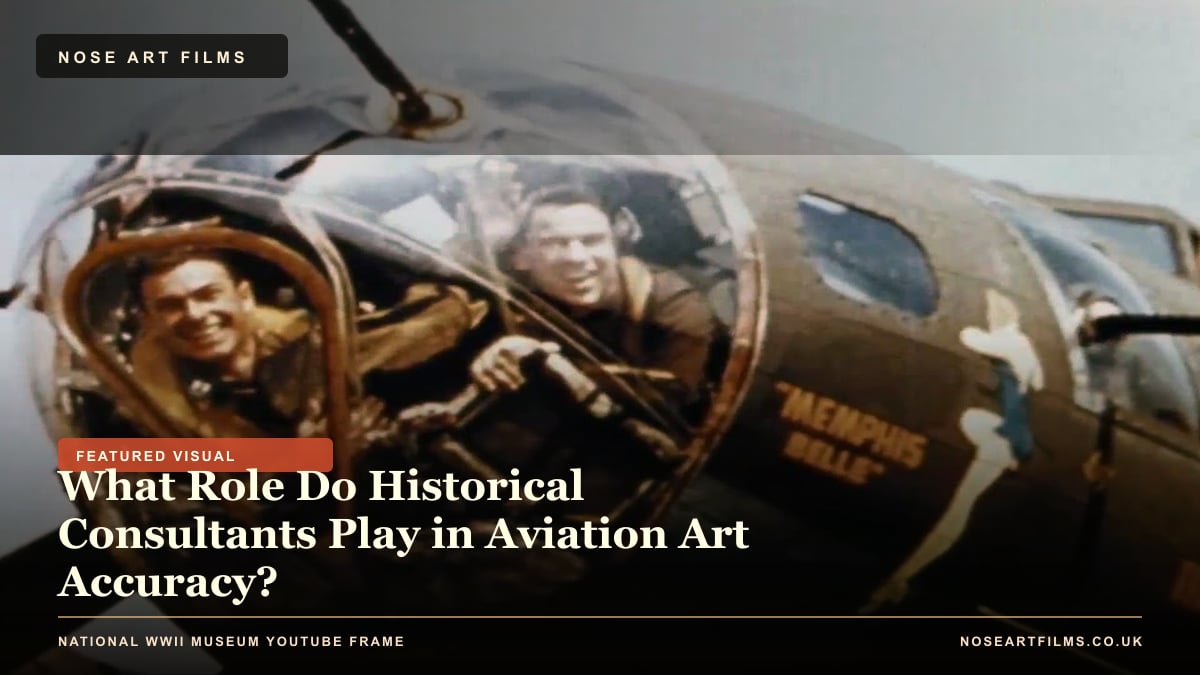
YouTube archival video frame prepared by Nose Art Films for What Role Do Historical Consultants Play in Aviation Art Accuracy?. Source: Sources and Visual Credits.
Historical consultants provide evidence checks for aircraft markings, unit context, and period detail.
Consultants reduce errors, but they do not control every final production choice.
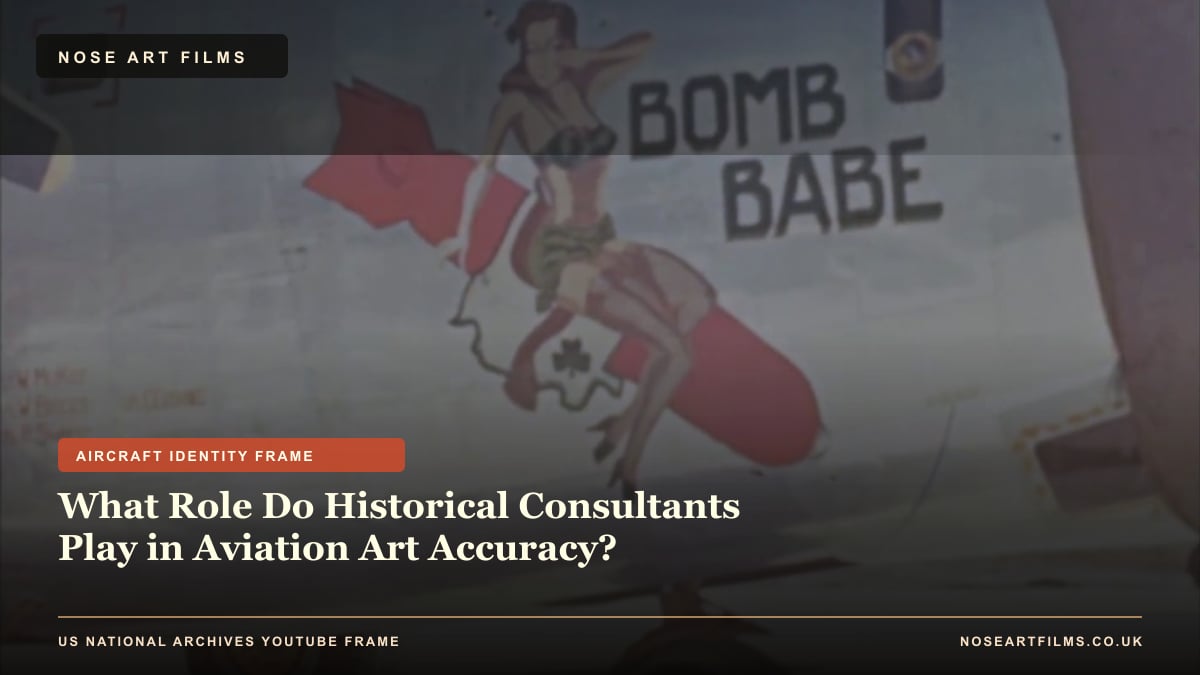
YouTube archival video frame prepared by Nose Art Films for What Role Do Historical Consultants Play in Aviation Art Accuracy?, showing aircraft identity, markings, and film evidence for this blog article.
How Do Aviation Historians Verify Movie Aircraft Markings?
Aviation historians verify markings through serial numbers, unit histories, photographs, mission records, and museum files.
A verified marking requires more than a single image.
What Records Help Consultants Confirm Real Nose Art?
The strongest records are wartime photographs, squadron histories, aircraft logs, crew memoirs, combat reports, and restoration files.
A museum record is stronger than a fan image or unsourced production still.
How Do Consultants Separate Wartime Nose Art from Restoration Paint?
Consultants separate wartime and restoration paint by checking date, aircraft ownership, restoration notes, photo sequence, and paint-layer evidence.
Restored aircraft can show a correct design without carrying original paint.
Why Do Films Still Change Nose Art After Historical Consultation?
Films still change nose art because of studio standards, camera needs, budget, aircraft access, and audience sensitivity.
Historical consultation improves accuracy. It does not remove production constraints.
What Were USAAF Rules and Regulations on Nose Art During WWII?
USAAF nose art was tolerated rather than fully official.
The National WWII Museum states that USAAF leadership allowed pilots and crews to express themselves through nose art because it worked as a morale booster; the same source contrasts this with U.S. Navy and Marine Corps restrictions. (Decoding WWII Plane Nose Art | The National WWII Museum)
Was Nose Art Officially Permitted by the Military?
Nose art was tolerated practice, not a fully official decoration program.
Formal markings identified nationality, unit, and aircraft. Nose art personalized the aircraft.
Was Nose Art Officially Regulated or Informally Tolerated?
Nose art was informally tolerated under commander discretion.
A permissive commander could allow elaborate art. A stricter commander could order removal or repainting.
Did USAAF Commanders Allow Pin-Up Nose Art?
Many USAAF commanders allowed pin-up nose art as morale-supporting crew expression.
The tolerance was not unlimited. Explicit, offensive, or publicly embarrassing art could trigger intervention.
Were Mission Tallies and Kill Markings Treated Differently from Pin-Up Art?
Mission tallies and kill markings were more operationally legible than pin-up art.
A bomb tally showed missions. A kill marking showed combat claims. Pin-up art was more personal and more likely to face censorship.
Did Rules Differ by Squadron, Group, Air Base, or Theater?
Rules differed by unit, commander, theater, and public visibility.
Nose art culture was not uniform across the USAAF, RAF, U.S. Navy, Pacific Theater, and European Theater.
Was Offensive Nose Art Painted Over During WWII?
Offensive nose art was painted over when commanders judged it indecent, unauthorized, or damaging to military image.
Exact frequency is difficult to measure because removal orders were local and unevenly documented.
How Did Commanders Force Crews to Remove Offensive Nose Art?
No reliable single percentage exists for forced removal of offensive nose art.
The stronger answer is procedural: removal depended on commander discretion, base rules, inspection context, and public visibility.
What Types of Nose Art Were Most Likely to Be Censored?
The most censored types were explicit nudity, obscene language, racist caricature, unauthorized symbols, and public-relations risks.
Censorship could happen during wartime service, postwar preservation, museum restoration, or modern film production.
Were Crews Punished for Unauthorized Aircraft Art?
Crews were more ordered to alter or remove the artwork than publicly prosecuted for nose art.
Discipline depended on the commander, aircraft role, and severity of the image.
How Did Unit-Level Command Affect Nose Art Freedom?
Unit command affected nose art through local tolerance or local restriction.
Nose art freedom was larger where commanders viewed the artwork as morale support.
Why Is Authentic WWII Nose Art Censored in Modern Films?
Authentic WWII nose art is censored in modern films because of sexual imagery, racist imagery, ratings, distribution, and audience standards.
Censorship can improve modern accessibility, but it can reduce visual accuracy.
What Types of Authentic Nose Art Are Altered in Modern Hollywood?
Modern Hollywood alters nudity, sexualized pin-ups, racist caricatures, profanity, and politically sensitive symbols.
These changes affect historical accuracy and public reception.
How Do Studios Handle Sexualized Pin-Up Nose Art?
Studios handle pin-up nose art through cropping, softening, costume changes, omission, or digital alteration.
The final choice depends on rating, platform, audience, and narrative relevance.
How Do Studios Handle Racist or Offensive Wartime Aircraft Imagery?
Studios handle offensive imagery through removal, avoidance, partial framing, or contextual presentation.
Context matters because reproduction without explanation can normalize the image.
Does Censoring Nose Art Reduce Historical Accuracy?
Censoring nose art can reduce visual historical accuracy.
A film can preserve historical understanding by explaining why the original art was altered or by showing the image within clear context.
How Do Films Balance Accuracy and Modern Audience Standards?
Films balance accuracy through consultation, framing, selective depiction, content standards, and contextual explanation.
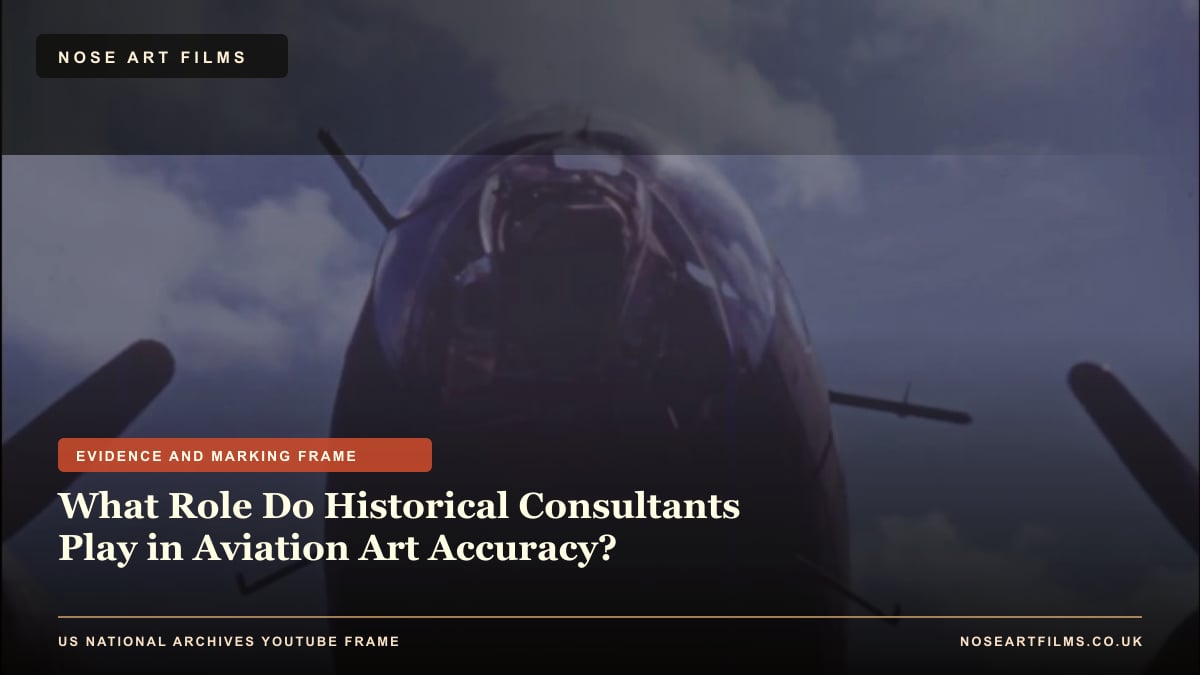
YouTube archival evidence frame prepared by Nose Art Films for What Role Do Historical Consultants Play in Aviation Art Accuracy?, with source status, marking logic, and screen-accuracy cues.
The strongest approach preserves history without presenting harmful imagery as decoration.
What Controversies Surround the Modern Display of Vintage Nose Art?
Modern nose art display is controversial because it sits between historical preservation and public sensitivity.
Pin-up art, racist caricature, enemy stereotypes, and sexual imagery create display challenges for museums, films, games, and model companies.
How Do Museums Display Controversial Aircraft Nose Art?
Museums display controversial nose art with labels, curatorial context, warnings, and historical framing.
A museum label can explain the wartime culture without endorsing the image.
Should Offensive Nose Art Be Preserved as Historical Evidence?
Offensive nose art can be preserved as historical evidence.
Preservation does not require celebration. Documentation can support accurate teaching about wartime culture, racism, sexism, propaganda, and morale.
How Do Curators Explain Controversial Aviation Art?
Curators explain controversial aviation art through wartime context, crew culture, propaganda, racism, sexism, and public memory.
The explanation must separate historical documentation from modern approval.
How Do Restoration Teams Handle Damaged or Offensive Nose Art?
Restoration teams handle damaged or offensive nose art through preservation, repainting, documentation, restricted display, or contextual display.
The decision depends on conservation ethics, aircraft history, institutional policy, and public access.
How Did RAF and USAAF Nose Art Traditions Differ?
RAF and USAAF nose art differed in visibility, style, scale, and command tolerance.
The National WWII Museum states that American aircraft produced one of the largest and most graphic bodies of wartime nose art, while each air force had its own aircraft-art style. (Decoding WWII Plane Nose Art | The National WWII Museum)
Why Was USAAF Nose Art More Visible Than RAF Nose Art?
USAAF nose art was more visible because of American popular culture, larger bomber art surfaces, and stronger crew personalization.
American pin-up magazines, cartoons, mascots, and aircraft names shaped the USAAF visual tradition.
Did RAF Bombers Use Pin-Up Nose Art?
RAF bombers used aircraft decoration, but RAF art was less graphic and less widespread than USAAF bomber nose art.
RAF practice varied by unit, aircraft, and command environment.
How Did British and American Military Cultures Shape Aircraft Art?
American aircraft art emphasized individual aircraft identity and popular illustration.
British aircraft art leaned more toward squadron culture, humor, names, and restrained personalization.
How Did RAF Aircraft Names Differ from USAAF Aircraft Names?
RAF aircraft names were shaped by unit culture and aircraft allocation, while USAAF names reflected individual crews, hometowns, sweethearts, slogans, and mascots.
How Did U.S. Navy Aircraft Art Differ from USAAF Nose Art?
U.S. Navy aircraft art was more restricted because of service culture, carrier operations, and formal marking control.
How Common Was Nose Art on WWII Bombers?
WWII bomber nose art was common but not precisely measurable by one universal percentage.
Prevalence changed by air force, aircraft type, theater, unit culture, documentation, and aircraft survival time.
What Percentage of Bombers Had Nose Art?
No reliable single percentage covers all WWII bombers.
The best research method is to sample wartime photographs by bomb group, aircraft type, theater, and date.
How Common Was Nose Art on B-17 Flying Fortress Bombers?
B-17 nose art was highly visible in USAAF bomber culture.
The B-17's forward fuselage provided a visible canvas, and named B-17s such as Memphis Belle became public symbols.
How Common Was Nose Art on B-24 Liberators?
B-24 nose art was also common in USAAF service, but placement differed because of aircraft shape and surface layout.
B-24 art used broader fuselage areas and large visual compositions.
Was Nose Art More Common on Bombers Than Fighters?
Nose art was more developed on bombers because bombers had larger crews, larger surfaces, and stronger shared aircraft identity.
Fighter art existed, but it focused on pilot identity, shark mouths, names, or smaller markings.
Did Theater, Aircraft Survival Time, or Crew Culture Affect Nose Art Prevalence?
Yes. Nose art prevalence changed with theater, survival time, and crew culture.
Aircraft that survived longer had more time to receive names, mission tallies, repairs, and expanded artwork.
What Was the Psychological Purpose of Nose Art for Bomber Crews?
The psychological purpose of nose art was morale, identity, fear management, and group cohesion.
Nose art gave crews a symbolic connection to aircraft that faced repeated combat risk.
How Did Nose Art Support Crew Morale?
Nose art supported morale by giving crews a shared visual identity.