A policy-safe editorial frame for presenting wartime pin-up art in an educational archive without sensational or adult treatment.
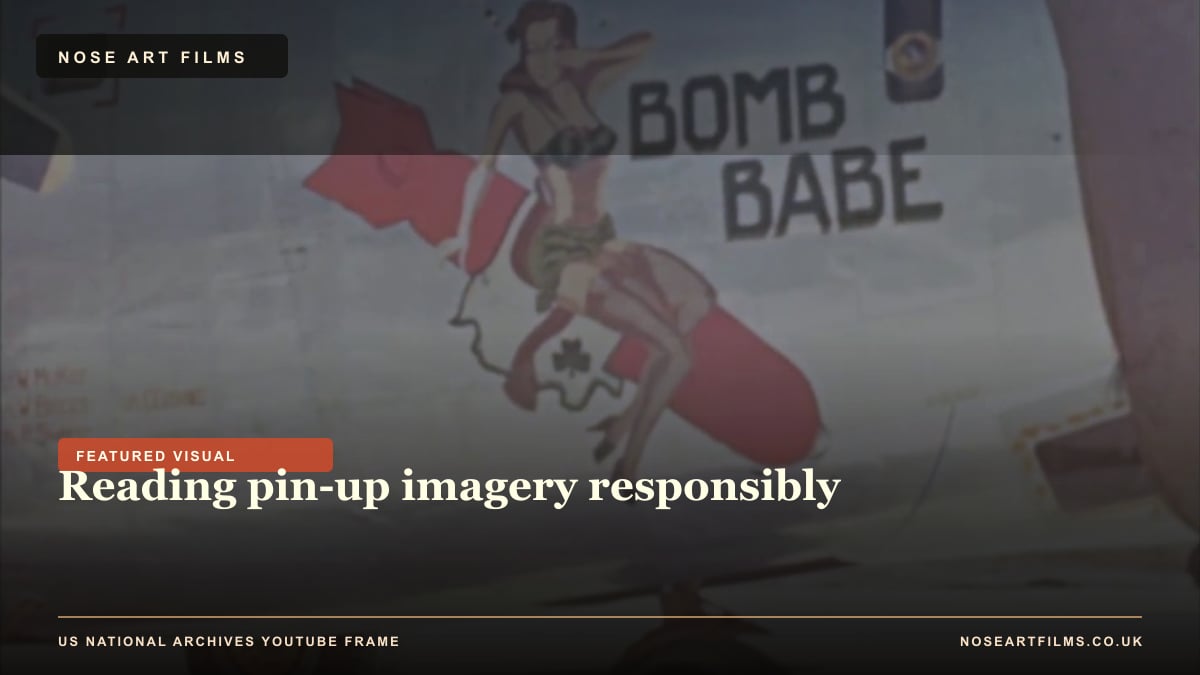
YouTube archival video frame prepared and branded by Nose Art Films for Reading pin-up imagery responsibly. Source: Sources and Visual Credits.
Context comes first
Pin-up imagery appears in many discussions of aircraft nose art, but presentation matters. A page that relies on suggestive imagery without analysis can feel thin or exploitative. A page that explains the imagery as part of wartime popular culture, masculine crew spaces, morale rituals, and later museum interpretation gives visitors a reason to stay and learn.
The site therefore avoids adult framing, shock language, or image-first layouts that detach the artwork from history. The goal is to make the material understandable to general readers, educators, and aviation-history audiences.
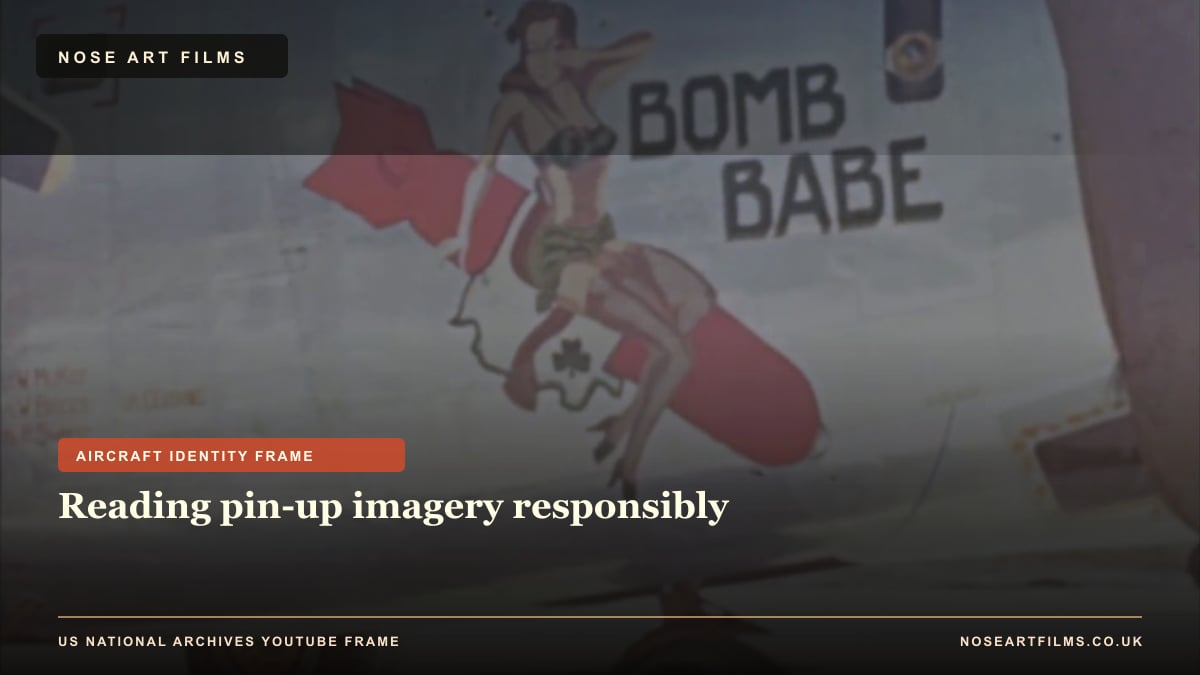
YouTube archival video frame prepared by Nose Art Films for Reading pin-up imagery responsibly, showing aircraft identity, markings, and film evidence for this blog article.
Captions should do work
A useful caption identifies what is known: the aircraft, the photographer or repository, the date when available, and whether the photograph shows a wartime object or a later restoration. It does not invent crew testimony, imply endorsement by the photographer, or pretend that a modern air-show image is automatically a combat-era record.
This is especially important for monetized pages. Google Publisher Policies warn against low-value or copied content, and image-heavy pages need original commentary, curation, or interpretation. The safest path is also the best editorial path: make each visual artifact accountable.
Educational use is not a shortcut
Calling a page educational does not solve copyright, attribution, or quality problems. The page itself has to show its work. That means source links, licensing notes, a visible editorial policy, and prose that adds meaning beyond the embedded or reproduced asset.
For Nose Art Films, the editorial standard is simple: if an image is included, the surrounding text must help a visitor understand the image more clearly than they could from the image alone.
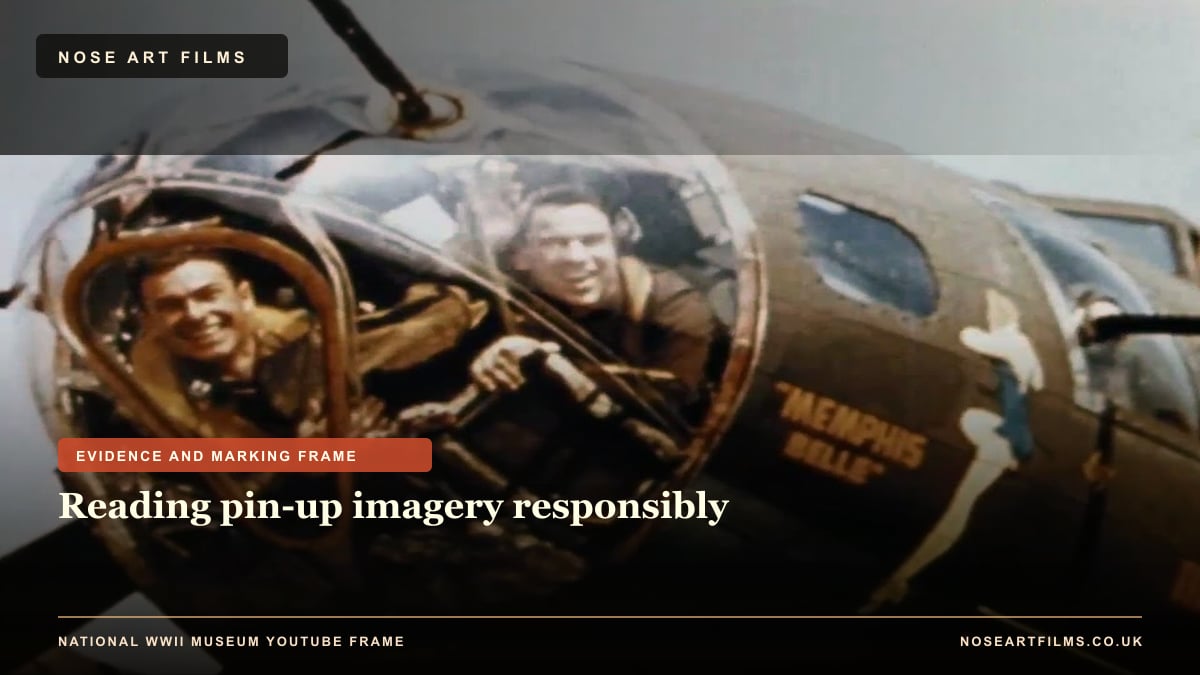
YouTube archival evidence frame prepared by Nose Art Films for Reading pin-up imagery responsibly, with source status, marking logic, and screen-accuracy cues.