What Are Iconic B-17 Flying Fortress Nose Art Examples?
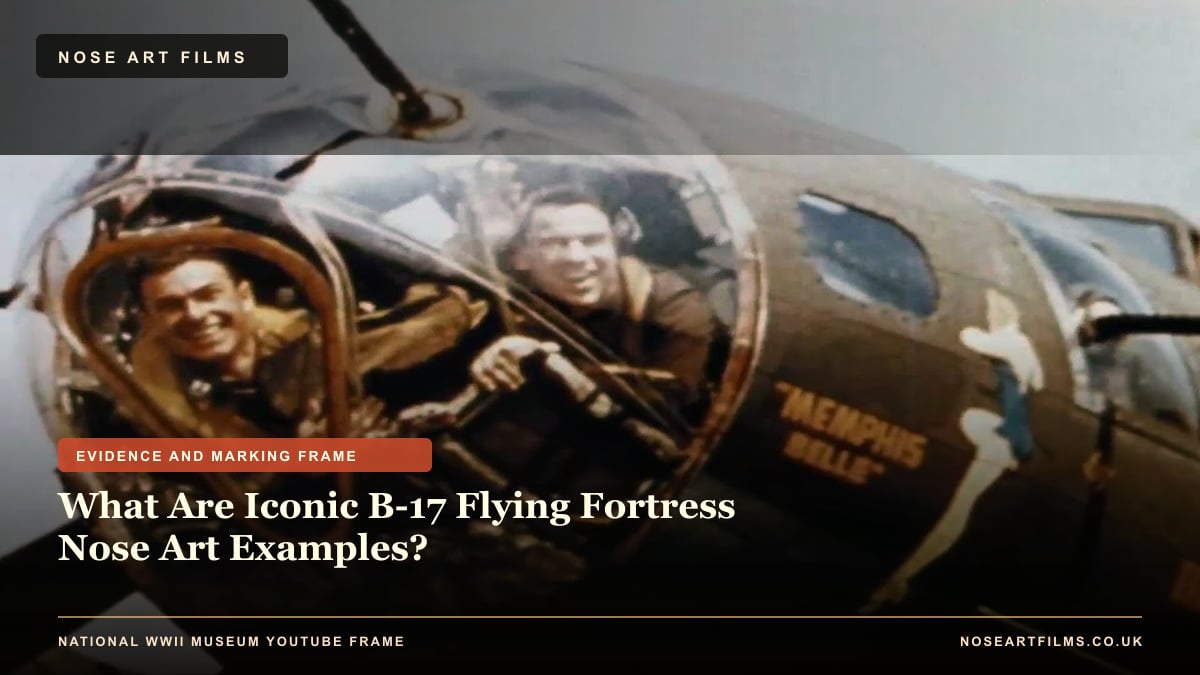
Iconic B-17 nose art examples include Memphis Belle, Shoo Shoo Baby, Sentimental Journey, Sally B, and Aluminum Overcast.
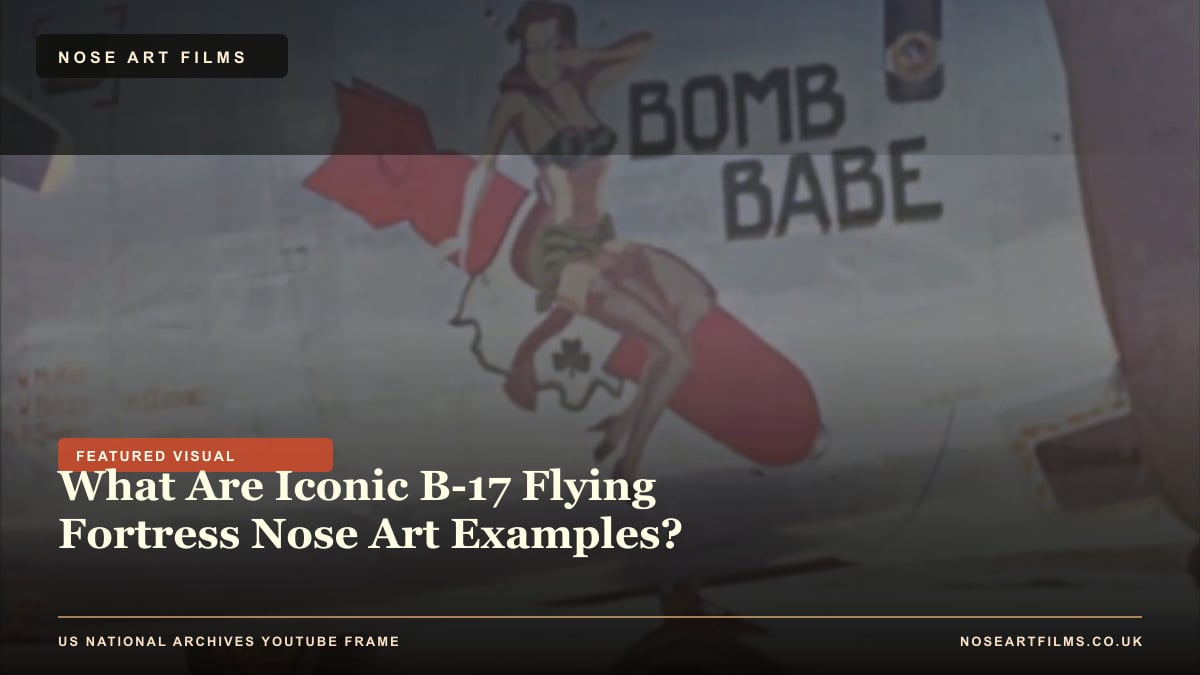
YouTube archival video frame prepared by Nose Art Films for What Are Iconic B-17 Flying Fortress Nose Art Examples?. Source: Sources and Visual Credits.
Iconic B-17 nose art examples include Memphis Belle, Shoo Shoo Baby, Sentimental Journey, Sally B, and Aluminum Overcast.
These aircraft appear in public memory through museums, documentaries, warbird displays, and model references.
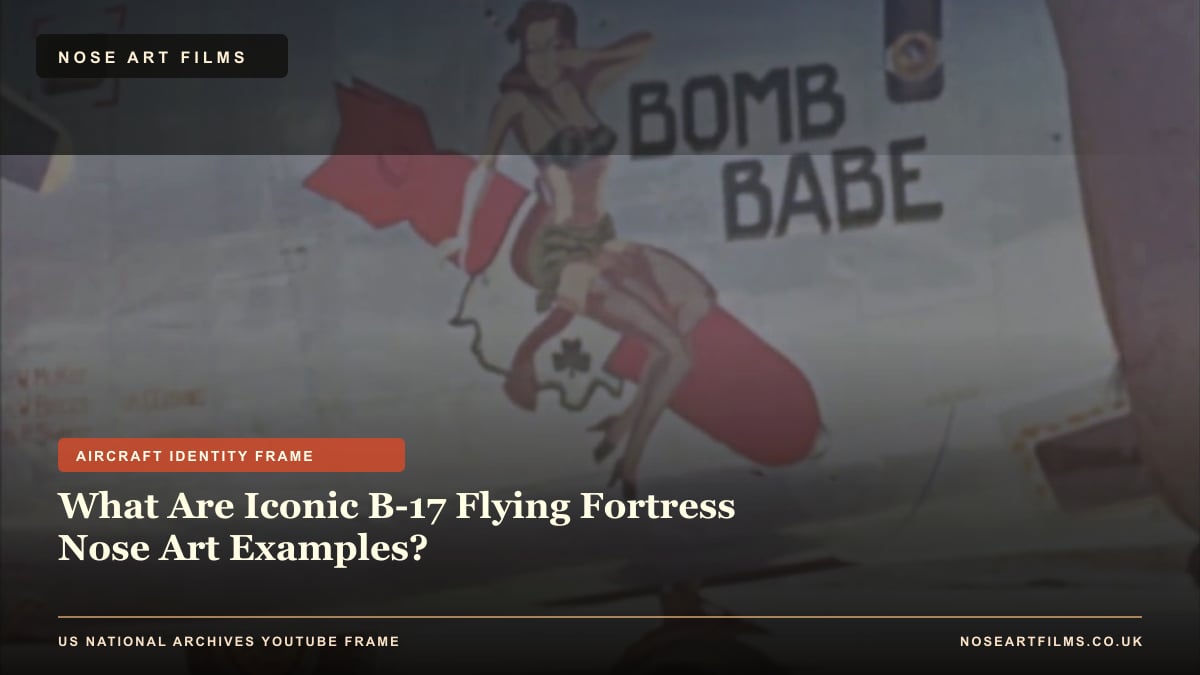
YouTube archival video frame prepared by Nose Art Films for What Are Iconic B-17 Flying Fortress Nose Art Examples?, showing aircraft identity, markings, and film evidence for this blog article.
What Are the Most Famous B-17 Nose Art Designs?
The most famous B-17 nose art design is Memphis Belle.
Its fame comes from combat record, wartime documentary exposure, later film recreation, and museum preservation.
How Does Memphis Belle Compare with Other B-17 Nose Art?
Memphis Belle has stronger recognition because it connects real aircraft history, documentary film, Hollywood film, and museum display.
Other B-17s can be historically important without the same film presence.
What Makes B-17 Nose Art Important in War Films?
B-17 nose art matters in war films because it provides aircraft identity, crew identity, and visual memory.
A named B-17 is easier to follow than an anonymous bomber.
Which B-17 Nose Art Examples Are Most Recreated?
The most recreated B-17 examples are highly documented and visually recognizable aircraft.
Memphis Belle has the strongest recreation value because of its evidence base and public fame.
What Are B-24 Liberator Nose Art Variations?
B-24 nose art variations are wide in scale, style, and placement.
The B-24's aircraft shape gave artists different surface options than the B-17.
How Did B-24 Nose Art Differ from B-17 Nose Art?
B-24 nose art differed through aircraft shape, placement, fuselage area, and theater use.
Some B-24 art used large side-fuselage compositions rather than compact nose placement.
Why Did B-24 Nose Art Have Different Placement and Scale?
B-24 art placement differed because of nose shape, gun positions, cockpit layout, and fuselage surface.
Aircraft design shaped artwork design.
What Are Famous B-24 Liberator Nose Art Examples?
Famous B-24 examples include The Dragon and His Tail and other documented Liberator artworks.
B-24 examples help compare bomber art beyond B-17-centered movie narratives.
How Do Movies Recreate B-24 Nose Art?
Movies recreate B-24 nose art through archival photos, aircraft profiles, model references, and digital textures.
The challenge is aircraft availability because flying B-24 aircraft are rarer than film demands.
How Did Fighter Plane Nose Art Differ from Bomber Nose Art?
Fighter plane nose art differed because fighters had smaller surfaces, single-pilot identity, and unit-based symbols.
Bomber nose art reflected larger crews and shared aircraft identity.
How Did P-51 Mustang Nose Art Differ from Bomber Nose Art?
P-51 Mustang nose art was smaller and more pilot-centered than bomber nose art.
The P-51 surface limited large multi-figure artwork.
What Is the History of the P-40 Warhawk Shark Mouth?
The P-40 Warhawk shark mouth is one of the most recognizable fighter aircraft markings.
It functioned as intimidation, unit identity, and aircraft recognition.
Was the Flying Tigers Shark Mouth Considered Nose Art?
The Flying Tigers shark mouth can be considered fighter nose art and unit marking.
It differs from bomber pin-up art because it emphasizes aggressive visual identity.
Did Fighter Pilots Use Aircraft Names Like Bomber Crews?
Fighter pilots used aircraft names, but bomber crews had stronger shared naming culture.
What Is the Real History Behind Enola Gay and Bockscar Artwork?
Enola Gay and Bockscar are important because their aircraft names became atomic mission symbols.
Their names are historically powerful even when their artwork differs from standard pin-up bomber art.
Did Enola Gay Have Traditional Nose Art?
Enola Gay had aircraft naming, not the same elaborate pin-up art common on many bombers.
The aircraft name became historically significant because of the Hiroshima mission.
Did Bockscar Have Traditional Nose Art?
Bockscar had aircraft naming and nose identification tied to the Nagasaki mission.
Its historical weight comes from the mission, not only the artwork.
How Did Atomic Bomber Naming Differ from Standard WWII Nose Art?
Atomic bomber naming differed through mission significance, secrecy, and postwar public memory.
The names became historical symbols beyond crew-level morale.
How Did Enola Gay and Bockscar Become Historical Symbols?
Enola Gay and Bockscar became symbols through atomic warfare, museum display, public controversy, and historical memory.
Their display context differs from ordinary bomber nose art.
What Role Did Nose Art Play in Public Morale and Propaganda?
Nose art supported public morale and propaganda by making aircraft crews visible, personal, and memorable.
Named aircraft helped media present bomber crews as identifiable wartime figures.
YouTube archival evidence frame prepared by Nose Art Films for What Are Iconic B-17 Flying Fortress Nose Art Examples?, with source status, marking logic, and screen-accuracy cues.
How Did Nose Art Shape Public Morale During WWII?
Nose art shaped morale through newsreels, photographs, aircraft tours, and named-bomber stories.
A named bomber created a story civilians could remember.
Did Newsreels and Newspapers Show Aircraft Nose Art?
Yes. Newsreels and newspapers showed aircraft nose art when the artwork supported publicity, crew identity, and war storytelling.
The 1944 Memphis Belle documentary is a major example of wartime bomber publicity.
Did the Military Use Famous Bomber Nose Art for Publicity?
Yes. Famous bomber nose art supported public recognition and morale campaigns.
Memphis Belle became a public symbol through documentary exposure and later museum preservation.
How Did Memphis Belle Become a Propaganda and Movie Symbol?
Memphis Belle became a symbol through combat fame, documentary film, aircraft naming, and later Hollywood recreation.
The aircraft moved from crew identity to public memory.
Did Offensive Nose Art Conflict with Public Morale Campaigns?
Yes. Offensive nose art could conflict with public-image goals.
Artwork that helped crew morale could still create public-relations problems.
What Sources Help Researchers Verify WWII Nose Art?
Researchers verify WWII nose art with primary records, wartime images, museum collections, squadron histories, and restoration files.
A single modern image is not enough.
What Primary Sources Document WWII Aircraft Nose Art?
Primary sources include wartime photographs, combat records, crew logs, squadron histories, aircraft serial records, and newsreels.
National archives and museums are stronger sources than unsourced image collections.
Where Can Researchers Find Wartime Nose Art Photos?
Researchers can find wartime nose art photos in national archives, museum collections, bomb group associations, veterans' collections, and aviation archives.
Group-specific collections are useful for unit-level identification.
Which Museums Preserve Nose Art Records?
Museums that preserve nose art records include military aviation museums, national WWII museums, and air force museums.
Museum records help separate original aircraft identity from restoration or film reproduction.
Are There Databases of WWII Aircraft Nose Art?
Yes. Databases and photo archives exist, but researchers must cross-check database entries with primary records.
Databases can contain restoration images, mislabeled aircraft, or postwar repainting.
How Do Researchers Identify Original Nose Art Artists?
Researchers identify artists through signatures, crew testimony, unit histories, museum notes, and repeated style evidence.
Artist identification is strongest when multiple records support the same attribution.
How Should Controversial Nose Art Be Handled in Films, Museums, and Games?
Controversial nose art should be handled with historical accuracy, clear context, and public sensitivity.
The goal is preservation without uncritical celebration.
How Do Film Studios Balance Historical Accuracy and Modern Standards?
Film studios balance accuracy and standards through full depiction, partial depiction, alteration, omission, or contextual framing.
The strongest choice depends on the film's purpose and audience.
How Do Museums Balance Preservation and Public Sensitivity?
Museums balance preservation and sensitivity through labels, warnings, educational panels, and documented conservation choices.
A museum can preserve an image while explaining its harmful or outdated content.
How Do Video Games Handle Platform Rules and Historical Markings?
Video games handle historical markings through platform rules, regional censorship, rating systems, and user-content moderation.
Games face more repeatable and scalable content rules than films.
How Do Model Companies Handle Controversial Decal Sheets?
Model companies handle controversial decal sheets through omission, alternate decals, separate sheets, or historical notes.
The decision affects both historical accuracy and market access.
How Does Public Reaction Influence Modern Nose Art Display?
Public reaction influences display through institutional policy, reputation risk, education goals, and cultural sensitivity.
Modern display decisions are part of the historical accuracy debate.
Frequently Asked Questions About the Historical Accuracy of Nose Art in War Films
Was WWII Nose Art Officially Allowed?
WWII nose art was tolerated rather than fully official.
Did Most WWII Bombers Have Nose Art?
No single verified percentage proves that most WWII bombers had nose art across all forces and theaters.
Why Did Bomber Crews Paint Pin-Ups on Aircraft?
Bomber crews painted pin-ups for morale, aircraft identity, popular-culture expression, and crew bonding.
How Accurate Is Memphis Belle 1990 Nose Art?
Memphis Belle 1990 nose art is historically based but recreated.
How Accurate Is Masters of the Air Nose Art?
Masters of the Air nose art is a research-based modern recreation tied to 100th Bomb Group and Eighth Air Force context.
Did Catch-22 Use Realistic Aircraft Nose Art?
Catch-22 used plausible B-25 nose art, but exact accuracy depends on whether the viewer compares it to specific real aircraft.
Why Do Modern Films Censor Authentic Nose Art?
Modern films censor authentic nose art because of nudity, racist imagery, profanity, ratings, audience standards, and distribution rules.
What Is the Best Way to Verify Movie Nose Art Accuracy?
The best verification method is wartime photo comparison with aircraft serials, unit records, museum files, and production stills.
Final Answer
Historical accuracy of nose art in war films depends on verified aircraft identity, authentic artwork, correct unit markings, military context, and transparent production choices.
War-film nose art accuracy is strongest when movies connect real WWII aircraft art, documented crew culture, military rules, historical consultants, and ethical modern display without separating the artwork from its historical source.