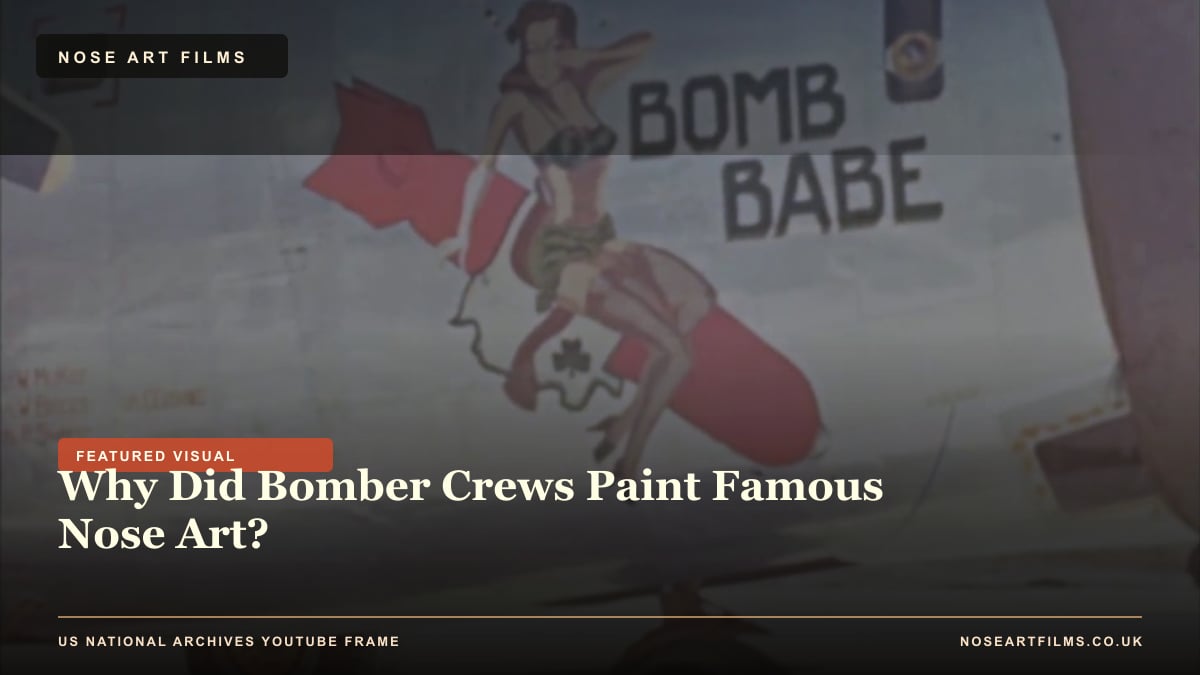
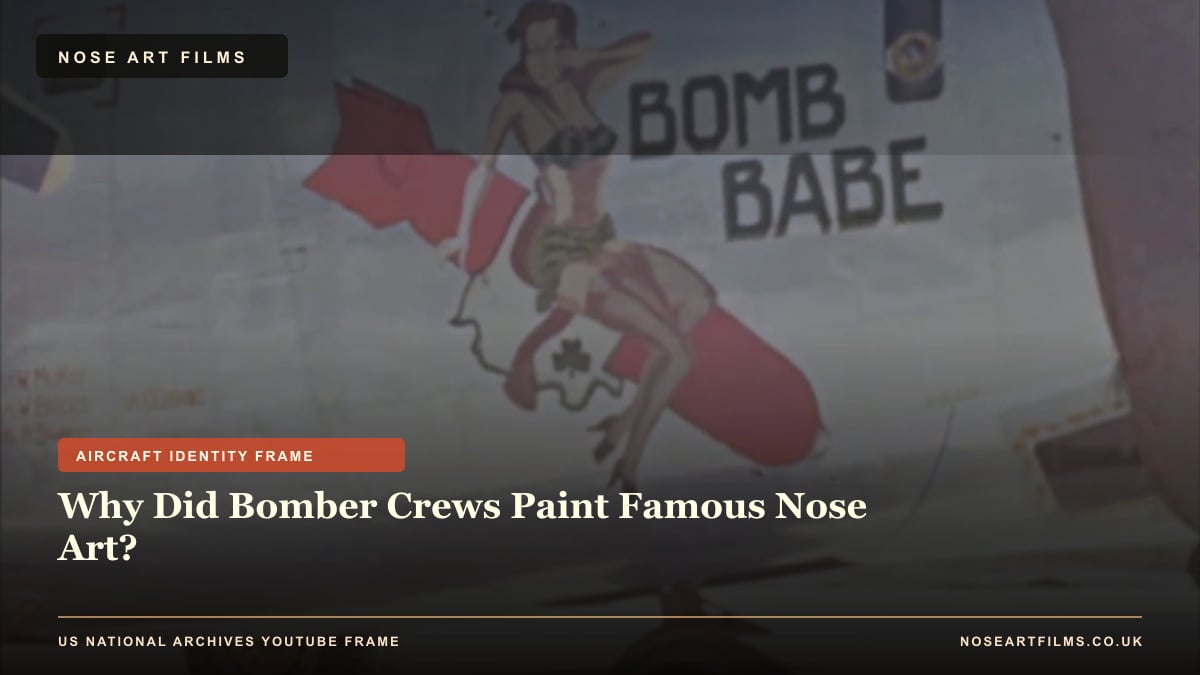
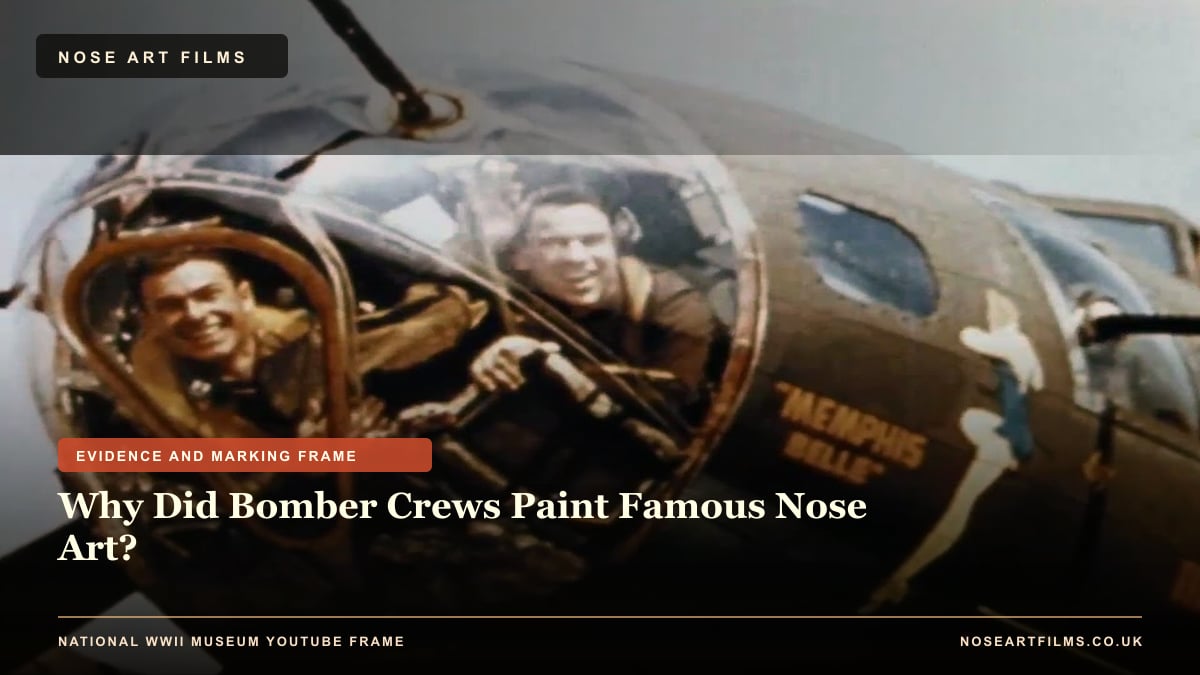
YouTube archival video frame prepared by Nose Art Films for Why Did Bomber Crews Paint Famous Nose Art?, showing aircraft identity, markings, and film evidence for this blog article.
What Was the Psychological Purpose of Aircraft Nose Art?
The psychological purpose of aircraft nose art was morale and shared identity.
The National WWII Museum states that USAAF leadership allowed crews to express themselves through nose art because it was recognized as a morale booster.
How Did Nose Art Support Crew Morale?
Nose art supported crew morale by giving the crew a shared symbol.
A named aircraft helped crews attach meaning to repeated missions.
How Did Aircraft Names Create Crew Identity?
Aircraft names created crew identity by linking a machine to a crew, mission history, and shared memory.
The aircraft name became a crew signifier.
Did Crews Believe Nose Art Brought Luck?
Some crews treated nose art as a luck symbol.
The belief was psychological. Aircraft survival still depended on training, maintenance, tactics, weather, and chance.
How Did Superstition Shape Aircraft Names?
Superstition shaped aircraft names through lucky words, mascots, charms, protective symbols, and naming rituals.
The name created emotional control in dangerous conditions.
Why Were Mascots Common in Aircraft Nose Art?
Mascots were common because animals, cartoons, symbols, and jokes created a simple crew identity.
A mascot made an aircraft easier to remember and recognize.
How Did Pin-Up Culture Influence Famous Aircraft Nose Art?
Pin-up culture influenced famous aircraft nose art through magazine illustration, calendar art, Vargas-style figures, Petty Girls, advertising art, and cartoons.
The Memphis Belle is a documented example of Petty-style influence.
How Did Alberto Vargas Influence Wartime Aircraft Art?
Alberto Vargas influenced wartime aircraft art through glamour illustration style.
Vargas-style figures shaped many pin-up aircraft designs.
How Did George Petty Influence Bomber Nose Art?
George Petty influenced bomber nose art through Petty Girl illustrations.
The Memphis Belle nose art was based on a George Petty illustration from the April 1941 edition of Esquire.
What Is the Difference Between Vargas Girls and Petty Girls in Aircraft Art?
Vargas Girls and Petty Girls were different pin-up illustration styles.
For movie accuracy, the key question is whether the film matches the correct source style for the aircraft.
Why Were Pin-Up Women Common on WWII Bombers?
Pin-up women were common because popular magazines, male crew culture, and morale practices shaped aircraft personalization.
The artwork carried home-front visual culture into military aviation.
Adaptation varied by artist skill, crew request, aircraft surface, and available paint.
Why Were Cartoons Used in Bomber Nose Art?
Cartoons were used because they gave crews humor, mascots, recognizable figures, and simple visual identity.
Cartoon art was easier to adapt than complex realistic illustration.
Who Painted Famous WWII Aircraft Nose Art?
Famous WWII aircraft nose art was painted by ground crews, mechanics, airmen, sign painters, trained artists, and unit specialists.
Some artists became known through museum records, unit histories, or signatures.
Who Were the Famous Real-Life Nose Artists of WWII?
Tony Starcer is one famous real-life WWII nose artist.
His work is tied to the 91st Bomb Group and the Memphis Belle context.
Was Tony Starcer a Famous Aircraft Nose Artist?
Yes. Tony Starcer was a famous aircraft nose artist.
The National Museum of the U.S. Air Force states that he painted nose art on several 91st Bomb Group aircraft and aircrew flight jackets.
Did Aircraft Mechanics Paint Nose Art?
Yes. Aircraft mechanics painted or maintained nose art.
Mechanics had aircraft access and could update mission tallies, repair paint, or support unit artists.
Did Ground Crews Maintain Nose Art?
Yes. Ground crews maintained nose art when aircraft weathering, combat repair, or mission tally updates changed the painted surface.
Maintenance made nose art a living aircraft record.
Were Aircraft Nose Artists Credited for Their Work?
Some aircraft nose artists were credited through signatures, unit histories, memoirs, and museum documentation.
Many artists remain unidentified because wartime art was informal.
How Do Movies and Video Games Differ in Showing Nose Art?
Movies and video games differ because movies prioritize cinematic storytelling, while games prioritize selectable models, liveries, and repeatable assets.
Both media face accuracy and censorship limits.
Are War Video Games More Accurate Than Movies for Aircraft Markings?
War video games can be more accurate for aircraft variants and selectable skins.
Movies can be more accurate for physical scale and texture when they use real aircraft or high-quality replicas.
Why Do Games Include or Censor Aircraft Nose Art?
Games include nose art for historical realism and aircraft customization.
Games censor nose art because of ratings, platform policies, regional laws, and user-generated content rules.
How Do Model Kits Handle Famous Aircraft Nose Art?
Model kits handle famous aircraft nose art through decals, paint guides, aircraft profiles, and marking options.
A model kit can be more aircraft-specific than a film scene.
Are Movie Nose Art Decals Historically Accurate?
Movie nose art decals can be movie-accurate and historically inaccurate.
The correct label depends on whether the decal represents the real aircraft, restored aircraft, or film aircraft.
How Do Documentaries Show Aircraft Nose Art Differently from Feature Films?
Documentaries show aircraft nose art as evidence or historical subject.
Feature films use nose art as storytelling, character identity, and visual design.
How Do Museums Treat Famous Aircraft Nose Art Compared with Movies?
Museums treat famous aircraft nose art as historical evidence, restoration subject, or public display object.
Movies treat nose art as screen identity and production design.
Where Can Viewers Find Famous Nose Art Movie Images?
Viewers can find famous nose art movie images in film stills, official trailers, production photos, museum records, documentary stills, and wartime photo archives.
YouTube archival evidence frame prepared by Nose Art Films for Why Did Bomber Crews Paint Famous Nose Art?, with source status, marking logic, and screen-accuracy cues.
The best source depends on whether the viewer wants movie accuracy or wartime accuracy.
Where Can Viewers Find War Movie Aircraft Screenshots?
Viewers can find war movie aircraft screenshots in trailers, official clips, publicity images, and frame captures.
Screenshots identify movie markings, not original wartime markings.
Where Can Viewers Find Aircraft Nose Art Film Stills?
Viewers can find aircraft nose art film stills through official studio materials, production galleries, archive collections, and aviation film discussions.
Film stills should be compared with wartime records before accuracy claims are made.
Where Can Viewers Find Wartime Nose Art Reference Photos?
Viewers can find wartime nose art reference photos in national archives, museum collections, veterans' collections, bomb group associations, and aircraft databases.
Wartime photos are the strongest visual evidence for original aircraft art.
Where Can Viewers Find Memphis Belle Nose Art Images?
Viewers can find Memphis Belle nose art images through National Museum of the U.S. Air Force materials, wartime photographs, documentary stills, and film stills.
Museum records are strongest for verified aircraft identity.
Where Can Viewers Find Masters of the Air Aircraft Marking References?
Viewers can find Masters of the Air marking references through museum consultancy materials, 100th Bomb Group records, production stills, and wartime photographs.
Official production and archive sources provide context for the series' B-17 reference work.
Where Can Viewers Find Catch-22 B-25 Nose Art Images?
Viewers can find Catch-22 B-25 nose art images through series stills, production breakdowns, VFX interviews, and film screenshots.
The VFX interview confirms art-department-created liveries for the 2019 series.
How Do Model Builders Use Famous War Movie Nose Art?
Model builders use famous war movie nose art through decals, paint guides, film stills, wartime photos, and aircraft profiles.
The builder must decide whether the model represents the real aircraft or the movie aircraft.
What Famous War Movie Nose Art Decals Are Available for Model Kits?
Famous war movie nose art decals include Memphis Belle and other B-17 markings.
Availability changes by kit maker, scale, licensing, and decal sheet.
Are Memphis Belle Movie Decals Historically Accurate?
Memphis Belle movie decals can be accurate to the movie and different from the wartime aircraft.
The target matters: 1990 film aircraft, real B-17F aircraft, or restored museum aircraft.
Are Movie Aircraft Decals Different from Wartime Decals?
Yes. Movie aircraft decals can differ from wartime decals.
Movie decals reproduce production markings. Wartime decals attempt to reproduce the aircraft's historical markings.
How Do Model Builders Verify Famous Aircraft Nose Art?
Model builders verify famous aircraft nose art by comparing decal sheets with wartime photos, museum images, film stills, and aircraft profiles.
The model subject should be defined before choosing markings.
Should Model Builders Use Movie Markings or Wartime Markings?
Model builders should use movie markings for a film-accurate build.
They should use wartime markings for a historical-aircraft build.
How Should Controversial Aircraft Nose Art Be Shown in Films?
Controversial aircraft nose art should be shown with accuracy, context, and public sensitivity.
Historical preservation does not require uncritical celebration.
How Do Museums Display Controversial Aircraft Nose Art?
Museums display controversial aircraft nose art with labels, warnings, curatorial explanation, and historical framing.
A museum can preserve evidence while explaining harmful imagery.
Should Offensive Nose Art Be Preserved as Historical Evidence?
Offensive nose art can be preserved as historical evidence.
Preservation allows historians to explain wartime sexism, racism, propaganda, morale, and military culture.
How Do Video Games Handle Offensive Historical Aircraft Markings?
Video games handle offensive historical aircraft markings through platform rules, rating systems, regional censorship, and moderation.
Interactive media face stricter repeat-use and user-content issues than feature films.
How Do Model Companies Handle Controversial Nose Art Decals?
Model companies handle controversial decals through omission, alternate sheets, separate decals, warning notes, or historical explanations.
The decision affects both historical accuracy and market access.
How Can Controversial Aircraft Art Be Shown with Historical Context?
Controversial aircraft art can be shown with explanatory labels, restricted framing, historical notes, and clear separation between documentation and endorsement.
The purpose should be education, not decoration.
Frequently Asked Questions About Famous Nose Art in War Movies
What Is the Most Famous Nose Art in War Movies?
The most famous nose art in war movies is Memphis Belle.
It connects real B-17 history, wartime film, Hollywood recreation, and museum preservation.
Which War Movies Show Famous Aircraft Nose Art?
War movies and series that show famous aircraft nose art include Memphis Belle, Masters of the Air, and Catch-22.
These titles cover B-17 and B-25 aircraft art.
Was Memphis Belle Nose Art Real or Recreated?
Memphis Belle nose art was real wartime artwork and was recreated for the 1990 movie.
The real artwork is documented by the National Museum of the U.S. Air Force.
What Famous Nose Art Appears in Masters of the Air?
Masters of the Air shows recreated B-17 nose art and aircraft markings tied to the 100th Bomb Group.
The series used museum consultation and B-17 reference material.
Did Catch-22 Use Real B-25 Nose Art?
Catch-22 used B-25-style nose art and art-department-created liveries.
The 2019 production digitized 2 real B-25s and created different liveries, including nose art.
Is the P-40 Shark Mouth Considered Nose Art?
Yes. The P-40 shark mouth can be considered fighter nose art and unit marking.
It is different from bomber pin-up art because it works as aggressive aircraft identity.
Did Enola Gay and Bockscar Have Traditional Nose Art?
Enola Gay and Bockscar are famous aircraft names, not standard pin-up-style nose art examples.
Bockscar's nose art was added after the Nagasaki mission, according to the National Museum of the U.S. Air Force.
How Do Movies Recreate Famous Aircraft Nose Art?
Movies recreate famous aircraft nose art through research, art direction, temporary markings, decals, CGI textures, replicas, and weathering.
The method depends on the aircraft, budget, and accuracy goal.
How Can Viewers Verify Movie Aircraft Nose Art?
Viewers can verify movie aircraft nose art by comparing film stills with wartime photos, museum records, serial numbers, fuselage codes, tail markings, and mission tallies.
A verified answer needs more than one image.
Final Answer
Famous nose art in war movies is best understood through real aircraft markings, movie recreations, historical accuracy, and public memory.
The strongest examples include Memphis Belle, B-17 markings in Masters of the Air, B-25 markings in Catch-22, B-24 artworks such as The Dragon and His Tail, fighter shark-mouth markings, and aircraft names such as Enola Gay and Bockscar.