The National WWII Museum says USAAF leadership allowed pilots and crews to express themselves through nose art because it was recognized as a morale booster, while the U.S. Navy and Marine Corps forbade the practice more formally. (Decoding WWII Plane Nose Art | The National WWII Museum)
YouTube archival video frame prepared by Nose Art Films for Was WWII Aircraft Nose Art Officially Allowed?, showing aircraft identity, markings, and film evidence for this blog article.
Was USAAF Nose Art Regulated or Tolerated?
USAAF nose art was tolerated under commander discretion.
Formal markings identified nationality, unit, and aircraft. Nose art personalized the aircraft.
What Were the USAAF Rules on Aircraft Nose Art During WWII?
USAAF rules separated official markings from unofficial crew art.
National insignia, squadron codes, serials, and unit markings were official. Pin-ups, cartoons, mascots, and slogans were tolerated crew expression.
Did Commanders Allow Pin-Up Nose Art on Bombers?
Many USAAF commanders allowed pin-up nose art when they viewed it as morale-supporting aircraft personalization.
The tolerance was not unlimited. Explicit or publicly embarrassing art could be altered or removed.
Were Mission Tallies Treated Differently from Decorative Nose Art?
Mission tallies were treated differently because they recorded operational history.
A bomb tally or kill marking carried service information. A pin-up or joke carried crew expression.
Did Rules Differ by Squadron, Group, Air Base, or Theater?
Rules differed by squadron, group, air base, commander, and theater.
This variation explains why some aircraft carried elaborate art while others carried little or none.
Did Commanders Remove Offensive Aircraft Nose Art During WWII?
Commanders removed offensive aircraft nose art when they judged it indecent, unauthorized, or harmful to military image.
Exact removal frequency is hard to prove because enforcement was local and unevenly documented.
How Was Offensive Nose Art Painted Over?
No reliable single percentage measures how offensive nose art was painted over.
The better answer is conditional: removal depended on commander standards, public visibility, inspection pressure, and artwork content.
What Types of Aircraft Nose Art Were Most Likely to Be Censored?
The most likely censored types were explicit nudity, obscene wording, racist caricature, unauthorized symbols, and public-relations risks.
Modern films and museums also alter or contextualize these categories.
Were Crews Punished for Unauthorized Nose Art?
Crews were more ordered to alter or remove artwork than publicly punished for nose art.
Discipline depended on commander discretion and the severity of the image.
How Did Unit-Level Command Affect Nose Art Freedom?
Unit-level command affected nose art freedom through local tolerance or restriction.
A permissive commander allowed more aircraft personalization. A stricter commander limited or removed it.
Why Do Modern Movies Censor Authentic WWII Nose Art?
Modern movies censor authentic WWII nose art because of nudity, racist imagery, profanity, ratings, distribution rules, and modern audience standards.
Censorship can reduce visual accuracy, but contextual presentation can preserve historical understanding.
What Types of Authentic Nose Art Are Altered in Modern Films?
Modern films alter nudity, sexualized pin-up art, racist caricatures, profanity, and politically sensitive symbols.
These changes affect both historical accuracy and audience reception.
How Do Studios Handle Sexualized Pin-Up Nose Art?
Studios handle sexualized pin-up nose art through cropping, costume changes, softening, digital alteration, omission, or selective framing.
The final choice depends on rating, platform, and narrative importance.
How Do Studios Handle Racist or Offensive Wartime Aircraft Imagery?
Studios handle offensive wartime imagery through removal, avoidance, partial framing, or contextual presentation.
Context matters because unframed reproduction can make harmful imagery appear decorative.
Does Censoring Nose Art Reduce Historical Accuracy?
Censoring nose art can reduce visual historical accuracy.
A film can reduce that loss by explaining the original artwork, showing it in context, or acknowledging historical alteration.
How Do Films Balance Accuracy and Modern Audience Standards?
Films balance accuracy and modern standards through historical consultation, selective depiction, content review, contextual framing, and production design choices.
The strongest approach preserves history without treating offensive imagery as harmless decoration.
How Did RAF and USAAF Nose Art Traditions Differ?
RAF and USAAF nose art traditions differed in visibility, style, scale, and command tolerance.
The National WWII Museum notes that every air force developed its own style of aircraft art, and that American aircraft produced one of the largest and most graphic wartime nose art traditions. (Decoding WWII Plane Nose Art | The National WWII Museum)
Why Was USAAF Nose Art More Visible Than RAF Nose Art?
USAAF nose art was more visible because of American popular culture, pin-up magazines, larger bomber surfaces, and stronger crew-level personalization.
This difference matters when films portray American and British aircraft in the same war setting.
Did RAF Bombers Use Pin-Up Nose Art?
RAF bombers used aircraft decoration, but RAF nose art was less graphic and less widespread than USAAF bomber art.
A film should not apply USAAF-style pin-up culture automatically to RAF aircraft.
Was RAF Aircraft Art More Restrained Than USAAF Aircraft Art?
RAF aircraft art was more restrained than USAAF art.
The difference came from command culture, national style, aircraft assignment, and public display standards.
How Did British and American Military Cultures Shape Aircraft Art?
American military culture supported stronger individual aircraft identity and popular illustration.
British military culture leaned more toward squadron identity, understatement, and restrained humor.
How Did U.S. Navy Aircraft Art Differ from USAAF Nose Art?
U.S. Navy aircraft art was more restricted than USAAF bomber art.
YouTube archival evidence frame prepared by Nose Art Films for Was WWII Aircraft Nose Art Officially Allowed?, with source status, marking logic, and screen-accuracy cues.
The National WWII Museum states that U.S. Navy and Marine Corps practice forbade nose art more formally, though aircraft farther from central oversight sometimes still carried it. (Decoding WWII Plane Nose Art | The National WWII Museum)
Why Did Bomber Crews Use Aircraft Nose Art?
Bomber crews used aircraft nose art for morale, identity, aircraft recognition, combat-stress relief, humor, and crew bonding.
Nose art made a dangerous aircraft feel personal.
What Was the Psychological Purpose of Nose Art for Bomber Crews?
The psychological purpose of nose art was crew morale and shared aircraft identity.
Adaptation changed by artist skill, available paint, aircraft surface, and crew request.
Who Painted WWII Aircraft Nose Art?
WWII aircraft nose art was painted by ground crew, mechanics, airmen, sign painters, trained artists, and unit specialists.
Some artists became famous. Many remain unidentified.
Who Were the Famous Real-Life Nose Artists of WWII?
Tony Starcer is one famous USAAF nose artist.
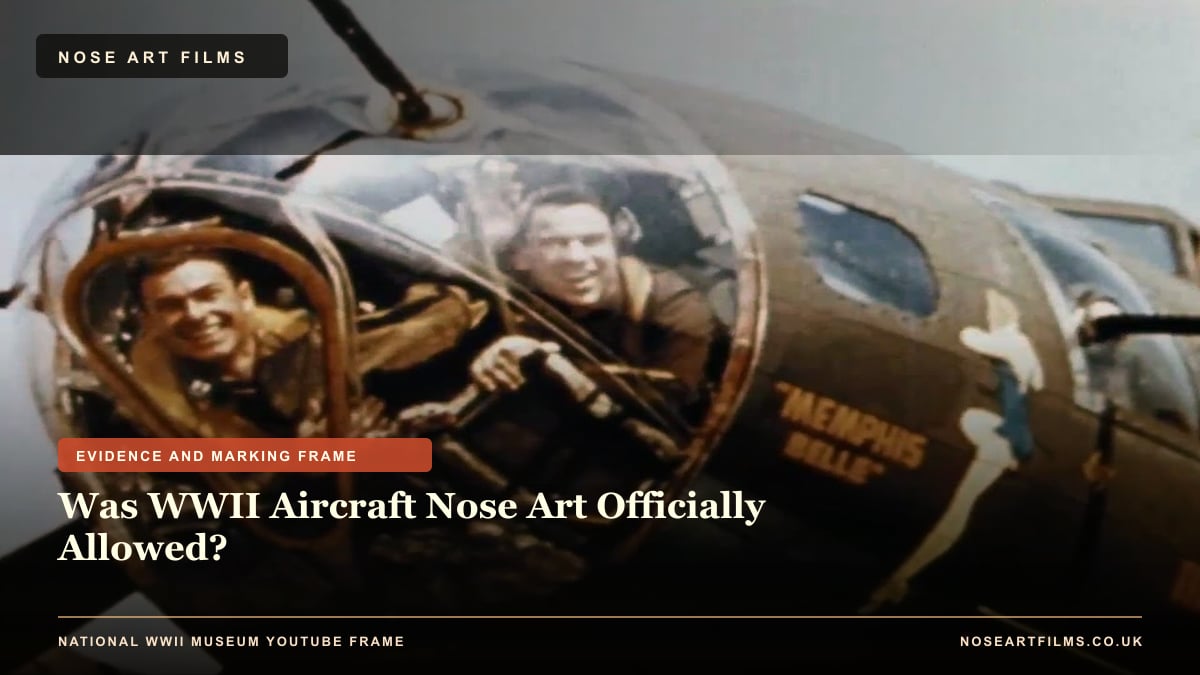
The National Museum of the U.S. Air Force states that Starcer touched up and repainted the Memphis Belle nose art and painted nose art on several 91st Bomb Group aircraft and aircrew flight jackets. (The Memphis Belle and Nose Art)
Was Tony Starcer a Famous Aircraft Nose Artist?
Yes. Tony Starcer was a famous aircraft nose artist associated with 91st Bomb Group aircraft.