Technique depended on materials, weather, aircraft surface, and artist skill.
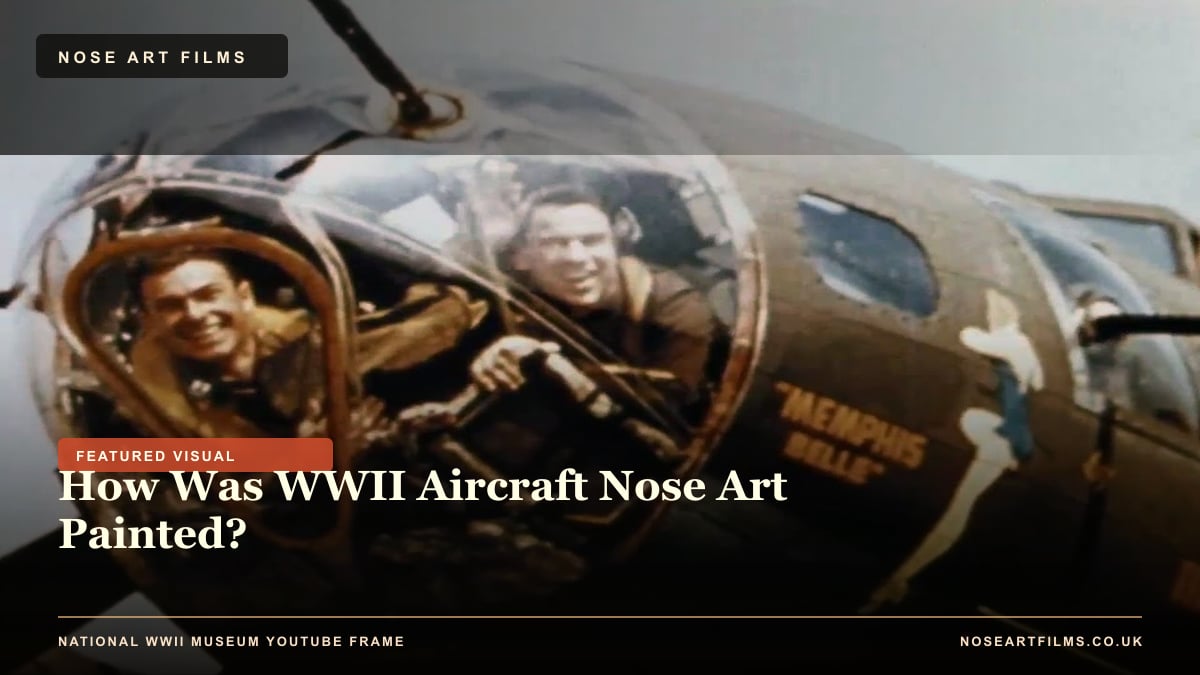
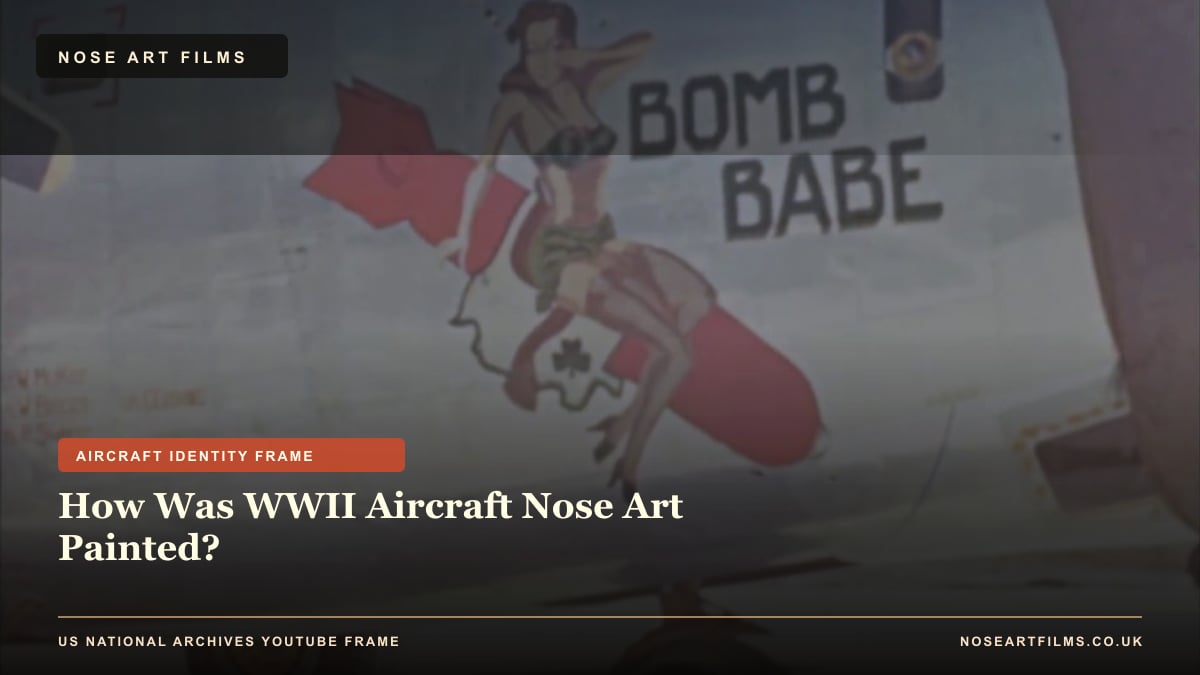
YouTube archival video frame prepared by Nose Art Films for How Was WWII Aircraft Nose Art Painted?, showing aircraft identity, markings, and film evidence for this blog article.
What Paint Types Were Used for WWII Aircraft Nose Art?
Nose artists used field-available paint and aircraft-compatible coatings.
Exact paint type varied by base supply, aircraft finish, and theater conditions.
Did Nose Artists Use Brushes, Airbrushes, or Stencils?
Nose artists used brushes, stencils, chalk sketches, freehand outlines, and airbrush effects.
Simple lettering could use stencils. Complex figures needed freehand work.
How Was Nose Art Applied to Metal Aircraft Surfaces?
Nose art was applied by cleaning the surface, sketching the design, outlining the art, painting the details, drying the paint, and touching up damage.
Combat repairs could interrupt or remove the artwork.
How Long Did It Take to Paint Bomber Nose Art?
Painting time depended on design complexity, aircraft schedule, weather, materials, and artist skill.
A simple aircraft name took less time than a large figure with color, shading, and lettering.
How Did Weather, Combat, and Maintenance Affect Nose Art?
Weather, combat, and maintenance affected nose art through fading, chipping, exhaust staining, patched panels, and repainting.
A clean movie aircraft can look inaccurate when the aircraft is supposed to be combat-worn.
Did Aircraft Nose Art Exist Before World War II?
Yes. Aircraft nose art existed before World War II as early aircraft personalization, unit marking, and personal emblem use.
World War II expanded the practice into a much larger visual culture.
Did Nose Art Exist in World War I Aviation?
Yes. World War I aviation used personal symbols, squadron insignia, aircraft markings, and painted emblems.
The practice was smaller and less developed than World War II bomber nose art.
What Are the Earliest Examples of Military Aircraft Nose Art?
Early military aircraft nose art included unit insignia, personal emblems, and identification marks.
These early markings helped create the foundation for later aircraft personalization.
How Did World War I Aircraft Markings Influence WWII Nose Art?
World War I aircraft markings influenced WWII nose art through squadron symbols, personal emblems, aircraft identity, and pilot personalization.
World War II added larger aircraft surfaces, bigger crews, and stronger popular-art influence.
How Did Interwar Aviation Culture Shape Aircraft Names and Markings?
Interwar aviation shaped aircraft names and markings through racing aircraft, commercial graphics, military unit identity, advertising art, and popular illustration.
These influences moved into World War II aircraft art through pilots, artists, and print culture.
Why Did Aircraft Nose Art Decline After World War II?
Aircraft nose art declined after World War II because of stricter regulations, jet aircraft design, standardized markings, professionalized military image, and institutional control.
Informal aircraft art became less acceptable in many postwar air forces.
How Did Post-WWII Regulations Restrict Nose Art?
Post-WWII regulations restricted nose art through standardized markings and tighter command control.
Unofficial artwork had less space in a formalized air force.
How Did the Jet Age Change Aircraft Nose Art?
The jet age changed aircraft nose art through smaller visible surfaces, higher speeds, standardized paint schemes, and institutional branding.
Large bomber-style pin-up panels became less common.
Did Nose Art Continue During the Korean War?
Yes. Nose art continued during the Korean War in reduced and changed forms.
The practice remained, but it did not dominate aircraft identity the way USAAF bomber art did during World War II.
Did Nose Art Continue During the Vietnam War?
Yes. Nose art continued during the Vietnam War in helicopter, gunship, and unit-marking culture.
Vietnam-era aircraft art used slogans, shark mouths, unit symbols, and personalized names.
Why Did Formal Military Markings Replace Informal Aircraft Art?
Formal military markings replaced informal aircraft art because of discipline, standardization, image control, and operational identity.
Modern aircraft markings became more institutional and less crew-driven.
How Do Movies and Video Games Differ in Aircraft Nose Art Accuracy?
Movies and video games differ because movies prioritize camera storytelling, while games prioritize interactive models, skins, and repeatable assets.
Both media must handle historical accuracy, censorship, and audience standards.
Are Video Games More Accurate Than Movies for Aircraft Markings?
Video games can be more accurate for aircraft variants and selectable liveries.
Movies can be more accurate for physical scale and texture when they use real aircraft, museum references, or high-quality replicas.
Why Do Some Games Include Historically Offensive Nose Art?
Some games include historically offensive nose art when they prioritize simulation accuracy or archive-based aircraft skins.
Platform rules and regional laws can still restrict those markings.
Why Do Some Games Censor Aircraft Nose Art?
Games censor aircraft nose art because of ratings, platform policies, regional laws, and user-generated content rules.
Game censorship is more systematic than film censorship.
How Do Model Kits Handle Aircraft Nose Art Accuracy?
Model kits handle aircraft nose art accuracy through decals, instruction sheets, paint guides, and aircraft-specific marking options.
A model kit can be more detailed than a movie because it targets aircraft enthusiasts.
Are Movie Aircraft Nose Art Decals Historically Accurate?
Movie aircraft nose art decals can be movie-accurate and historically inaccurate.
The correct judgment depends on whether the decal represents a wartime aircraft, a restored aircraft, or a film aircraft.
What Role Did Aircraft Nose Art Play in Public Morale and Propaganda?
Aircraft nose art supported public morale and propaganda by making aircraft crews visible, personal, and memorable.
Named aircraft helped newspapers, newsreels, and documentaries turn combat machines into public stories.
How Did Nose Art Shape Public Morale During WWII?
Nose art shaped public morale through named-bomber stories, newsreels, photographs, war bond publicity, and aircraft tours.
A named bomber gave civilians a story to remember.
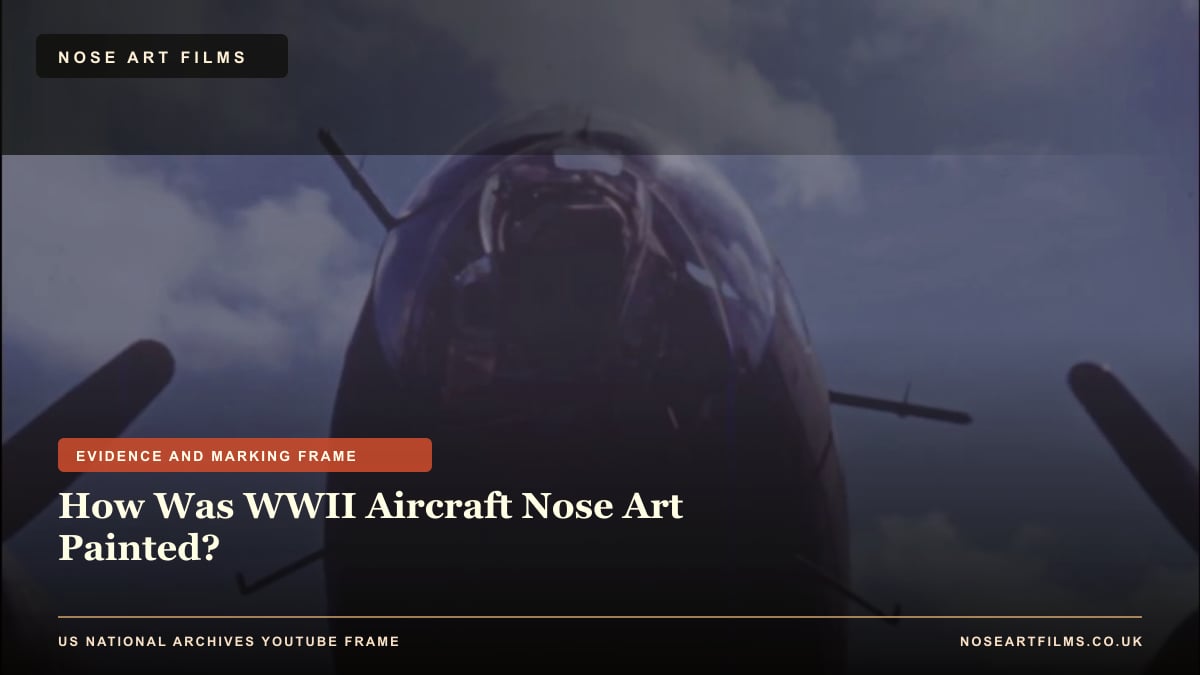
YouTube archival evidence frame prepared by Nose Art Films for How Was WWII Aircraft Nose Art Painted?, with source status, marking logic, and screen-accuracy cues.
Did Newsreels and Newspapers Show Aircraft Nose Art?
Yes. Newsreels and newspapers showed aircraft nose art when it supported crew identity and wartime storytelling.
Memphis Belle is a major example because its aircraft identity moved from combat service into documentary and later movie culture.
Did the Military Use Famous Bomber Nose Art for Publicity?
Yes. Famous bomber nose art supported public recognition and morale campaigns.
Memphis Belle became a public symbol through wartime media exposure and later museum preservation.
How Did Memphis Belle Become a Propaganda and Movie Symbol?
Memphis Belle became a propaganda and movie symbol through combat fame, documentary film, aircraft naming, nose art, and later Hollywood recreation.
The aircraft moved from crew identity to public memory.
Did Offensive Nose Art Conflict with Public Morale Campaigns?
Yes. Offensive nose art could conflict with public morale campaigns.
Artwork that helped crew morale could still create public-image problems.
How Can Viewers Identify Accurate Aircraft Nose Art in Movies?
Viewers can identify accurate aircraft nose art in movies by checking tail markings, serial numbers, mission tallies, fuselage codes, aircraft variants, paint schemes, and screenshot evidence.
The nose art alone is not enough.
How Can Tail Markings Verify Movie Aircraft Identity?
Tail markings verify movie aircraft identity by linking the aircraft to a group, unit, or theater.
A wrong tail marking can expose a historically inaccurate aircraft.
How Can Serial Numbers Verify Movie Aircraft Accuracy?
Serial numbers verify movie aircraft accuracy by connecting the screen aircraft to a known airframe record.
Serials also help separate real aircraft, restored aircraft, and film substitutes.
How Can Mission Tallies Help Verify Aircraft History?
Mission tallies help verify aircraft history by showing completed missions or combat claims.
A mission tally should fit the aircraft's service record and time period.
How Can Fuselage Codes Identify Movie Aircraft?
Fuselage codes identify movie aircraft by showing squadron assignment and aircraft position within a unit.
Codes must match the correct unit for strong accuracy.
How Can Paint Schemes Reveal Aircraft Marking Inaccuracies?
Paint schemes reveal inaccuracies when the finish does not match the aircraft type, theater, or period.
Wrong camouflage, overly clean weathering, or incorrect natural-metal finish can weaken accuracy.
How Should Controversial Nose Art Be Handled in Films, Museums, and Games?
Controversial nose art should be handled with historical accuracy, clear context, and public sensitivity.
The goal is preservation without uncritical celebration.
How Do Film Studios Balance Historical Accuracy and Modern Standards?
Film studios balance accuracy and modern standards through full depiction, partial depiction, alteration, omission, or contextual framing.
The best choice depends on the film's purpose, audience, and rating.
How Do Museums Display Controversial Aircraft Nose Art?
Museums display controversial aircraft nose art with labels, warnings, curatorial context, and educational framing.
A museum can preserve an image while explaining its harmful or outdated content.
Should Offensive Nose Art Be Preserved as Historical Evidence?
Offensive nose art can be preserved as historical evidence.
Preservation does not require approval. It allows historians to explain wartime culture, racism, sexism, propaganda, and morale honestly.
How Do Video Games Handle Offensive Historical Aircraft Markings?
Video games handle offensive historical markings through platform rules, rating systems, regional censorship, and user-content moderation.
Historical accuracy and content policy conflict in interactive media.
How Do Model Companies Handle Controversial Decal Sheets?
Model companies handle controversial decal sheets through omission, alternate decals, separate sheets, warning notes, or historical explanations.
The decision affects both accuracy and market access.
Frequently Asked Questions About Accurate Aircraft Nose Art in Movies
What Makes Aircraft Nose Art Accurate in Movies?
Aircraft nose art is accurate in movies when it matches the real aircraft name, artwork, placement, unit, serial number, paint scheme, and time period.
How Accurate Is WWII Aircraft Nose Art in War Films?
WWII aircraft nose art in war films is mixed in accuracy.
Some films recreate documented aircraft markings, while others use fictional, censored, or production-based artwork.
What Is the Difference Between Real Nose Art and Movie Nose Art?
Real nose art is wartime aircraft artwork.
Movie nose art is recreated artwork made for film through paint, decals, CGI, or production design.
How Accurate Is Memphis Belle 1990 Nose Art?
Memphis Belle 1990 nose art is historically based but recreated.
The film used the real Memphis Belle identity but depended on substitute movie aircraft.
How Accurate Is Masters of the Air Nose Art?
Masters of the Air nose art is a researched modern recreation.
Its accuracy depends on historical consultation, 100th Bomb Group references, CGI execution, and aircraft-specific markings. (Masters of the Air - Apple TV Press)
Did Catch-22 Use Historically Accurate Aircraft Nose Art?
Catch-22 used historically inspired B-25 nose art.
Why Do Modern Movies Censor Authentic WWII Nose Art?
Modern movies censor authentic WWII nose art because of nudity, racist imagery, profanity, ratings, distribution rules, and modern audience standards.
Censorship can reduce visual accuracy if the film gives no historical context.
How Can Viewers Verify Whether Movie Aircraft Nose Art Is Authentic?
Viewers can verify movie aircraft nose art by comparing film stills with wartime photos, museum records, aircraft serials, unit markings, and production notes.
A verified answer needs more than one image.
Final Answer
Accurate aircraft nose art in movies depends on verified aircraft identity, authentic artwork, correct markings, military context, production method, and clear handling of sensitive historical imagery.
A complete article on accurate aircraft nose art in movies must connect real wartime artwork, Hollywood recreation, aircraft types, movie case studies, military rules, art direction, CGI, historical consultants, visual verification, and ethical display.