The belief did not apply to every crew, but it was part of wartime aircraft culture.
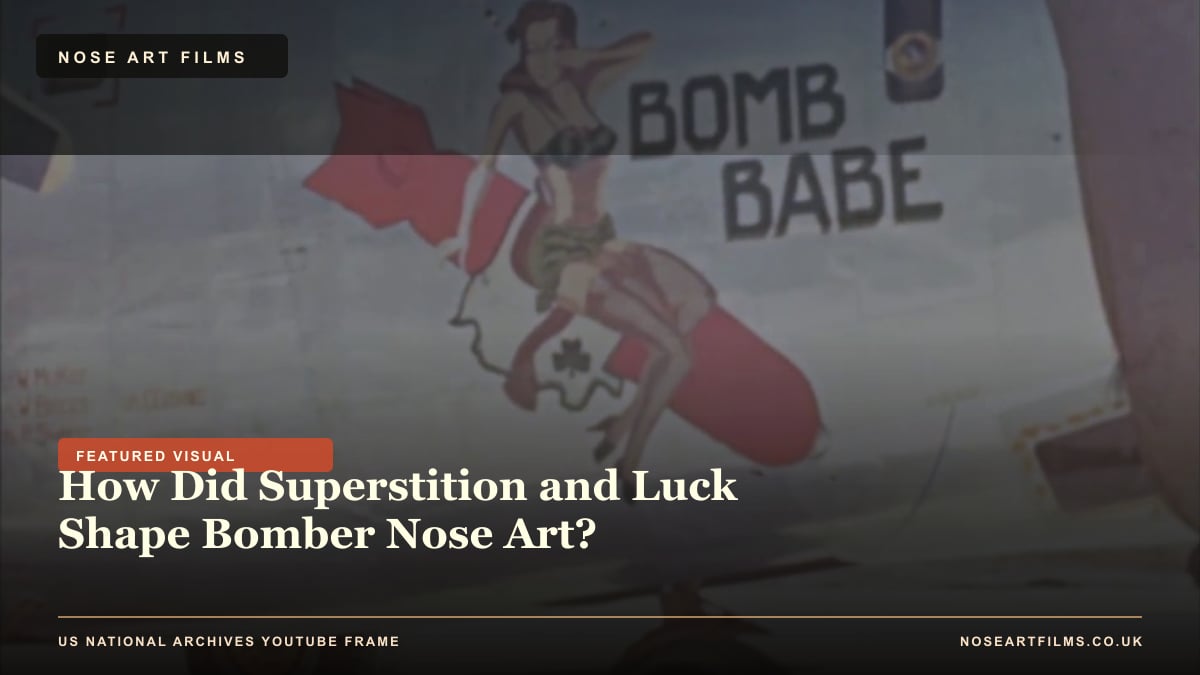
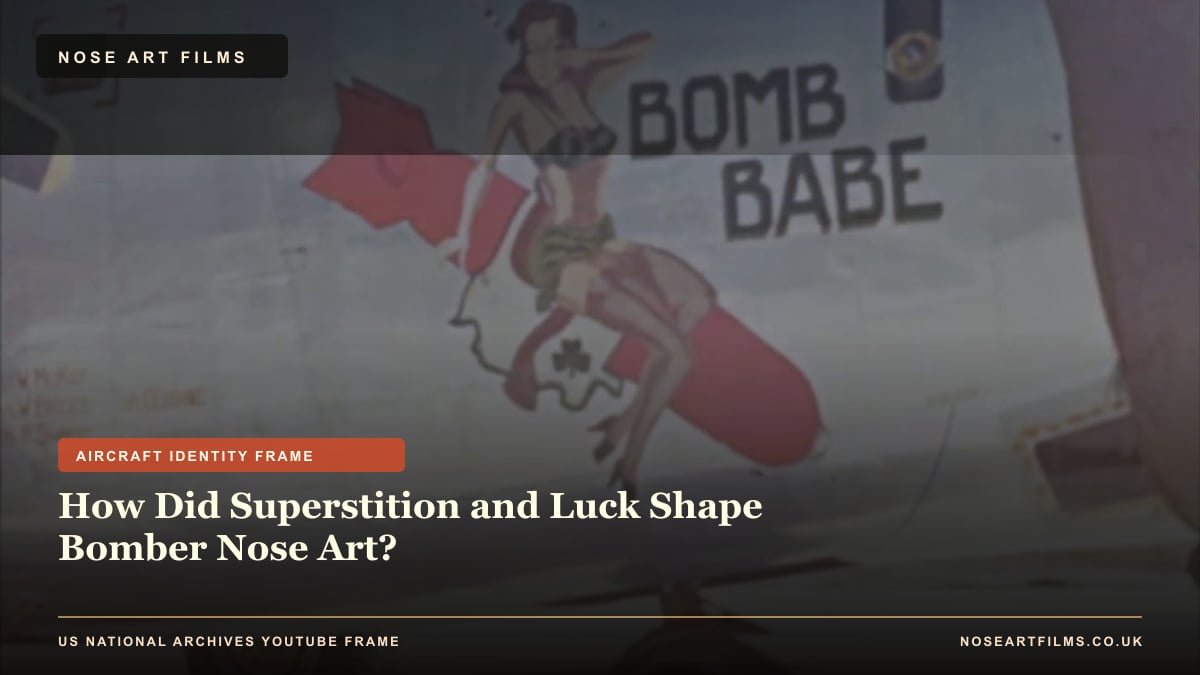
YouTube archival video frame prepared by Nose Art Films for How Did Superstition and Luck Shape Bomber Nose Art?, showing aircraft identity, markings, and film evidence for this blog article.
Why Did Crews Give Aircraft Lucky Names?
Crews gave aircraft lucky names to create control, continuity, and symbolic protection.
A lucky name gave the crew a repeated identity across dangerous missions.
How Did Mascots and Symbols Become Part of Nose Art?
Mascots and symbols became part of nose art through animals, cartoons, charms, flags, and personal references.
These symbols turned the aircraft into a crew emblem.
Did Crews Believe Nose Art Protected the Aircraft?
Some crews treated nose art as a luck symbol.
The belief was psychological, not operational. The aircraft still depended on training, maintenance, tactics, and chance.
How Did Naming Rituals Build Bomber Crew Identity?
Naming rituals built identity by turning aircraft assignment into crew ownership.
The name connected the aircraft to the crew's shared memory.
How Did Pin-Up Culture Influence WWII Nose Art?
Pin-up culture influenced WWII nose art through magazines, calendar art, Vargas-style figures, Petty Girls, cartoons, and advertising images.
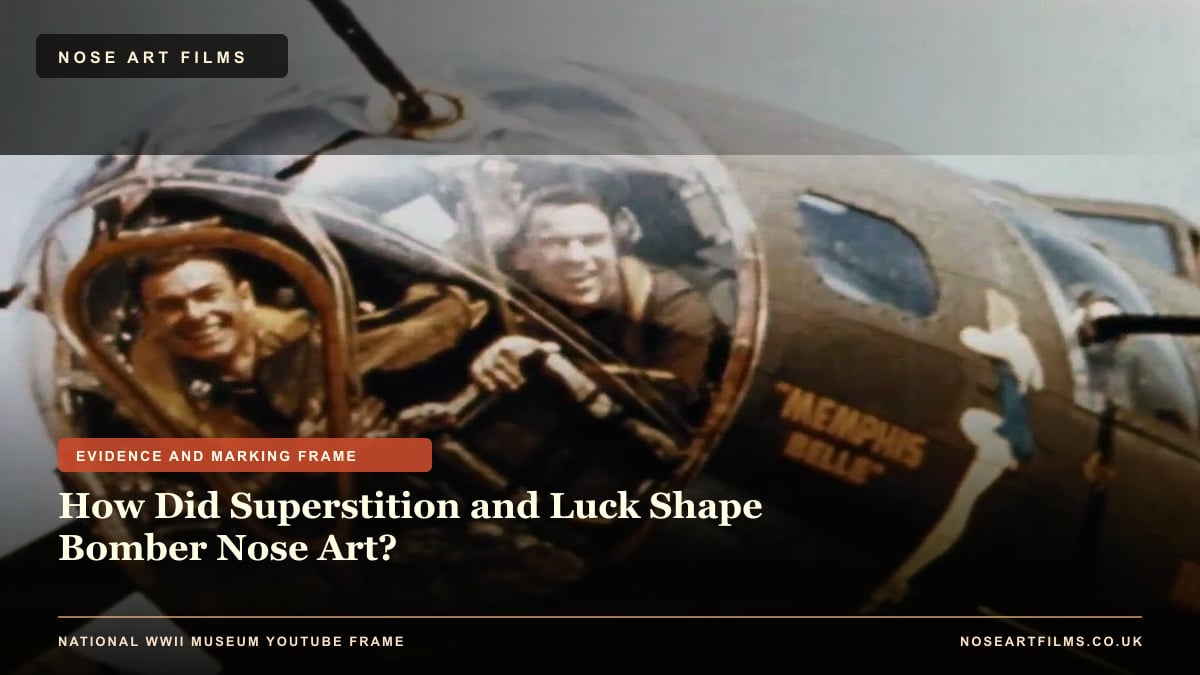
The Memphis Belle is a documented example. Its nose art was based on a George Petty illustration from the April 1941 edition of Esquire. (The Memphis Belle and Nose Art)
How Did Alberto Vargas Influence Aircraft Nose Art?
Alberto Vargas influenced aircraft nose art through glamour illustration style.
Vargas-style figures shaped the visual language of many wartime pin-up aircraft designs.
How Did George Petty Influence Bomber Art?
George Petty influenced bomber art through Petty Girl illustrations.
Adaptation changed by artist skill, aircraft surface, and crew request.
How Did Cartoons, Comics, and Advertising Influence Nose Art?
Cartoons, comics, and advertising influenced nose art through mascots, slogans, product imagery, and recognizable figures.
These sources made aircraft art readable to crews and civilians.
Who Painted WWII Aircraft Nose Art?
WWII aircraft nose art was painted by ground crew, mechanics, airmen, sign painters, trained artists, and unit specialists.
Some artists became known. Many remained unidentified.
Who Were the Famous Real-Life Nose Artists of WWII?
Tony Starcer is one famous USAAF nose artist.
The National Museum of the U.S. Air Force states that Starcer touched up and repainted Memphis Belle nose art and painted art on several 91st Bomb Group aircraft and aircrew flight jackets. (The Memphis Belle and Nose Art)
Did Aircraft Mechanics Paint Nose Art?
Yes. Aircraft mechanics and ground crew painted or maintained nose art because they had direct aircraft access.
Ground crews also updated mission tallies and repaired damaged art.
Did Professional Artists Serve in Bomber Groups?
Yes. Some trained artists served in bomber groups and became unit nose-art specialists.
Their backgrounds could include sign painting, commercial art, cartooning, or illustration.
Were Nose Artists Credited for Their Work?
Some nose artists were credited through signatures, unit histories, memoirs, and museum documentation.
Many aircraft artists were not formally recorded.
Which Documentaries Cover WWII Nose Artists?
WWII nose-art documentaries cover aircraft artists, crews, restored aircraft, and museum preservation.
A documentary list should be verified against film catalogs, museum programs, and aviation archives before publication.
How Was WWII Aircraft Nose Art Painted?
WWII aircraft nose art was painted with available aircraft paint, enamel, brushes, airbrushes, stencils, and freehand methods.
Technique depended on materials, weather, aircraft surface, and artist skill.
What Paint Types Were Used for WWII Aircraft Nose Art?
Nose artists used field-available paint and aircraft-compatible coatings.
Exact paint type varied by base supply, aircraft finish, and theater conditions.
Did Nose Artists Use Brushes, Airbrushes, or Stencils?
Nose artists used brushes, stencils, chalk sketches, freehand outlines, and airbrush effects.
Simple lettering could use stencils. Complex figures needed freehand work.
How Was Nose Art Applied to Metal Aircraft Surfaces?
Nose art was applied by cleaning, sketching, outlining, painting, drying, and touching up the aircraft surface.
Combat repair panels could interrupt or remove artwork.
How Long Did It Take to Paint Bomber Nose Art?
Painting time depended on art complexity, aircraft schedule, weather, materials, and artist skill.
YouTube archival evidence frame prepared by Nose Art Films for How Did Superstition and Luck Shape Bomber Nose Art?, with source status, marking logic, and screen-accuracy cues.
A small name took less time than a large figure with shading, color, and lettering.
How Did Weather, Combat, and Maintenance Affect Nose Art?
Weather, combat, and maintenance affected nose art through fading, chipping, exhaust staining, patched panels, and repainting.
A clean movie aircraft can look inaccurate when the aircraft is supposed to be combat-worn.
Did Nose Art Exist Before World War II?
Yes. Nose art existed before World War II as early aircraft personalization and unit marking.
World War II expanded the practice into a larger visual culture.
Did Nose Art Exist in World War I Aviation?
Yes. World War I aviation used personal symbols, squadron insignia, and aircraft markings.
The practice was smaller than World War II bomber nose art.
What Are the Earliest Examples of Military Aircraft Nose Art?
Early military aircraft nose art included unit insignia, personal emblems, and identification marks.
These examples created the foundation for later aircraft personalization.
How Did World War I Aircraft Markings Influence WWII Nose Art?
World War I markings influenced WWII nose art through insignia, emblems, aircraft identity, and pilot personalization.
World War II added larger aircraft surfaces, bigger crews, and stronger popular-art influence.
How Did Interwar Aviation Culture Shape Aircraft Names and Markings?
Interwar aviation shaped aircraft markings through racing aircraft, commercial graphics, popular illustration, and military unit identity.
These influences entered WWII through pilots, artists, and print culture.
Why Did Nose Art Decline After World War II?
Nose art declined after World War II because of stricter regulation, jet aircraft design, professionalized military image, and standardized markings.
Informal artwork became less accepted in many postwar contexts.
How Did Post-WWII Regulations Restrict Nose Art?
Post-WWII regulations restricted nose art through standardized aircraft markings and tighter command control.
Unofficial art had less space in a more formalized air force.
How Did the Jet Age Change Aircraft Art?
The jet age changed aircraft art through smaller visible surfaces, higher speeds, standardized schemes, and institutional branding.
Large bomber-style pin-up panels became less common.
Did Nose Art Continue During the Korean War?
Yes. Nose art continued in reduced and changed forms during the Korean War.
The practice existed but did not dominate aircraft identity as strongly as WWII USAAF bomber culture.
Did Nose Art Continue During the Vietnam War?
Yes. Nose art continued in helicopter and gunship culture during the Vietnam War.
Vietnam-era art used slogans, shark mouths, unit symbols, and personalized names.
Why Did Formal Military Markings Replace Informal Aircraft Art?
Formal military markings replaced informal aircraft art because of discipline, standardization, image control, and operational identity.
Modern aircraft markings became more institutional.
How Accurate Is Nose Art in Vietnam War Helicopter Movies?
Vietnam War helicopter movie nose art is accurate when it matches helicopter unit culture, improvised markings, crew slogans, and aircraft type.
It should not be judged by WWII bomber standards alone.
How Did Vietnam Helicopter Nose Art Differ from WWII Bomber Nose Art?
Vietnam helicopter nose art differed through smaller aircraft surfaces, shorter slogans, unit symbols, and crew-level improvisation.
Bomber art used larger figures and mission tallies.
What Nose Art Appears in Vietnam War Helicopter Films?
Vietnam helicopter films show shark mouths, unit names, slogans, crew marks, and improvised symbols.
Accuracy depends on the specific unit and aircraft model.
How Accurate Are Huey and Cobra Helicopter Markings in Movies?
Huey and Cobra markings are accurate when they match unit markings, aircraft serials, theater paint, and period-specific slogans.
Generic slogans can create atmosphere but not exact historical accuracy.
How Did Crew Culture Change from WWII Bombers to Vietnam Helicopters?
Crew culture changed from large bomber crews to smaller helicopter crews and air cavalry units.
The artwork became more immediate, unit-based, and mission-environment specific.
How Do Video Games and Movies Handle Aviation Nose Art Accuracy?
Video games and movies handle nose art accuracy differently because games prioritize models, customization, and repeatable assets, while movies prioritize story, camera, and continuity.
Both media face censorship and historical accuracy issues.
Are Video Games More Accurate Than Movies in Aircraft Markings?
Video games can be more accurate in variant libraries and selectable liveries.
Movies can be more accurate in physical scale and texture when they use real aircraft or museum references.
Why Do Games Sometimes Include Historically Offensive Nose Art?
Games include offensive historical art when they prioritize simulation accuracy and archive-based aircraft skins.
Platform rules, region rules, and community standards can still restrict content.
Why Do Games Sometimes Censor Aircraft Nose Art?
Games censor nose art because of ratings, regional laws, platform policies, and user-generated content rules.
Censorship is more systematic in games than in single-film production.
How Do Model Kits, Games, and Movies Differ in Nose Art Accuracy?
Model kits can be more detailed in decals and aircraft-specific markings.
Games can offer more variants. Movies can provide stronger visual realism but fewer exact aircraft.