The Devil Wears Prada 2 Release Date Is Here - And the World Showed Up
The Devil Wears Prada 2 release date landed on May 1, 2026, after months of anticipation, a New York premiere, and a global box-office launch that turned the sequel into a theatrical event.
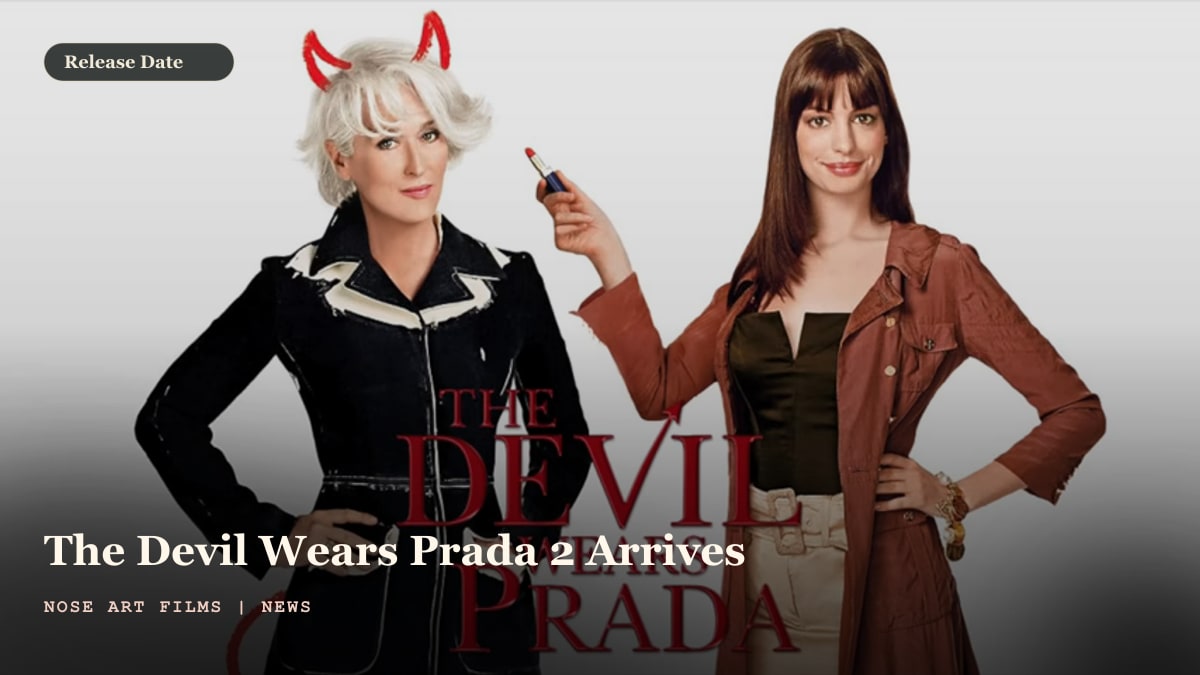
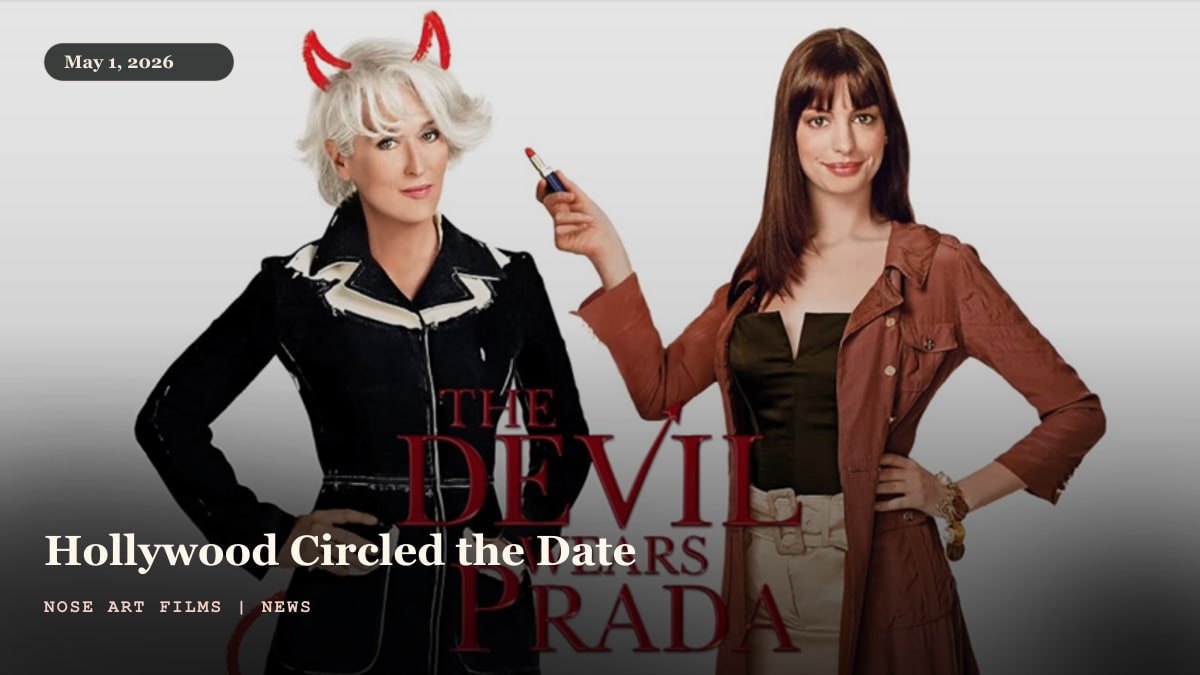
Featured image supplied to Nose Art Films and branded for the news article on The Devil Wears Prada 2 release date. Source: Sources and Visual Credits.
The Devil Wears Prada 2 Release Date Was the Most Talked-About Day in Hollywood This Spring
For months, the question kept resurfacing in comment sections, fan forums, and casual conversations: when, exactly, is The Devil Wears Prada 2 actually coming out? The answer, it turned out, was May 1, 2026 - and the world circled it. Twenty years after the original film quietly became a cultural fixture, the sequel arrived in theaters with the kind of buildup that most studios can only dream of engineering and rarely manage to sustain.
The path to that release date was longer than anyone expected. Talk of a sequel to the 2006 film had floated around Hollywood for years, surfacing occasionally in trade publications before disappearing back into the noise. The original, starring Meryl Streep as the terrifyingly composed Miranda Priestly and Anne Hathaway as the overwhelmed but sharp Andy Sachs, had finished its theatrical run at roughly $326 million globally - a strong number, though not an obvious mandate for a sequel at the time. Studios tend to greenlight follow-ups immediately when they see a franchise forming, or not at all. This one took two decades. That is either patience or difficulty, and it is probably some of both.
What finally materialized was a film that reportedly went through genuine creative development rather than a quick assembly. Director David Frankel and screenwriter Aline Brosh McKenna - both returning from the original - spent time building a story that would hold up on its own terms, not just coast on familiarity. The premise they landed on finds Emily Charlton, played by Emily Blunt, now sitting at the head of a media conglomerate holding the financial future of Miranda's magazine in her hands. That is a real story. The kind of setup that lets the characters evolve rather than simply repeat themselves. McKenna put it plainly: the film had to be about how the world has changed, not just about the world audiences remembered.
Nose Art Films branded news visual for The Devil Wears Prada 2 release-date coverage.
The release strategy itself followed a familiar but carefully paced pattern. The world premiere took place on April 20 in New York City - appropriate, given that the fictional Runway Magazine has always lived in the imagination as a heightened version of the city's actual fashion media world. There is something fitting about the cast walking a red carpet in Manhattan before sending the film to cinemas globally. A few markets, including Australia and Egypt, got their dates a day or two earlier, landing at the very end of April. The US theatrical opening locked in May 1. By the end of that first weekend, the global box office number had reached $233.6 million.
For context, that figure already represents 72% of everything the original film earned across its entire theatrical run. The release date was clearly well chosen - early May has historically been a sweet spot, bridging spring and the summer blockbuster season without being swallowed by the loudest franchise releases. It is possible the timing helped capture an audience that was not yet in full summer mode but was clearly ready to go back to the movies for something that felt genuinely anticipated rather than obligatory.
The streaming question has been one of the more discussed follow-on topics since the theatrical debut. According to reporting from Forbes, a digital release could arrive as early as mid-to-late June 2026, with the Disney+ and Hulu debut likely falling somewhere in August or September. For comparison, other major 2026 releases have followed similar windows, suggesting studios are still threading the needle between theatrical exclusivity and the undeniable pull of home viewing. It is still unclear whether an earlier digital window would cannibalize any remaining theatrical momentum or simply extend the film's total commercial reach. Both are plausible.
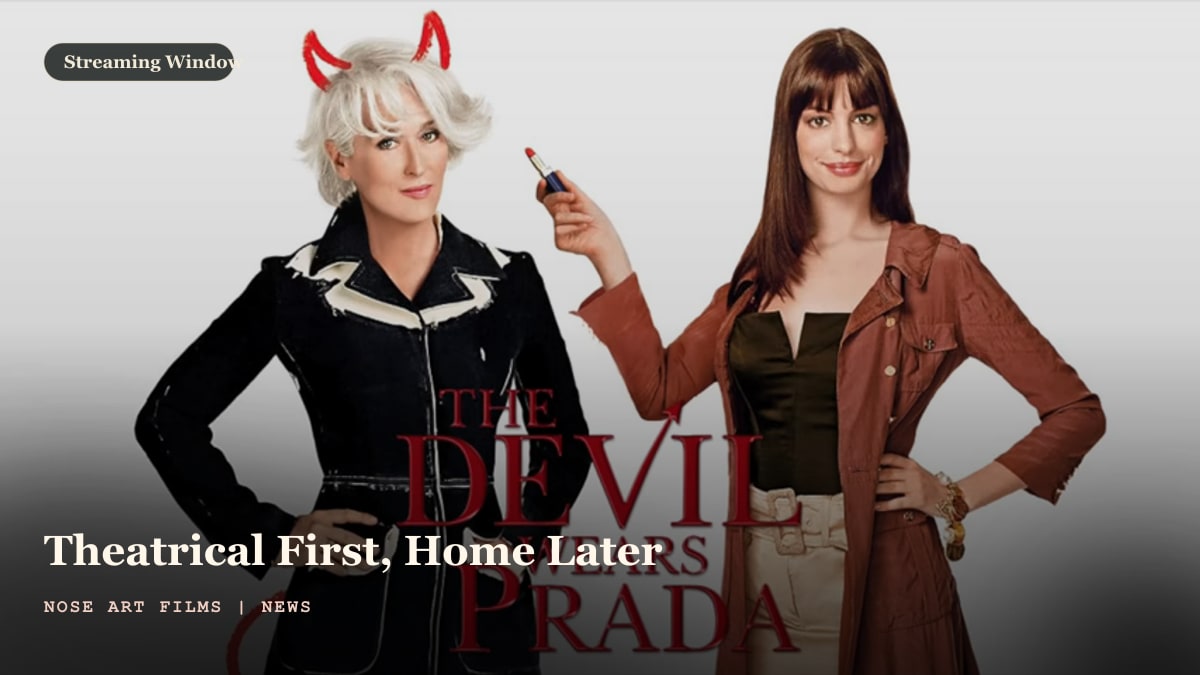
The release conversation moved quickly from theatrical date to digital and streaming-window speculation.
There is a feeling, watching all of this unfold, that the release date conversation reflects something larger about how audiences relate to cinema right now. People want reasons to go to a theater. Not just spectacle - actual reasons, tied to characters they already know and stories that feel like they matter. The original film has been streaming on Disney+ and Hulu for some time, and according to Nielsen data, viewership surged 428% between March and April of 2026 as the sequel's opening approached. That is a generation of new viewers arriving just in time to then buy a ticket. Anticipation, carefully earned, can still do remarkable things.
The full cast reinforces just how much the production leaned into that sense of occasion. Beyond the returning core - Streep, Hathaway, Blunt, Stanley Tucci, Tracie Thoms, and Tibor Feldman reprising their original roles - the sequel introduced Kenneth Branagh, Simone Ashley, Justin Theroux, Lucy Liu, Pauline Chalamet, B.J. Novak, and Lady Gaga. That is not a supporting ensemble. That is a deliberate signal that this film takes itself seriously, that it intends to be an event. Whether the story fully delivers on that ensemble's potential is a separate conversation - but the ambition is visible in every casting decision, and audiences, so far, seem to be responding to it.